BioWorld covers the Trump administration’s latest policy decisions and actions affecting the life sciences sector, as well as their impacts across the globe.
GC Genome Corp. priced a Kosdaq offering of 4 million shares at ₩10,500 per share May 27, entailing a gross ₩42 billion (US$30.5 million) raise in early June. The Yongin, South Korea-based genomics subsidiary of GC Biopharma Corp. fixed its shares price to the top of its ₩9,000 to ₩15,000 price band May 27 after conducting demand forecasting on domestic and international institutional investors from May 19 to May 23.
Echoing President Donald Trump’s justification for reciprocal tariffs, the U.S. Trade Representative’s annual Special 301 Report is a bit more aggressive in tone this year as it calls out trading partners that don't adequately enforce intellectual property rights or that otherwise discriminate against products from foreign companies.
The first 100 days of the Trump administration have been nothing short of chaotic, both in the U.S. and throughout the world. Shining a light through the uncertainty, BioWorld continues to cover the administration’s latest policy decisions and actions affecting the life sciences sector, as well as their impacts across the globe. It’s all right here at Trump administration impacts.
Genes associated with lysosomal dysfunction increase the risk of Parkinson’s disease (PD), according to a study led by scientists at Northwestern University. The discovery also explains why some people who carry a pathogenic variant of the GBA1 gene develop PD or dementia with Lewy bodies (DLB) and others do not. The key lies in the Commander complex, involved in the transport of proteins to this organelle. This discovery raises the need for combinatorial therapies that act on more than one pathway for this type of neurodegenerative disorder.
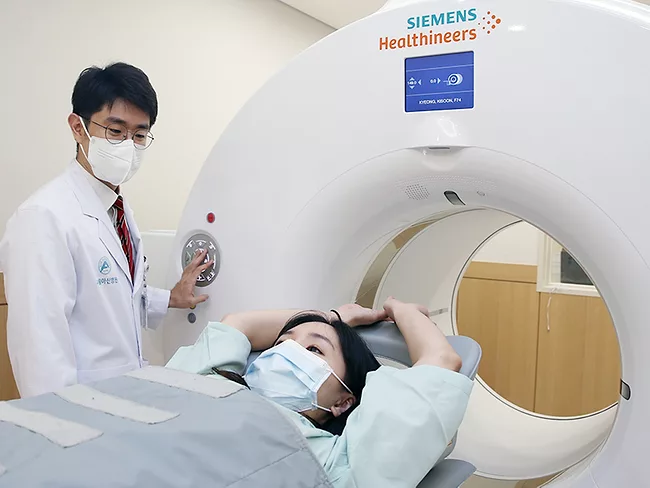
Radiopharmaceuticals, including 16α-18F-fluoro-17β-estradiol (18F-FES) PET/CT, are emerging as powerful tools with new diagnostic and therapeutic potential in breast cancer diagnosis and treatment, Han Sang-won, professor from the department of nuclear medicine at Asan Medical Center, recently told BioWorld.
Kyorin Pharmaceutical Co. Ltd. struck two licensing deals recently, including one with Hyfe Inc. Feb. 25 to develop the world’s potential first prescription digital therapeutic for chronic cough in Japan.
The Biosecure Act may have died with the 118th U.S. Congress, but efforts to stop U.S. government funding of R&D in China are alive and well. Rep. Claudia Tenney, R-N.Y., introduced the Stop Funding our Adversaries Act in the House Feb. 7 to prohibit direct and indirect federal funding of research in China or entities owned by China.
For the pharmaceutical industry caught in the crosshairs of a potential trade war, the consequences of U.S. tariffs on China or Europe remain largely speculative, although both would be detrimental, according to a Korea Biotechnology Industry Organization (KoreaBIO) issue briefing Feb. 7.
“This current administration is like nothing that we've seen before,” said a managing partner of a global venture capital firm who spoke to BioWorld on the condition of anonymity. “President Trump’s first term was bad,” he said, “but nobody knows what’s coming.” “This is truly nationalism at its worst, because he won on the campaign [largely] to protect American jobs, claiming that Americans have been unfairly treated.” And it's not just China, he said, but India and other countries will also likely be affected.
 RSS
RSS