The biopharma industry lauded the first steps the Australian government has taken to widen access for drugs and devices via reforms to the current health technology assessment process that has remained unchanged for 30 years.
Two big pharma firms placed high offers on Dec. 26 to acquire companies focused on radiopharmaceuticals and cell therapies in what Evercore ISI analysts are calling a “good sign for the end of the year.”
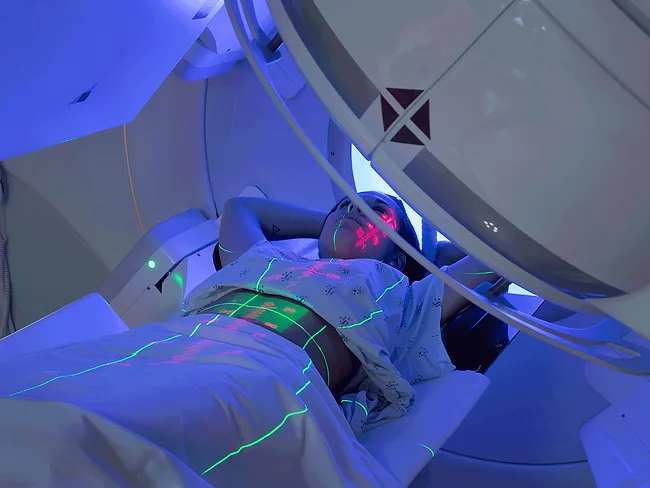
If its challenges can be overcome, radioligand therapy is poised to change the way many cancers are treated. It is also likely to become an example of how scientific advances, once they are translated successfully, can enable further insights in a bench-to-bedside-to-bench loop. David Piwnica-Worms, professor and chair of cancer systems imaging at The University of Texas MD Anderson Cancer Center, predicted that as radioligand therapy expands, many questions will be answered about both radiation biology and the interaction of radiation with the immune system more specifically.
After spending decades developing targeted chemotherapy and bringing a dozen or so compounds into the clinic, Fusion Pharmaceuticals Inc. Chief Scientific Officer Christopher Leamon switched careers to focus on radio-oncology because he saw the need for “a really strong bomb to target cancer to get it to respond.” That was radiotherapy, said Leamon, who was one of the scientific founders of Endocyte Inc., which Novartis AG acquired.
The Australian government will deliver $50 million to a new biomedical and med-tech incubator (BMTI) program for health discoveries spanning early-stage drug development through to cutting edge medical devices and evidence-based digital health technologies.
Ophthalmic startup Eluminex Biosciences Ltd. closed a $40 million series B round to progress its pipeline of ophthalmic assets and recombinant human collagen technology. Eluminex’s pipeline includes multi-targeted antibody molecules for vision-threatening retinal diseases and an oral small molecule for rare inherited pediatric retinal dystrophies, but its lead asset, EB-301, is a biosynthetic cornea derived from recombinant human type III collagen.
Anthony Fauci has retired from his position as director of the National Institute of Allergy and Infectious Diseases (NIAID) and as chief medical advisor to the U.S. president. But Fauci, who has advised every president since Ronald Reagan, continues to share his encyclopedic knowledge with the HIV research community, as he has since the beginning of the HIV pandemic. Fauci co-founded the first National Conference on Human Retroviruses and related infections in 1993. At the Opening Session of the 30th edition of the Conference on Retroviruses and Opportunistic Infections (CROI), he highlighted the advances that have collectively extended the life expectancy of newly diagnosed patients by decades.
A computational platform that used single-cell RNA sequencing (scRNA-seq) data could quickly predict the best chemical compounds to use to convert cells from one type into another for use in research or cell therapies. The work, published in the Nov. 17, 2022, issue of Stem Cell Reports, was a collaboration between the lab of Hongkui Deng, a professor and director of the Key Laboratory of Cell Proliferation and Differentiation at Peking University in Beijing, and the lab of Antonio del Sol, a professor at the Luxembourg Centre for Systems Biomedicine at the University of Luxembourg.
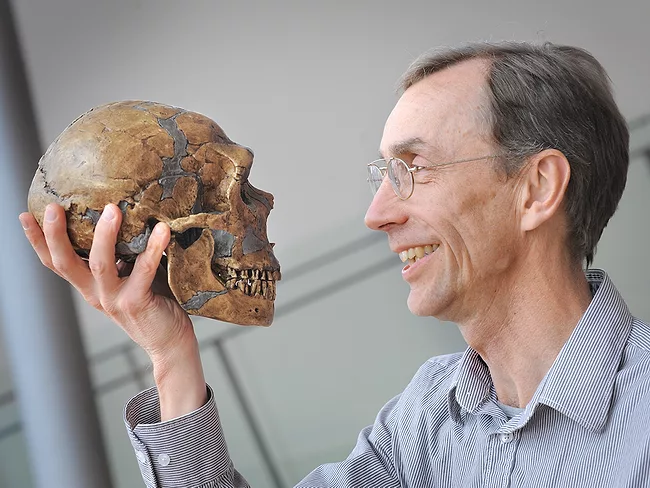
The Nobel Prize in Physiology or Medicine 2022 was awarded to Svante Pääbo today "for his discoveries concerning the genomes of extinct hominins and human evolution." Pääbo, who is currently the director of the Max Planck Institute for Evolutionary Anthropology in Leipzig, Germany, and his colleagues overcame extreme technical challenges to sequence the DNA of ancient hominids – because after tens of thousands of years, there is no such thing as aging well for DNA.

 RSS
RSS