With millions of people suffering from chronic back pain, Discure Technologies Ltd. is hoping that its bioelectronic therapy, the Discure system, will soon bring relief.
The U.K.’s national health service (NHS) is rolling out a new artificial intelligence (AI)-powered tool which can predict a patient’s risk of falling with a 97% accuracy rate. The AI software designed by Cera Care Ltd. is already in use in more than two-thirds of NHS integrated care systems across the country and NHS England hopes that the tool will prevent around 2,000 falls and hospital admissions each day.
A slow-down in EU medical device audits due to the long-delayed transition to the EU Medical Device Regulation is leading to increased applications to Australia as small businesses bypass Europe altogether.
With more than three weeks left in the first quarter, the value of med-tech IPOs for 2025 already exceeds the funds raised from all IPOs for med-tech companies in the last two years combined. Kestra Medical Technologies Ltd. provides a clear example of how fast the market is heating up, with a final IPO that raked in more than twice as much as initially expected, while Advanced Biomed Inc. shows the appeal of the U.S. exchanges for non-U.S. companies.
Regulatory snapshots, including global submissions and approvals, clinical trial approvals and other regulatory decisions and designations: Zimmer Biomet.
Investigators at Pennsylvania State University have described a novel approach to combat Clostridioides difficile infection using a synthetic microbiome therapy, which offers an alternative to antibiotics and fecal microbiota transplant .
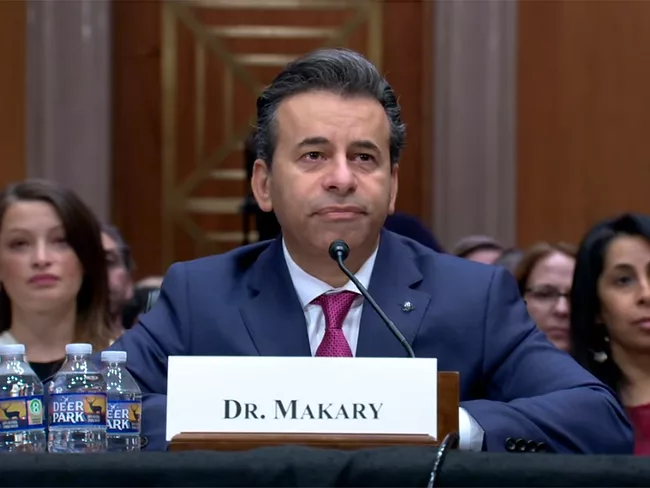
Martin Makary, President Donald Trump’s pick to head the U.S. FDA, took his turn before the Senate Health, Education, Labor and Pensions (HELP) Committee March 6, a week ahead of the committee’s confirmation votes on both him and Jay Bhattacharya as the next NIH director. The committee votes will set the stage for the full Senate to vote on confirming both nominees later this month.
 RSS
RSS