After Novosis Putty gained U.S. FDA breakthrough device designation of bio-fusion spine implantation device, South Korea’s Cgbio Co. Ltd. posted positive findings of similar ceramic bone graft, Novosis, to lay groundwork for U.S. market entry.
One-year data from the Notion-2 trial, which compared transcatheter aortic valve implantation (TAVI) with surgical aortic valve replacement (SAVR) in younger low-risk patients with severe tricuspid or bicuspid aortic valve stenosis, showed little difference in clinical outcomes between the two procedures. The results were presented at the recent EuroPCR conference in Paris.
Pulsed field ablation dominated the news out of the Heart Rhythm Society meeting this week with three late-breaking studies highlighting the safety and efficacy of the technology replacing thermal ablation for treatment of atrial fibrillation and active discussion of the ‘unprecedented’ growth of these procedures. Boston Scientific Corp’s Farapulse is rapidly building dominance in the field, while results from Johnson & Johnson’s Varipulse study and Medtronic plc’s trial of the Affera system set up those companies for U.S. FDA approval later this year.
Regulatory snapshots, including global submissions and approvals, clinical trial approvals and other regulatory decisions and designations: Axonics, BD, Brainomix, Diasorin, Implicty.
Med-tech happenings, including deals and partnerships, grants, preclinical data and other news in brief: Adagio, Circle Cardiovascular, Cook, Enterasense, Inheart, Lifecore, Oxford Biodynamics, Siemens Healthineers, Varian.
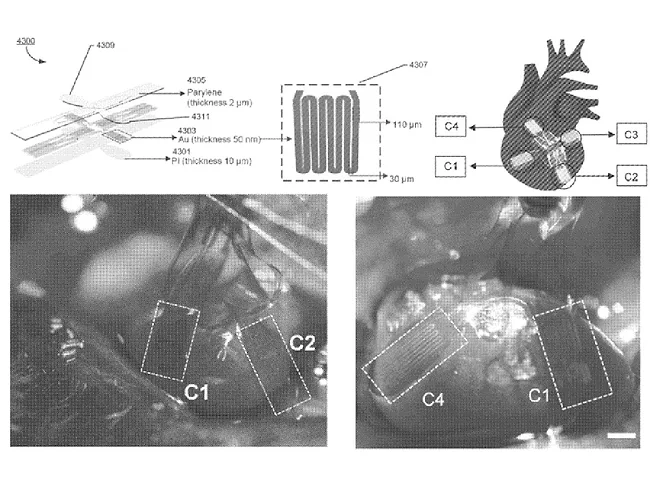
Wubin Bai, assistant professor of applied physical sciences at UNC-Chapel Hill, is seeking protection for morphable 3D-folded microelectronic mesostructures, including epicardial bioelectronic probes, made using concepts borrowed from origami.
Denver-based Arcscan Inc. gained Chinese approval of its computer-controlled, ultra-high frequency ultrasound diagnostic imaging solution for myopia called Insight 100, expanding its reach beyond the U.S. and Europe.
The U.S. FDA has several methods for signaling its enforcement intentions regarding medical devices and drugs, but there are times when warning letters are the vectors for communicating the agency’s current thinking.
 RSS
RSS