BioWorld. Link to homepage.

Clarivate
  • BioWorld
  • BioWorld Science
  • BioWorld Asia
  • Data Snapshots
    • Biopharma
    • Medical technology
    • Infographics: Dynamic digital data analysis
    • Index insights
    • NME Digest
  • Special reports
    • Infographics: Dynamic digital data analysis
    • Trump administration impacts
    • Under threat: mRNA vaccine research
    • BioWorld at 35
    • Biopharma M&A scorecard
    • Bioworld 2025 review
    • BioWorld MedTech 2025 review
    • BioWorld Science 2025 review
    • Women's health
    • China's GLP-1 landscape
    • PFA re-energizes afib market
    • China CAR T
    • Alzheimer's disease
    • Coronavirus
    • More reports can be found here

BioWorld. Link to homepage.

  • Sign In
  • Sign Out
  • My Account
Subscribe
BioWorld - Wednesday, February 25, 2026
Home » Authors » Anette Breindl

Articles by Anette Breindl

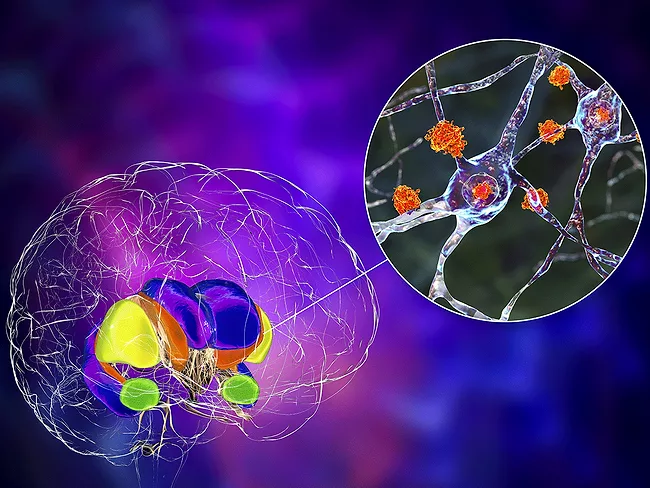
Illustration of Alzheimer’s in the brain.
Neurology/Psychiatric

Study identifies cause of death for Alzheimer’s neurons

Sep. 18, 2023
By Anette Breindl
By creating a new mouse model of Alzheimer’s disease that better recapitulated how the disease plays out in humans, investigators at KU Leuven have gained new insights into how amyloid plaques, tau tangles and neuronal death are related at the molecular level.
Read More
High-density lipoprotein particles and red blood cells
Biomarkers

From membranes to metabolites, looking at lipids

Sep. 14, 2023
By Anette Breindl
Lipids are “very diverse, but also vastly understudied,” Anne Brunet told the audience at the recent meeting on Aging Research and Drug Discovery. Advances in the ability to predict protein structures have fueled a much better understanding of the human proteome and its estimated 20,000 members. The lipidome is much larger, numbering maybe 100,000 total. And what those lipids do remains much more fuzzy. “Very little is known about their function, and especially their function during aging,” Brunet said. Slowly, however, technological advances are enabling researchers to understand the roles of lipids as well.
Read More
Cardiovascular

Neuronal, blood vessel miscommunication affects aging heart: study

Aug. 31, 2023
By Anette Breindl
Throughout the body, the vasculature and the nervous system are fellow travelers. Renaissance physician and anatomist Andreas Vesalius described their proximity on the macroanatomical level in the 16th century, and modern microscopic techniques have shown that it extends into the micrometer range – where there is a blood vessel, there is often a nerve nearby, and vice versa.
Read More
DNA double helix with sand hour glass

Biomarker brainteaser: Aging? Or just changing?

Aug. 30, 2023
By Anette Breindl
“Change is the only constant” is an ageless truth. In the search for age-related biomarkers, it is also a prosaic confounding factor.

Age-related biomarkers will be critical for the development of antiaging therapeutics. “Nobody is planning to do a life span study in humans,” Eric Verdin told the audience at the 10th Conference on Aging Research and Drug Development in Copenhagen on Monday. “Hence the need for … surrogate markers.”
Read More
DNA double helix with sand hour glass
Biomarkers

Biomarker brainteaser: Aging? Or just changing?

Aug. 30, 2023
By Anette Breindl
“Change is the only constant” is an ageless truth. In the search for age-related biomarkers, it is also a prosaic confounding factor. Age-related biomarkers will be critical for the development of antiaging therapeutics. “Nobody is planning to do a life span study in humans,” Eric Verdin told the audience at the 10th Conference on Aging Research and Drug Development in Copenhagen on Monday. “Hence the need for … surrogate markers.” And “we are not there … we are actually quite far from there.”
Read More
Central nervous system
Neurology/Psychiatric

Methodological, target breadth begets optimism for movement disorder progress

Aug. 29, 2023
By Anette Breindl
“I am not a fortune teller, nor am I a gambler. I will make no bets,” Lorraine Kalia told the audience at the 2023 International Congress of Parkinson’s Disease and Movement Disorders. “But I am optimistic.” At the meeting, which is being held in Copenhagen this week, Kalia, who is a scientist at Toronto Western Hospital’s Krembil Brain Institute and at the University of Toronto’s Tanz Centre for Research in Neurodegenerative Diseases, was giving an overview of “Emerging targets in the clinic” in a plenary session on “Therapeutic strategies for the future.”
Read More
Genetic/Congenital

At long last, sequencing complete for smallest chromosome

Aug. 25, 2023
By Anette Breindl
“The size of a chromosome does not correlate with complexity of the sequences within,” Jackson Laboratory professor Charles Lee told BioWorld. Which is why the Y chromosome, which is the runt of the litter as far as human chromosomes are concerned, was the last to be fully sequenced. Now, 20 years after publication of the first near-complete human genome sequence and 16 months after the telomere to telomere (T2T) consortium announced it had completed “gapless assemblies for all chromosomes except Y,” of the human genome, it really is done.
Read More
Stem cells
Neurology/Psychiatric

Stem cell study functionally links Alzheimer’s risk genes

Aug. 23, 2023
By Anette Breindl
Investigators have functionally linked the Alzheimer’s disease (AD) risk gene SORL1 to apolipoprotein E (ApoE) and clusterin, another apolipoprotein. The work, Tracy Young-Pearse told BioWorld, is part of an attempt to “try to understand different subtypes of Alzheimer’s disease.” It maps some of what Young-Pearse termed the “many molecular roads that lead to Alzheimer’s” – which, in turn, is the first step to setting up roadblocks. Young-Pearse is an associate professor in the Ann Romney Center for Neurologic Diseases at Brigham and Women’s Hospital and Harvard Medical School and co-leader of the Harvard Stem Cell Institute’s Nervous System Diseases Program. She is also the senior author of the paper describing the findings, which appeared online in Cell Reports on Aug. 22, 2023.
Read More
DNA double helix made up of a spoon and fork
Genetic/Congenital

Machine learning sleuthing yields undiagnosed binge eating patients, insights

Aug. 16, 2023
By Anette Breindl
By using machine learning techniques to scour electronic health records, researchers have identified individuals who were likely to have binge eating disorder (BED) but had not received a formal diagnosis. Genomewide association studies including such patients enabled the investigators to identify several risk variants that were correlated with BED irrespective of body mass index (BMI), which covaries with BED and is a potential confounding factor.
Read More
Close-up photo of multi-colored beads threaded onto a string
Immune

Double-double-duty EBV vaccine shows promise in animal models

Aug. 9, 2023
By Anette Breindl
An experimental vaccine that contained antigens of both lytic and latent phases of Epstein-Barr virus (EBV), and induced both an antibody and a T cells response, was able to generate broad and long-lasting immunity against EBV in mouse models of infection. Researchers from the QIMR Berghofer Medical Research Institute and Elicio Therapeutics Inc. reported those results online in Nature Communications on Aug. 8, 2023.

For some viruses, the challenge to developing a vaccine is their rapid mutation rate. This is the major challenge to developing an HIV vaccine or a universal flu vaccine. EBV is different. Its superpower is its ability to hide.
Read More
Previous 1 2 … 21 22 23 24 25 26 27 28 29 … 400 401 Next

Popular Stories

  • Today's news in brief

    BioWorld
  • IL-22 and TL1A, a robust couple for diagnosing hidradenitis suppurativa

    BioWorld Science
    Hidradenitis suppurativa (HS) is a chronic inflammatory skin disease with strong association with psoriasis and inflammatory bowel disease (IBD). While some...
  • Illustration of head with maze that is missing parts

    Inhibiting the NLRP3 inflammasome for cognitive impairment, stroke

    BioWorld Science
    Vascular cognitive impairment and dementia (VCID) and cerebral small vessel disease are among the leading causes of dementia, where inflammation is known to play...
  • Pill in immersive interface

    New mechanism of action identified for QC-6352

    BioWorld Science
    QC-6352 is a small molecule developed to inhibit the histone demethylase 4 (KDM4) that has shown potent antitumoral activity and which has a derivative named...
  • Illustration of brain and antibodies

    VST Bio’s VB-001 is neuroprotector after stroke

    BioWorld Science
    At the recent International Stroke Conference, researchers from VST Bio Corp. and Yale University presented preclinical data regarding VB-001, a monoclonal...
  • BioWorld
    • Today's news
    • Analysis and data insight
    • Clinical
    • Data Snapshots
    • Deals and M&A
    • Financings
    • Medical technology
    • Newco news
    • Opinion
    • Regulatory
  • BioWorld Science
    • Today's news
    • Biomarkers
    • Cancer
    • Conferences
    • Endocrine/metabolic
    • Immune
    • Infection
    • Neurology/psychiatric
    • NME Digest
    • Patents
  • BioWorld Asia
    • Today's news
    • Analysis and data insight
    • Australia
    • China
    • Clinical
    • Deals and M&A
    • Financings
    • Newco news
    • Regulatory
    • Science
  • More
    • About
    • Advertise with BioWorld
    • Archives
    • Article reprints and permissions
    • Contact us
    • Cookie policy
    • Copyright notice
    • Data methodology
    • Infographics: Dynamic digital data analysis
    • Index insights
    • Podcasts
    • Privacy policy
    • Share your news with BioWorld
    • Staff
    • Terms of use
    • Topic alerts
Follow Us

Copyright ©2026. All Rights Reserved. Design, CMS, Hosting & Web Development :: ePublishing