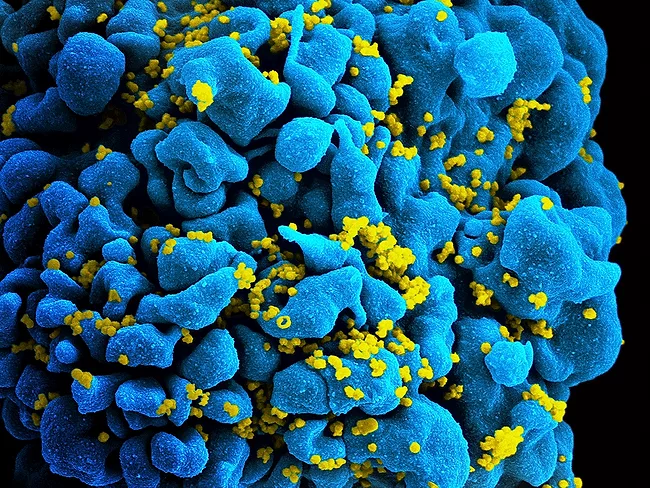
At the 2022 Conference on Retroviruses and Opportunistic Infections (CROI), investigators reported on a fourth patient who has achieved HIV remission after a stem cell transplant. The patient is the first woman and the first mixed-race person to achieve HIV remission through a transplant procedure. In 2017, she was transplanted with cord blood stem cells lacking a functional CCR5 receptor, which prevents HIV from entering cells.
It's neither a retrovirus nor an opportunistic infection. But of course, SARS-CoV-2 has a prominent place at the table at the 2022 Conference on Retroviruses and Opportunistic Infections (CROI) –
starting with the fact that COVID-19 has again forced the conference to go virtual.
Using a mix of clinical and animal studies, researchers at Yale University have identified an enzyme whose decreased activity appears to be behind some of the beneficial effects of caloric restriction. They published their work in the February 11, 2022, issue of Science.
Studies published this week have introduced a consensus-based definition of long COVID-19 in children and young persons, narrowing its prevalence estimates, which have been wildly divergent. Long COVID rates for adults are still unclear, but a recent meta-analysis estimated that between one third and two thirds of adult COVID-19 patients who had severe acute disease develop symptoms of long COVID.
Researchers at New York University have demonstrated that protease-activated receptor 2 (PAR2) on epithelial cells of the colon continued after they were trafficked from the cell membrane.
“The premise of our whole company is that we target molecular machines, but we don’t target the engine,” Adrian Schomburg told BioWorld. Instead, “we interfere with the throttle and other highly specific controls of these machines.” “We,” in this case, is Eisbach Bio GmbH, a German startup that is developing anticancer programs aimed at exploiting synthetic lethality by targeting helicases. Founded in 2019, the company has three programs, a recently announced collaboration with MD Anderson Cancer Center in oncology, and another program in COVID-19.
The growth of some pancreatic cancers is fueled by fungus-induced production of the cytokine IL-33, and the progression of such tumors could be slowed down by treatment with antifungals or genetic deletion of IL-33, researchers reported in the February 3, 2022, online issue of CancerCell.
A remarkably brief exposure to a multidrug cocktail enabled frogs to re-grow largely functional limbs after amputation, investigators from Tufts University reported in the January 26, 2022, issue of ScienceAdvances. Twenty-four hours of exposure to five factors – brain-derived neurotrophic factor (BDNF), growth hormone (GH), 1,4-dihydrophenonthrolin-4-one-3carboxylic acid (1,4-DPCA), resolvin D5 (RD5) and retinoic acid (RA) – set off regeneration processes that continued for 18 months.
Two studies published this January by separate research teams have conclusively identified Epstein-Barr virus infection as the cause of multiple sclerosis, and the mechanism by which the immune response to EBV infection triggers an attack on the myelin sheath, the insulation that enables high-speed neuronal transmission.
By using a new method to model ovarian cancer, researchers at Memorial Sloan-Kettering Cancer Center have gained new insights into the role of senescence in therapy response of high-grade serous ovarian cancers.