More than 10% of Americans suffer from chronic pain, and how to prevent acute pain from turning chronic has been a critical question in pain research. But according to a study published in the May 11, 2022, issue of Science Translational Medicine, that approach has it backwards. In several animal models of pain, the resolution of acute pain was an active process. Chronic pain happened when those active processes failed to occur.
There are 40 years of history behind the development of phosphoinositide 3-kinase (PI3K) inhibitors, Rebecca Dent told her audience at ESMO Breast Cancer 2022. And there have been success stories. There are five FDA-approved PI3K inhibitors in several cancer types, and in April, the FDA approved Vijoice (alpelisib; Novartis AG) for PIK3CA-related overgrowth spectrum, a rare disorder resulting from germline mutations of PIK3CA.
There are 40 years of history behind the development of phosphoinositide 3-kinase (PI3K) inhibitors, Rebecca Dent told her audience at ESMO Breast Cancer 2022. And there have been success stories. There are five FDA-approved PI3K inhibitors in several cancer types, and in April, the FDA approved Vijoice (alpelisib; Novartis AG) for PIK3CA-related overgrowth spectrum, a rare disorder resulting from germline mutations of PIK3CA.
Fat cells surrounding the lymph nodes could switch jobs in response to a distant infection, taking on immune cell functions, researchers at Johns Hopkins University reported in the May 3, 2022, online issue of CellMetabolism.
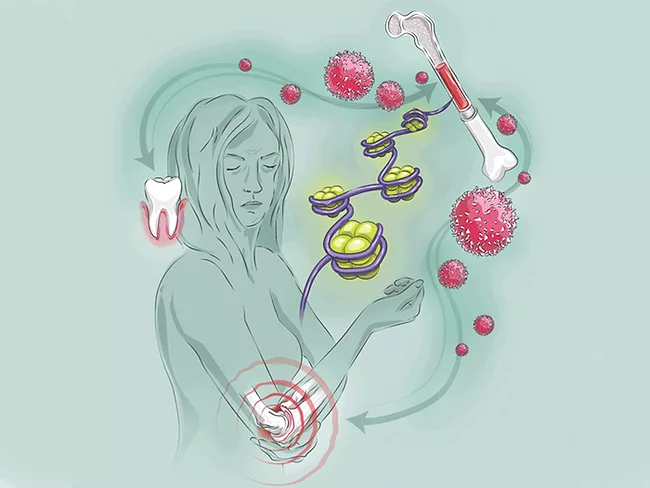
Researchers at the University of Pennsylvania have gained new insight into how different inflammatory conditions reinforce each other via trained innate immunity.
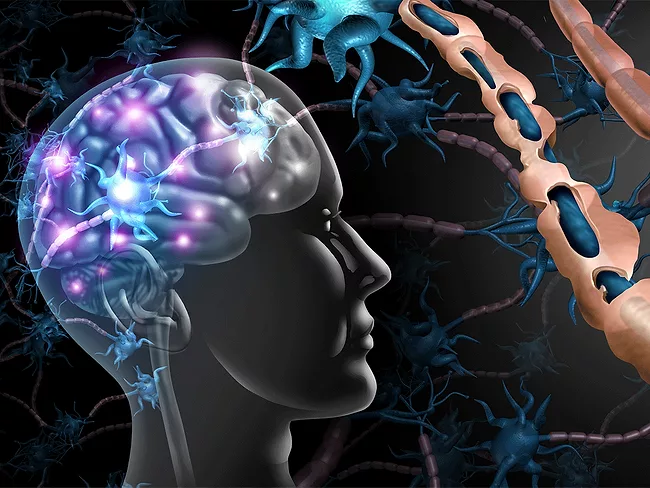
Screening a panel of potential autoantigens, investigators at the Karolinska Institute have identified four autoantigens that are targeted by the T cells of multiple sclerosis patients.
Antibiotics drugs discovery, Ursula Theuretzbacher told the audience at the 2022 European Congress of Clinical Microbiology & Infectious Diseases (ECCMID), has more than one challenge to overcome.
A new animal model of systemic lupus erythematosus (lupus) could be useful for understanding the disparity of the disorder, which is vastly more common in women than men.
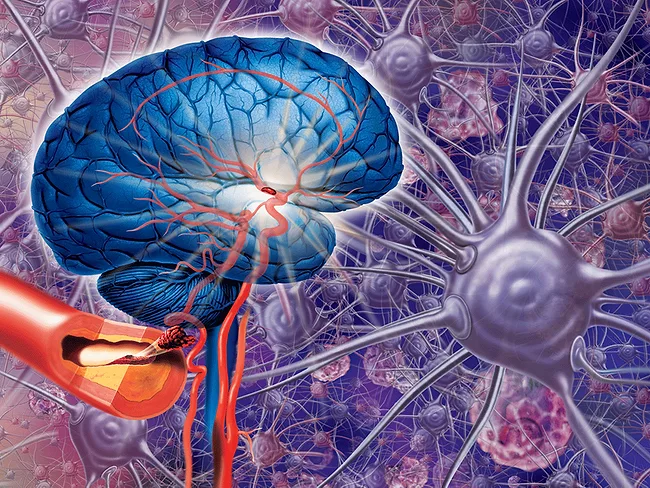
By altering the balance between neuronal excitation and inhibition, researchers have reduced cell death and improved outcomes in animal models of stroke.