The amount of money raised through global biopharma IPOs in the first seven months of 2025 is at the lowest level since 2016, and more than half of the 13 completed through July were done on ex-U.S. exchanges. Only five of the companies have U.S. roots, while the rest are based in Asia: four in China, two in South Korea, one in Taiwan and one in Hong Kong.
With a packed pipeline of drug candidates targeting multiple markers of cancer, Bayer AG signed on for a new project, this time going after the KRAS pathway with a global deal that could bring Kumquat Biosciences Inc. up to $1.3 billion in payments.
With half-year industry financings down 59% from last year, and a U.S. administration supportive of cryptocurrencies, biopharma companies are building treasuries of digital assets to secure future R&D efforts and operational runways. Companies such as Artelo Biosciences Inc., MEI Pharma Inc., Windtree Therapeutics Inc. and 180 Life Sciences Corp. and have entered crypto deals in recent weeks, with the latter noting the potential to “unlock value outside traditional biotech milestones.”
Regeneron Pharmaceuticals Inc. disclosed within a positive second-quarter earnings report that it had received a complete response letter (CRL) two days earlier from the U.S. FDA for its bispecific antibody, odronextamab, for relapsed/refractory follicular lymphoma following two or more lines of systemic therapy.
A month away from the PDUFA decision date for a Leqembi (lecanemab) subcutaneous autoinjector to be used for maintenance dosing for those with early Alzheimer’s disease, Eisai Co. Ltd. and Biogen Inc. presented clinical data at the Alzheimer's Association International Conference (AAIC) 2025 in Toronto, showing comparable efficacy and safety to the FDA-approved intravenous formulation.
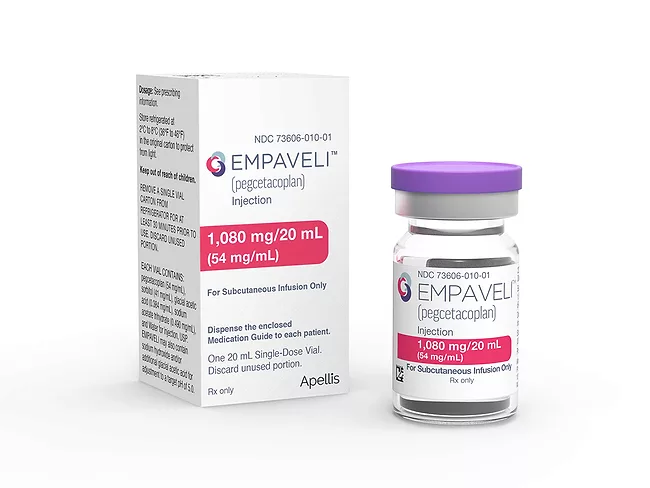
Following a priority review, Apellis Pharmaceuticals Inc. received U.S. FDA approval of a supplemental NDA making pegcetacoplan the second marketed treatment for complement 3 glomerulopathy and the first for primary immune complex membranoproliferative glomerulonephritis.
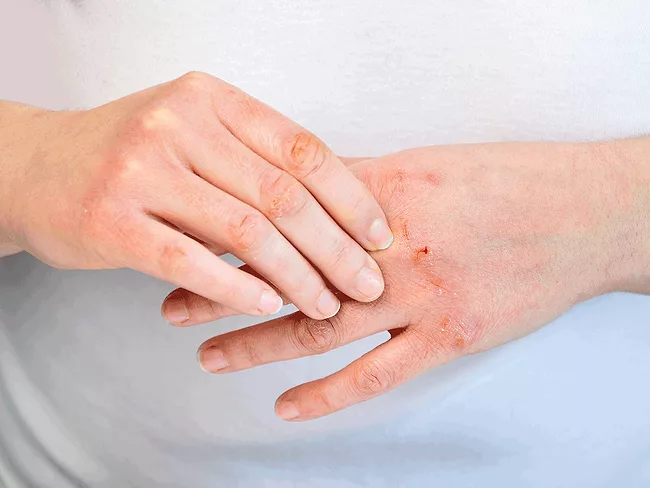
Becoming the first approved treatment for chronic hand eczema in the U.S., Leo Pharma A/S’s Anzupgo (delgocitinib) received FDA clearance for an indication that affects 10% of adults worldwide. The cream, dosed at 20 mg/g and applied topically, will treat moderate to severe cases in those not responsive to, or unable to take, topical corticosteroids.
A glucagon-like peptide-1 and glucose-dependent insulinotropic polypeptide receptor dual agonist developed by Jiangsu Hengrui Pharmaceuticals Co. Ltd. and licensed by Kailera Therapeutics Inc. has shown a mean weight loss of 19.2% at the 6-mg dose with no plateau over 48 weeks in a phase III trial conducted in China.
After expanding development of DM-199 (rinvecalinase alfa) into preeclampsia last year, Diamedica Inc. rolled out early phase II results showing the recombinant form of human tissue kallikrein-1 reduced the mother’s blood pressure, did not cross the placental barrier, and potentially improves blood flow to the fetus.
A glucagon-like peptide-1 and glucose-dependent insulinotropic polypeptide receptor dual agonist developed by Jiangsu Hengrui Pharmaceuticals Co. Ltd. and licensed by Kailera Therapeutics Inc. has shown a mean weight loss of 19.2% at the 6-mg dose with no plateau over 48 weeks in a phase III trial conducted in China.