The development of glucagon-like peptide 1 receptor (GLP-1R) agonists, such as semaglutide and tirzepatide, has been a game changer in the clinical management of overweight and obesity, but there is interpersonal variability in efficacy of these medications for weight loss, as well as in the incidence of undesired side effects. Investigators from the 23andMe Research Institute have shed some light on how variations in the GLP-1R and GIP receptor (GIPR) genes impact their effectiveness and the occurrence of side effects.
A yearslong bipartisan effort to end the patent-eligibility chaos the U.S. Supreme Court created more than a decade ago could finally come to fruition with the current Congress.
For years, the biopharma industry has spent increasing amounts of money on R&D without improving success rates, leaving many executives searching for new, more predictable drug development paths.
Turning the human body into a biofactory of precision protein therapeutics is the focus of newly launched Signify Bio, which emerged with an oversubscribed $15 million initial financing to advance three platforms with broad potential across therapeutic areas.
Turning the human body into a biofactory of precision protein therapeutics is the focus of newly launched Signify Bio, which emerged with an oversubscribed $15 million initial financing to advance three platforms with broad potential across therapeutic areas.
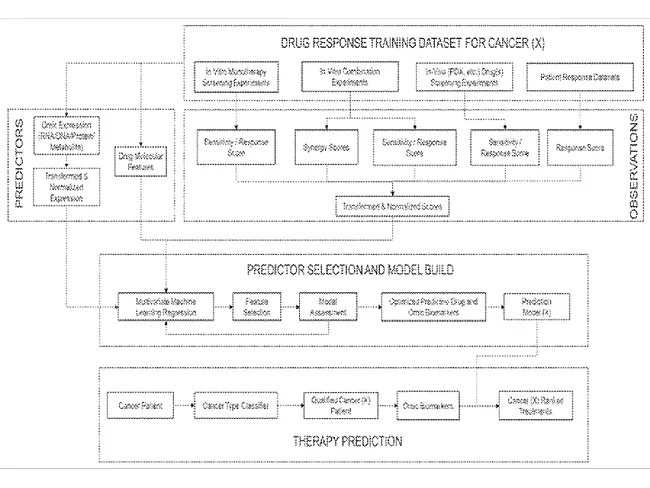
Certis Oncology Solutions Inc. filed for protection of its artificial intelligence platform that utilizes big data, statistical algorithms, and machine learning to predict drug efficacy based on gene expression biomarkers.
Technological breakthroughs are changing the biopharmaceutical landscape and forcing regulators to think on their feet and facilitate (not impede) innovation, experts said at the Global Bio Conference (GBC) 2024. “Regulatory speed and agility are necessary amid emergencies to cater to unmet medical needs,” Choong May Ling, CEO of Singapore’s Health Sciences Authority, told audience members in Seoul, South Korea.
Technological breakthroughs are changing the biopharmaceutical landscape and forcing regulators to think on their feet and facilitate (not impede) innovation, experts said at the Global Bio Conference (GBC) 2024. “Regulatory speed and agility are necessary amid emergencies to cater to unmet medical needs,” Choong May Ling, CEO of Singapore’s Health Sciences Authority, told audience members in Seoul, South Korea.
Researchers from the La Jolla Institute for Immunology (LJI) and collaborators have presented a new platform to identify and validate neoantigens that would otherwise escape traditional routine sampling methods. The project, which they describe in an article published on Feb. 28, 2024, in Science Translational Medicine, started after discussions at the beginning of a cancer vaccine program between teams at UCSD Moores Cancer Center (MCC) and LJI.
Researchers have created an artificial intelligence (AI)-enabled implantable bio-sensing device that can change shape and adapt to maintain drug treatment and bypass scar tissue build up. As the foreign body response continues to impact the longevity of implantable medical devices that treat many conditions, the researchers hope that the Fibrosensing Dynamic Soft Reservoir (FSDSR), capable of monitoring fibrotic capsule formation and overcoming its effects via soft robotic actuations, can change the way patients body respond to therapeutic treatments.