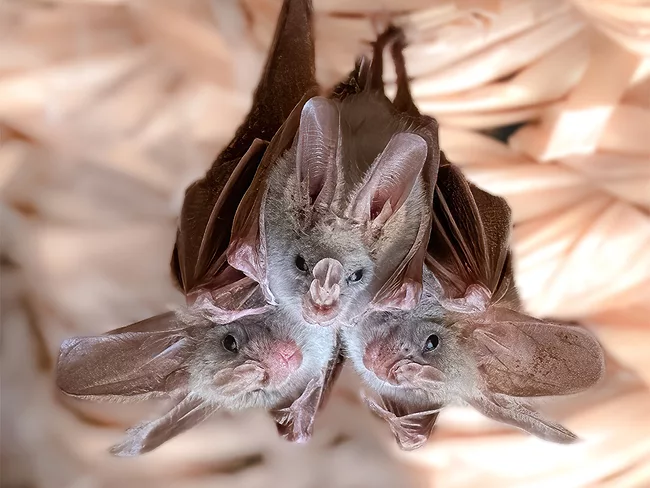
Researchers in the U.K. have developed an AI-driven method of identifying viruses in wild animals with the potential to spillover into humans. The technique makes it possible to use the genome sequences of the spike proteins by which viruses enter host cells to assess the potential to infect humans without having to isolate an individual virus and tests its infectivity in the lab.
French vaccines specialist Osivax SAS has been awarded $19.5 million by the U.S. Biomedical Advanced Research and Development Authority (BARDA) to fund work on its universal influenza A vaccine.
After more than three years of discussion, the World Health Organization’s Intergovernmental Negotiating Body (INB) has agreed on a proposal to prevent, prepare and respond to a pandemic. The plan is born, the INB proposal said, out of inequities around the world that slowed timely and equitable access to health products to respond to the COVID-19 pandemic.
After more than three years of discussion, the World Health Organization’s Intergovernmental Negotiating Body (INB) has agreed on a proposal to prevent, prepare and respond to a pandemic. The plan is born, the INB proposal said, out of inequities around the world that slowed timely and equitable access to health products to respond to the COVID-19 pandemic.
After more than three years of discussion, the World Health Organization’s Intergovernmental Negotiating Body (INB) has agreed on a proposal to prevent, prepare and respond to a pandemic. The plan is born, the INB proposal said, out of inequities around the world that slowed timely and equitable access to health products to respond to the COVID-19 pandemic.
The National Institutes of Health (NIH) has established a pandemic preparedness research network to conduct research on high-priority pathogens most likely to threaten human health with the goal of developing effective vaccines and monoclonal antibodies.
With the COVID-19 pandemic still visible in the rearview mirror, the World Health Organization (WHO) is taking no chances as it preps for human avian influenza, or H5N1, a subtype of influenza A.
In a study published in Nature on Oct. 11, coinciding with the beginning of IDWeek 2023 in Boston, researchers from Harvard Medical School described EVEscape, a method for anticipating the movements of SARS‑CoV‑2 by predicting potential mutations likely to escape current vaccines and treatments.
In a study published in Nature on Oct. 11, coinciding with the beginning of IDWeek 2023 in Boston, researchers from Harvard Medical School described EVEscape, a method for anticipating the movements of SARS‑CoV‑2 by predicting potential mutations likely to escape current vaccines and treatments.
In a study published in Nature on Oct. 11, coinciding with the beginning of IDWeek 2023 in Boston, researchers from Harvard Medical School described EVEscape, a method for anticipating the movements of SARS‑CoV‑2 by predicting potential mutations likely to escape current vaccines and treatments.