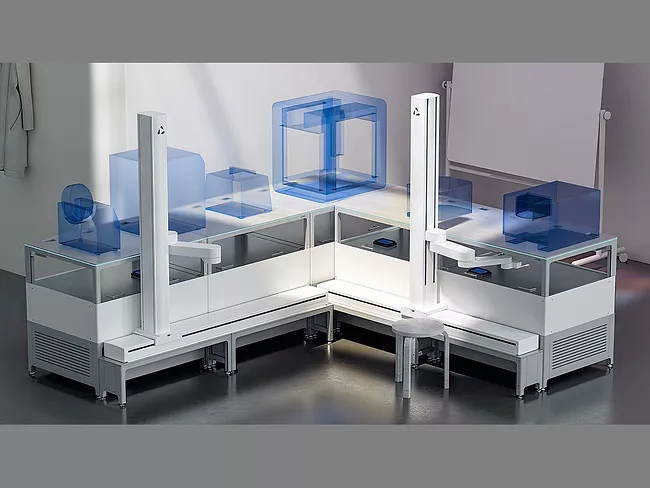
There is no doubt that artificial intelligence, automation and robotics are transforming today’s laboratories. At the forefront of these changes is Automata Technologies Ltd., which has developed the Linq platform to digitally and robotically connect all the components of a modern life sciences lab to create fully automated end-to-end workflows.
Smartcella Holding AB raised €50 million (US$54 million) in a new share issue that it will use to accelerate growth and ramp up commercialization of its endovascular Extroducer delivery device, in addition to strengthening its cell and mRNA operations. The funding is supported by existing and new investors including Astrazeneca, which committed to approximately half of the shares issued.
The generation of anti-citrullinated protein autoantibodies (ACPA) are known key drivers in the pathogenesis of rheumatoid arthritis (RA) and are generated by peptidyl arginine deiminases (PADs).
Astrazeneca plc has added a novel target for systemic lupus erythematosus (SLE) to its discovery portfolio through its collaboration with Benevolentai Ltd. The novel target was discovered using Benevolentai’s artificial intelligence (AI) drug discovery platform and experimentally validated by Astrazeneca.
Roche Holding AG’s Genentech Inc. unit received U.S. FDA approval on June 20 of Piasky (crovalimab) to treat adults and children 13 and older with paroxysmal nocturnal hemoglobinuria and a body weight of at least 40 kg (88 pounds).
The BioWorld Biopharmaceutical Index (BBI) saw an 8.15% increase at the close of May, outperforming the Dow Jones Industrial Average, which rose by 2.64%, and the Nasdaq Biotechnology Index, which was up by 0.7%. The BBI previously showed a strong performance in Q1, followed by a dip for all three indices in April, before all rebounded in May.
Bispecific CD20×CD3 T-cell engagers have shown efficacy in hematological malignancies; however, associated toxicities such as cytokine release syndrome and immune effector-associated neurotoxicity syndrome limit their use.
Trophoblast cell-surface antigen 2 (TROP2) antibody-drug conjugates became a topic of talk during the recent American Society of Clinical Oncology meeting in Chicago.
Astrazeneca plc’s blockbuster Enhertu continued to garner attention as new data released at the American Society of Clinical Oncology (ASCO) annual meeting show the antibody-drug conjugate demonstrated strong progression-free survival in metastatic breast cancer patients. Puma Biotechnology Inc. had advances of its own at ASCO with new biomarker findings from a phase II study of alisertib, an aurora protein kinase 2 inhibitor, in endocrine-resistant metastatic breast cancer.
Cambridge, U.K.-based Astrazeneca plc is looking to Asia, specifically China and Singapore, to build an innovative cancer-focused pipeline filled with antibody-drug conjugates (ADC), monoclonal antibodies (MAbs) and cell therapies.