After nearly two years of waiting, Withings SA won FDA clearance for its Scanwatch, a smartwatch that can take an electrocardiogram and monitor for sleep disturbances indicative of sleep apnea or respiratory illnesses such as chronic obstructive pulmonary disease. The FDA action makes the watch the first cleared for both functions.
Abbott Laboratories received FDA approval for its Amplatzer Amulet left atrial appendage occluder to treat people with atrial fibrillation who are at risk of ischemic stroke about a month earlier than generally expected, given the backlog at the FDA. The dual-closure device closes the left atrial appendage during the procedure, reducing the risk of blood clots immediately and eliminating the need for blood thinners both during the healing process and longer term.
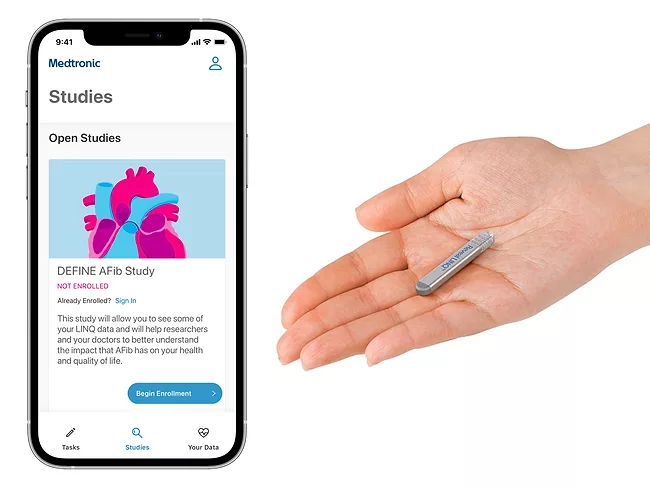
Medtronic plc got a thumbs up from the FDA for two Accurhythm algorithms to detect atrial fibrillation and asystole in patients who have heart rhythm abnormalities. The new artificial intelligence (AI)-based algorithms are designed for use on the company’s Linq II insertable cardiac monitor (ICM). Dublin-based Medtronic said the Accurhythm AI algorithms will be available on its Carelink Network later this year for use with all implanted Linq II devices in the U.S.
Medtronic plc kicked off an app-based research study to improve understanding of atrial fibrillation (AF) disease burden and its impact on patient outcomes, quality of life and health care utilization. The first patients in the DEFINE AFib study were enrolled at Duke University Medical Center and the Florida Electrophysiology Associates in Atlantis, Fla. “When it comes to managing atrial fibrillation, there is not a ‘one-size-fits-all’ approach, and the hope is that DEFINE AFib may give us the tools to help personalize AF management based on a patient’s individual health profile and physiology,” said Jonathan Paul Piccini, director of cardiac electrophysiology and associate professor of medicine at Duke University School of Medicine and chair of the DEFINE AFib Steering Committee. “DEFINE AF will harness the power of digital health to make fundamental discoveries about how we can manage atrial fibrillation better in each and every one of our patients.”
Boston Scientific Corp. has exercised an option as part of a 2020 agreement to acquire Farapulse Inc. in full, folding the startup’s pulsed electric field ablation technology for the treatment of atrial fibrillation and other cardiac arrhythmias into its own electrophysiology portfolio. With a 27% stake in Farapulse already, it will pay about $295 million for the remainder.
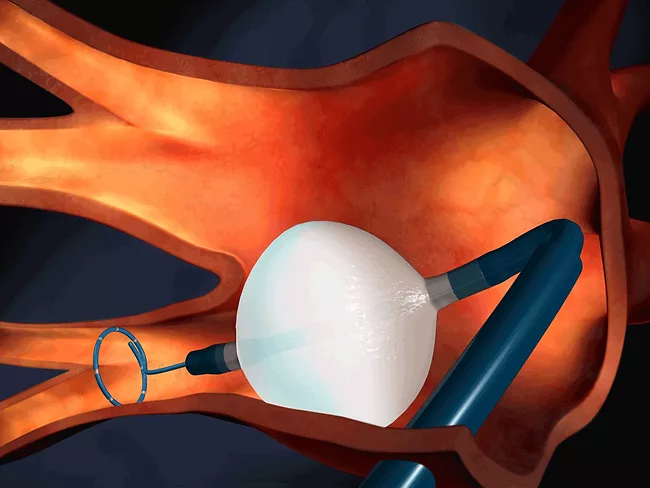
Medtronic plc won expanded FDA 510(k) approval for its Arctic Front family of cardiac cryoablation catheters for alternative treatment of recurrent symptomatic paroxysmal atrial fibrillation (AF) as an alternative to the current standard first-line treatment, antiarrhythmic drug (AAD) therapy. The Arctic Front family of catheters are the first catheter ablation devices in the U.S. approved to help physicians improve AF patient outcomes before drug failure. They have also been proven to shorten the time to diagnosis, according to Dublin-based Medtronic.
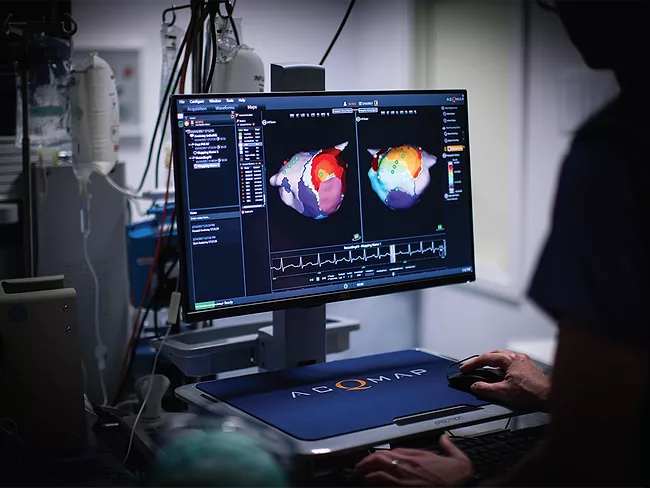
Acutus Medical Inc. scored big with regulators in recent weeks. The company, which focuses on devices to diagnose and treat cardiac arrhythmias, received FDA approval to launch an investigational device exemption clinical trial for its Acqblate Force sensing ablation catheter and system in atrial fibrillation just two weeks after gaining CE mark approval for a broad suite of electrophysiology products.
Percutaneously implanted devices designed to seal off the left atrial appendage (LAA) have been around for some time, but a recent study of surgical closure of the appendage might have a beneficial effect on sales of these devices despite that the study did not deal directly with these devices. The results were compelling enough to provoke a halt to the study before all patients had reached the projected term of follow-up, and at least one observer said it may be time to study whether more routine use of devices for percutaneous LAA closure is indicated.
Acutus Medical Inc. appears to have solved one of the more vexing problems in cardiology, the sheer persistence of persistent atrial fibrillation despite treatment. In a study recently published in Heart Rhythm, the Carlsbad, Calif.-based company demonstrated that 73% of patients undergoing ablation using the new pulmonary vein isolation plus core-to-boundary guided approach experienced acute termination of AF after one procedure, compared to 10% of patients undergoing ablation with the traditional posterior wall isolation approach.
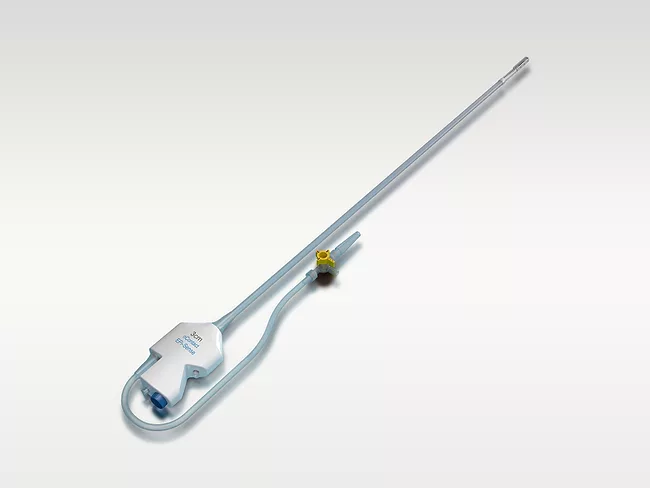
Atricure Inc. has received the green light from the FDA for its Epi-Sense guided coagulation system with Visitrax technology to treat patients diagnosed with long-standing, persistent atrial fibrillation (AF). The device was previously cleared via a 510(k) for the coagulation of cardiac tissue, and is already available in the U.S. The FDA approval represents the first and only minimally invasive ablation therapy for the more than 3 million Americans with longstanding AF.