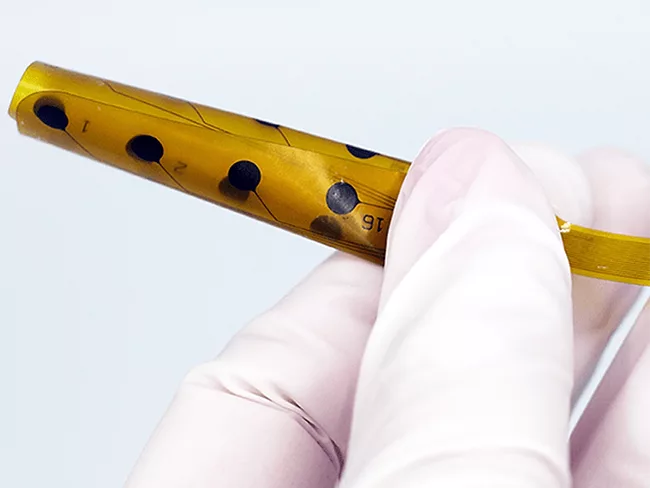
Neuroone Medical Technology Corp.’s thin film, high definition cortical electrode technology, Evo, can record, monitor, ablate, and stimulate brain tissue for up to 30 days, potentially transforming neurosurgical procedures used to treat epilepsy, Parkinson’s disease, chronic pain, and other conditions.
HONG KONG – Tokyo-headquartered Eisai Co. Ltd. is targeting new markets for its orexin receptor antagonist, Dayvigo, to treat insomnia. The company launched the drug in Japan on July 6, alongside a new fine granule formulation for its antiepileptic drug, Fycompa.
HONG KONG – SK Biopharmaceuticals Co Ltd.’s shares are still basking in the afterglow of a successful entrance on the Korea Exchange, which raised ?959.30 billion (US$799 million).
HONG KONG – SK Biopharmaceuticals Co Ltd.’s shares are still basking in the afterglow of a successful entrance on the Korea Exchange, which raised ?959.30 billion (US$799 million).
Redpin Therapeutics Inc., of New York, plans to take its newly secured $15.5 million series A financing to continue developing its ion-channel based chemogenetics platform for addressing neural circuit dysfunctions such as epilepsy, neuropathic pain and Parkinson’s disease.
Stoke Therapeutics Inc. is marching ahead in the second half of this year with its phase I/IIa study with STK-001 in Dravet syndrome (DS), one of the more abysmal forms of epilepsy, although the FDA has temporarily hobbled part B of the test, pending preclinical data that will more fully characterize the safety profile of the antisense oligonucleotide (ASO).
Lowering levels of tau protein improved multiple symptoms of autism spectrum disorders (ASD) in two different mouse models of the disease, both of which are driven by hyperactivity of the mTOR PI3 kinase pathway.
Lowering levels of tau protein improved multiple symptoms of autism spectrum disorders (ASD) in two different mouse models of the disease, both of which are driven by hyperactivity of the mTOR PI3 kinase pathway.
San Diego-based Cortechs Labs Inc. has developed an automated PET image analysis tool that identifies changes in specific brain structures associated with Alzheimer’s disease, vascular dementia, epilepsy, multiple sclerosis and other neurological disorders.