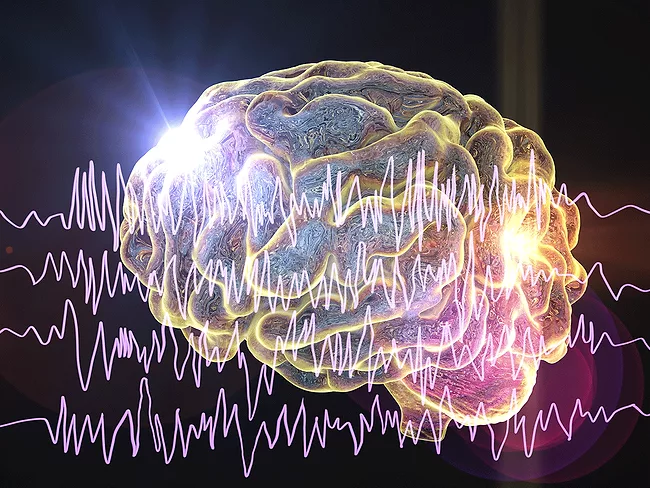
By pairing the expression of an inhibitory ion channel with an activity-dependent promoter, researchers have developed the first on-demand gene therapy that specifically silenced hyperactive cells and prevented epileptic seizures.
By pairing the expression of an inhibitory ion channel with an activity-dependent promoter, researchers have developed the first on-demand gene therapy that specifically silenced hyperactive cells and prevented epileptic seizures. The channels are expressed when the promoter is turned on by excessive neuronal activity, and so “we can’t stop the first seizures,” Dimitri Kullmann told BioWorld.
By pairing the expression of an inhibitory ion channel with an activity-dependent promoter, researchers have developed the first on-demand gene therapy that specifically silenced hyperactive cells and prevented epileptic seizures.
“Epilepsy is really a classical neurological disorder,” Lars Pinborg told the audience at the European College of Neuropsychopharmacology (ECNP) annual conference on Sunday. “Or is it?” Pinborg, of Rigshospitalet's The Neuroscience Center in Denmark, was chairing a session dedicated to an alternative hypothesis, summed up in the session title: “Is epilepsy a psychiatric disorder?”
Avicanna Inc. has expanded its research in the field of epilepsy through a new collaboration with the University of Toronto to explore the efficacy of Avicanna's proprietary formulations in preclinical models of epilepsy.
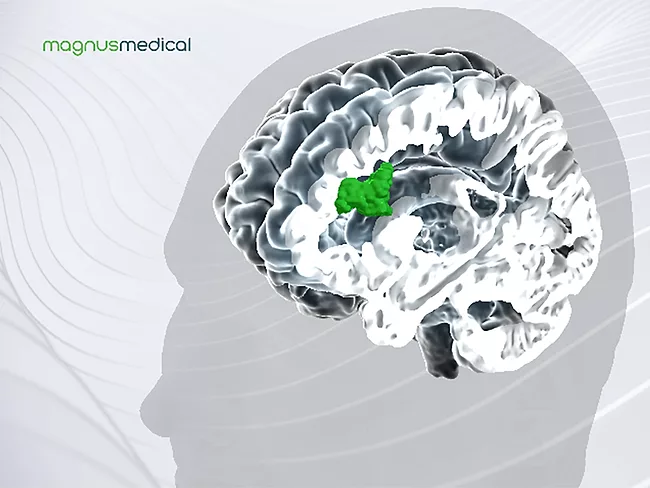
Magnus Medical Inc. received FDA clearance for a neuromodulation platform to treat major depressive disorder (MDD) in adults for whom antidepressant medication has been ineffective.
International research project Multicentre Epilepsy Lesion Detection (MELD), led by University College London, has developed artificial intelligence software that can identify minute brain anomalies that lead to epilepsy seizures. These anomalies, known as focal cortical dysplasia, can often be treated with surgery but are difficult to visualize on an MRI.
The U.K.’s competition watchdog has found that a subsidiary of Pfizer Inc. and a generics firm jacked up the price of a life-saving epilepsy drug by up to 2,600%, fining them a total of £70 million (US$83.72 million). The Competition and Markets Authority’s decision is part of a long-running dispute against subsidiary Pfizer Ltd. and the generics firm Flynn Pharma Ltd.