Redpin Therapeutics Inc., of New York, plans to take its newly secured $15.5 million series A financing to continue developing its ion-channel based chemogenetics platform for addressing neural circuit dysfunctions such as epilepsy, neuropathic pain and Parkinson’s disease.
Stoke Therapeutics Inc. is marching ahead in the second half of this year with its phase I/IIa study with STK-001 in Dravet syndrome (DS), one of the more abysmal forms of epilepsy, although the FDA has temporarily hobbled part B of the test, pending preclinical data that will more fully characterize the safety profile of the antisense oligonucleotide (ASO).
Lowering levels of tau protein improved multiple symptoms of autism spectrum disorders (ASD) in two different mouse models of the disease, both of which are driven by hyperactivity of the mTOR PI3 kinase pathway.
Lowering levels of tau protein improved multiple symptoms of autism spectrum disorders (ASD) in two different mouse models of the disease, both of which are driven by hyperactivity of the mTOR PI3 kinase pathway.
San Diego-based Cortechs Labs Inc. has developed an automated PET image analysis tool that identifies changes in specific brain structures associated with Alzheimer’s disease, vascular dementia, epilepsy, multiple sclerosis and other neurological disorders.
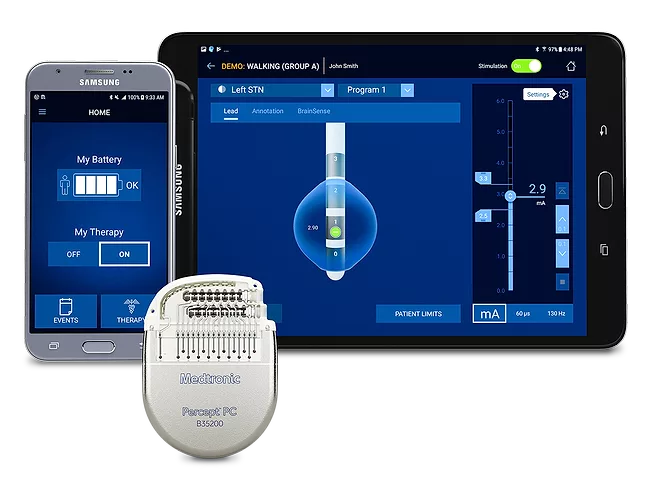
Dublin-based Medtronic plc received a CE mark for its Percept PC neurostimulator to treat neurologic disorders such as Parkinson’s disease. It is the first deep brain stimulation system launched in the EU that integrates the company’s technology to sense and record brain signals, known as Brainsense. It’s intended to enable more personalized treatment driven by that data.
In its second large deal of the calendar year, Neurocrine Biosciences Inc. acquired the rights to Xenon Pharmaceutical Inc.’s selective sodium channel inhibitor for treating epileptic encephalopathy. Xenon receives $30 million up front, $20 million in equity and up to $1.7 billion in potential development, regulatory and commercial milestone payments.
On its PDUFA date Thursday, the FDA cleared Xcopri (cenobamate) tablets from South Korea’s SK Biopharmaceuticals Co. Ltd. to treat partial-onset seizures in adults. The drug’s mechanism of action is not fully understood, but it's believed to work through two separate mechanisms: enhancing inhibitory currents through positive modulation of GABA-A receptors and decreasing excitatory currents by inhibiting the persistent sodium current.
On its PDUFA date Thursday, the FDA cleared Xcopri (cenobamate) tablets from South Korea’s SK Biopharmaceuticals Co. Ltd. to treat partial-onset seizures in adults. The drug’s mechanism of action is not fully understood, but it's believed to work through two separate mechanisms: enhancing inhibitory currents through positive modulation of GABA-A receptors and decreasing excitatory currents by inhibiting the persistent sodium current.
LONDON – The Swiss headquarter operations of Arvelle Therapeutics GmbH are taking shape as the company awaits the outcome later this month of the FDA's deliberations on its in-licensed asset, cenobamate, and prepares to apply for EMA approval for the novel epilepsy treatment in the first half of 2020.