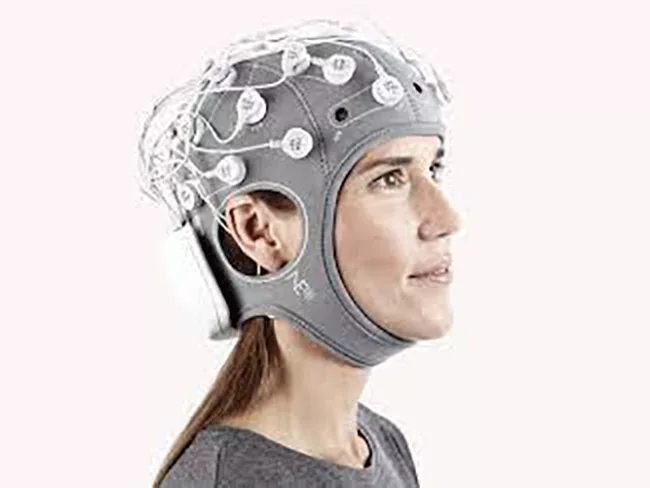
Neuroelectrics Inc. garnered $17.5 million in a series A fundraising round led by the Morningside Group of Hong Kong. The Cambridge, Mass. and Barcelona-based brain stimulation company plans to use the funds primarily to advance its pivotal trial of the Starstim system in refractory focal epilepsy and its at-home feasibility study in refractory major depressive disorder and related infrastructure, Neuroelectrics co-founder and CEO Ana Maiques told BioWorld. Supportive infrastructures for the trials include brain modeling, the platform for remote montage delivery, and clinical and regulatory resources.
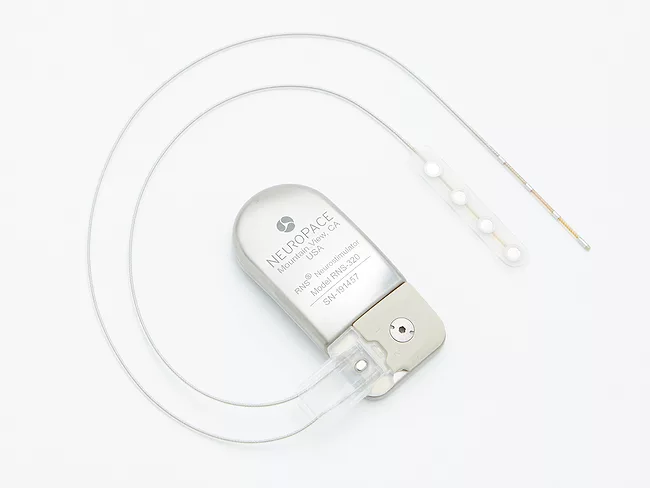
The FDA granted breakthrough device designation status to Neuropace Inc.'s responsive neurostimulation (RNS) system for idiopathic generalized epilepsy, a subtype that represents about one-third of all epilepsies. The news closely follows the company’s March 24, 2021, SEC filing to raise $75 million in an initial public offering on the Nasdaq.
Brain Scientific Inc., a neurology-focused device and software company, is seeking to combine a miniaturized electroencephalogram (EEG) with subcutaneous graphene electrodes to produce a minimally invasive brain monitoring device that could provide continuous data on patients with neurological conditions. The device, which the New York-based company is calling the Brain E-Tattoo, would monitor brain wave activity outside the clinical setting, allowing for long-term continuous data collection without interrupting daily life.
Bioserenity SAS has gained U.S. FDA clearance for the Neuronaute electroencephalography (EEG) system and Icecap EEG wearable device, which aim to help physicians remotely monitor and assess electrical brain activity of people with epilepsy. The company noted that the Icecap and Neuronaute system will facilitate access to care in a variety of settings, including rural and remote environments.
LONDON – Family-owned Angelini Pharma is to buy Swiss startup Arvelle Therapeutics GmbH for $960 million, acquiring full European rights to the epilepsy drug cenobamate. The first tranche, of $610 million, will be paid following the EMA’s recommendation to approve cenobamate, which is expected at either the January or February meeting of the Committee for Medicinal Products for Human Use.
HONG KONG – Pangyo, South Korea-based SK Biopharmaceuticals Co. Ltd. has agreed to collaborate with New York-based Lifesci Venture Partners to invest in private health care companies developing novel therapies and innovative technologies.
HONG KONG – Pangyo, South Korea-based SK Biopharmaceuticals Co. Ltd. has agreed to collaborate with New York-based Lifesci Venture Partners to invest in private health care companies developing novel therapies and innovative technologies.
PERTH, Australia – Epi-Minder Pty. Ltd. has completed an oversubscribed series A round of AU$18 million (US$12.89 million) that will see its Minder epilepsy monitoring device enter a pivotal trial to support marketing applications in Europe and the U.S. The smartphone-enabled device promises to improve on wearables and other tools – such as patient diaries – that have proven to be unreliable.
HONG KONG – Israel’s Ben-Gurion University of the Negev (BGU) has set up a company to further develop and commercialize its technology into a wearable device for predicting epilepsy-related seizures.
Neuropace Inc. has scooped up $67 million in a financing round that was led by Accelmed Partners. The funds will be used to accelerate commercial growth of its brain-responsive neurostimulator (RNS), as well as to advance new indications for the U.S. FDA-cleared system.