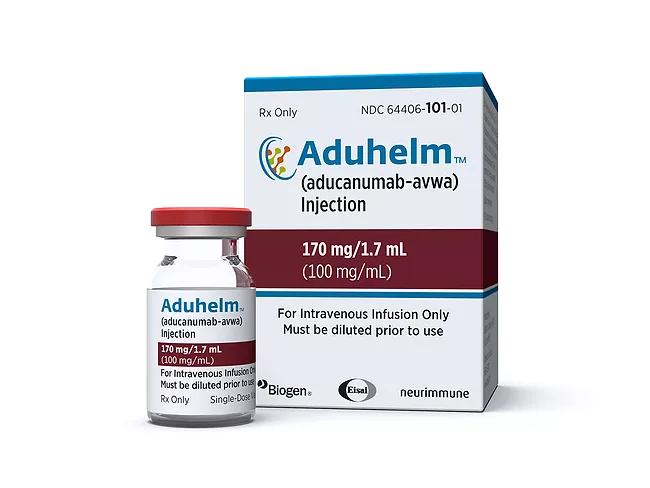
Biogen Inc.’s pricing of its newly approved Alzheimer’s drug, Aduhelm (aducanumab), has made it the latest bull’s eye for lawmakers and advocacy groups targeting U.S. drug prices, especially given the controversy surrounding the drug’s approval, which has resulted in the resignation of three of the 11 members of the FDA’s Peripheral and Central Nervous System Drugs Advisory Committee.
Of all the controversies surrounding the FDA, the agency’s reliance on user fees and its use of accelerated review of therapies might be the most consistent sources of public angst. Coleen Klasmeier, a partner of Sidley Austin LLP, told BioWorld that while she is not particularly concerned about regulatory capture stemming from FDA reliance on user fees, it may be appropriate to ask whether the drug premarket review process leaves FDA staff with more confidence in a new drug application than the data would seem to suggest.
Developers of blood tests for the early diagnosis of Alzheimer’s disease (AD) are poised to see a spike in demand, following the FDA’s accelerated approval on Tuesday of Cambridge, Mass.-based Biogen Inc.’s AD drug treatment Aduhelm (aducanumab). The FDA’s decision paves the way for AD assays to move beyond aiding in drug development toward addressing ongoing issues with undiagnosed cases.
During a conference call with investors, Biogen Inc. officials defended the price of Aduhelm (aducanumab) for Alzheimer’s disease (AD), with CEO Michel Vounatsos saying the $56,000 per year price tag was based on “the value it is expected to bring to patients, caregivers, and society.”
By granting accelerated approval for Biogen Inc.’s Aduhelm (aducanumab) for Alzheimer’s disease (AD), the FDA is “essentially confirming that the beta-amyloid hypothesis has been validated,” Mizuho analyst Salim Syed said in an alert to investors. Shares of Cambridge, Mass.-based Biogen (NASDAQ:BIIB) closed $395.85, up $109.71, or 38.3%, as Wall Street hailed the first new AD therapy to reach the market since 2003.
Public biopharmaceutical companies did manage to attract some investors off the sidelines in May with medical conference season getting into full gear. However, it was generally another lackluster month, with the Nasdaq Biotech index dropping 2% in the period in contrast to the broader markets with the Dow Jones Industrial Average growing by 2%. The sector, however, could get a significant boost in the next few days if the FDA gives the green light to Biogen Inc. and Eisai Co. Ltd.’s experimental Alzheimer’s disease therapy, aducanumab, a recombinant chimeric human IgG1 monoclonal antibody targeting beta-amyloid, that could be the first disease-modifying therapy for an indication that has seen no novel therapies approved in more than 15 years.
Little more than two years ago, Biogen Inc. plunked down about $800 million for gene therapy developer Nightstar Therapeutics plc, which had an X-linked retinitis pigmentosa drug in its pipeline. Top-line results from the phase II/III Xirius study of cotoretigene toliparvovec (BIIB-112), administered by subretinal injection, show the one-time therapy missed its primary endpoint of producing a statistically significant improvement in the proportion of treated study eyes.
Little more than a year ago, when COVID-19 lockdowns began, turned out to be a prime time for finding the right funding and partners. That’s when privately held Capsigen Inc. was on a search that ended with a Biogen Inc. deal that could add up to $1.3 billion.
While it remains to be seen whether the FDA will break with its advisory panel and approve Biogen Inc.’s high-profile Alzheimer’s candidate by the June 7 PDUFA date, the clinical data for beta-amyloid-targeting aducanumab didn’t exactly impress experts at the Institute for Clinical and Economic Review, who suggested an annual price tag of $2,560 to $8,290.
The rocky first quarter for public biopharmaceutical companies continued into April as the BioWorld Biopharmaceutical index remained flat for the period in contrast to the general market, with the Dow Jones Industrial Average growing by more than 2%. Weighing on the sector has been softer than expected earnings in the period among the top tier companies.