The lead asset of Applied Genetic Technologies Corp. has been spun into Beacon Therapeutics Ltd., which launches with $120.9 million to run a phase II/III pivotal trial of AGTC-501 in X-linked retinitis pigmentosa, and to take forward two other in-licensed preclinical programs in age-related macular degeneration and cone rod dystrophy.
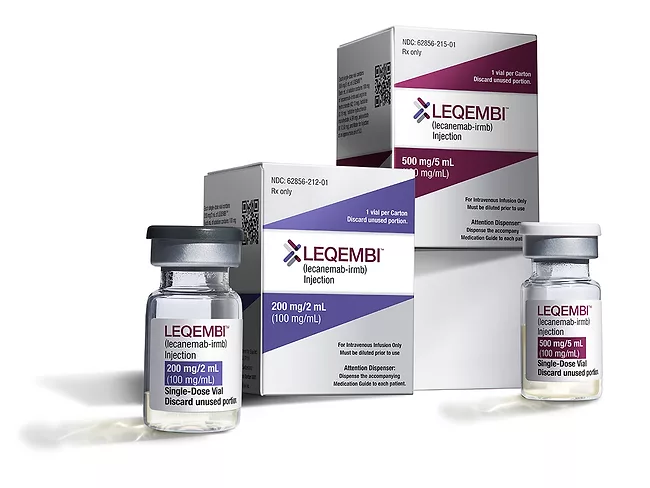
Eisai Co. Ltd. and Biogen Inc.’s Leqembi (lecanemab) gained the support of the U.S. FDA’s Peripheral and Central Nervous System Drugs Advisory Committee (adcom) in a 6-0 vote on June 9, as panel members unanimously agreed that the results of the phase III Clarity trial verified the clinical benefit in the treatment of Alzheimer’s disease. The FDA does not have to follow the adcom’s recommendation, but it often does. The PDUFA date for the supplemental NDA is July 6.
Six months after getting accelerated approval from the U.S. FDA without any input from an advisory committee, Eisai Co. Inc. and Biogen Inc.’s Alzheimer’s disease (AD) therapy, Leqembi (lecanemab) will make an appearance June 9 before the Peripheral and Central Nervous System Drugs Advisory Committee (PCNSDAC), set to discuss the supplemental BLA seeking to convert use of the amyloid beta-targeting antibody to traditional approval.
Lack of efficacy brought the development of two investigational agents for amyotrophic lateral sclerosis (ASL) to a halt over the past week. On May 23, Wave Life Sciences Inc. disclosed that its stereopure antisense oligonucleotide WVE-004 failed to demonstrate clinical benefit after 24 weeks of treatment on a phase Ib/IIa trial in familial ALS patients or frontotemporal dementia patients. And on May 25, Apellis Pharmaceuticals Inc. and its partner, Swedish Orphan Biovitrum International AB, said that pegcetacoplan failed to meet its primary endpoint of a one-year phase II trial in patients with sporadic disease.
As the clock ticks toward the “full,” or traditional, approval date for Biogen Inc./Eisai Co. Inc.’s Alzheimer’s drug, Leqembi (lecanemab), the U.S. Centers for Medicare & Medicaid Services (CMS) is facing increasing pressure to get the structures in place to ensure Medicare beneficiaries have access to the drug when the approval comes.
Despite congressional concerns about accelerated approval, the U.S. FDA’s use of the pathway is not slowing down. If anything, it’s picked up pace since Congress gave the agency stronger authority last year to monitor drugs approved based on a surrogate endpoint and to ensure that confirmatory trials are progressing in a timely way.
In January, a Wall Street analyst predicted the U.S. FDA’s rejection of Eli Lilly and Co.’s application seeking accelerated approval of amyloid beta-targeting Alzheimer’s candidate, donanemab, would be a “mere footnote” in the drug’s development, a forecast confirmed in the wake of positive top-line phase III data showing donanemab significantly slowed cognitive and functional decline in people with early symptomatic disease.
U.S. Centers for Medicare & Medicaid Services (CMS) Administrator Chiquita Brooks-LaSure made her first appearance April 26 before the House Energy and Commerce’s Subcommittee on Health, ostensibly to discuss legislative solutions to increase transparency and competition in health care. But member after member, regardless of political party, demanded answers about why CMS continues to severely restrict access to Eisai Co. Ltd.’s Alzheimer’s drug, Leqembi (lecanemab), especially since another government agency is covering it for all veterans that meet the labeling requirements.
Despite the approval of Biogen Inc.’s Qalsody (tofersen) for treating amyotrophic lateral sclerosis (ALS), there are still hurdles for the drug to clear, including a confirmatory study and setting a price. Because the U.S. FDA granted Qalsody accelerated, not full approval, there are plenty more data to collect in the ongoing confirmatory phase III Atlas study of those who develop ALS symptoms during the trial compared to placebo. The randomized, double-blind, placebo-controlled study is being conducted with those carrying the superoxide dismutase 1 gene genetic mutation but are symptom free.
A twisted, uncertain path has led to a U.S. FDA approval for Biogen Inc.’s Qalsody (tofersen), the first drug targeting a genetic cause of amyotrophic lateral sclerosis (ALS). Qalsody is for ALS associated with a mutation in the superoxide dismutase 1 (SOD1) gene. Patients with SOD-1 mutations account for 2% of ALS cases.