The use of DNA scaffolds could mark a turning point in HIV vaccine design. Scientists at Scripps Research and the Massachusetts Institute of Technology (MIT) have created a new vaccine platform based on DNA origami, a material that the immune system does not recognize as a threat, avoiding unwanted responses.
Two independent studies applied CRISPR-based genetic editing – one to treat leukemia and the other to target myeloma – to overcome the challenges faced by CAR T cells, such as exhaustion, impaired activation and fratricide, a phenomenon in which they attack each other.
Researchers at the Massachusetts Institute of Technology have developed a generative AI model that was able to generate novel antibiotic structures from either chemical fragments or de novo, starting from ammonia, methane, water or no starting point at all. In a study that was published online in Cell, the team tested two dozen of more than 10 million structures that were proposed as potential antibiotics by the model.
Researchers at the Massachusetts Institute of Technology have developed a generative AI model that was able to generate novel antibiotic structures from either chemical fragments or de novo, starting from ammonia, methane, water or no starting point at all. In a study that was published online in Cell, the team tested two dozen of more than 10 million structures that were proposed as potential antibiotics by the model.
Researchers at the Massachusetts Institute of Technology have developed a generative AI model that was able to generate novel antibiotic structures from either chemical fragments or de novo, starting from ammonia, methane, water or no starting point at all. In a study that was published online in Cell, the team tested two dozen of more than 10 million structures that were proposed as potential antibiotics by the model.
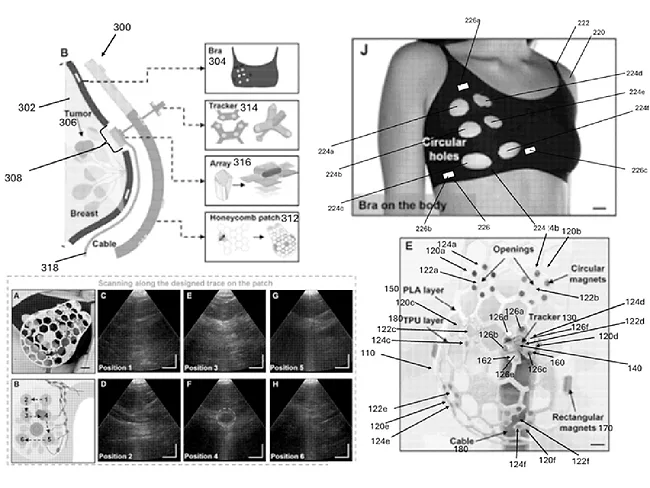
The latest patenting from Canan Dagdeviren seeks protection for their wearable, conformable ultrasound breast patch that enables standardized and reproducible image acquisition over the entire breast with less reliance on operator training and applied transducer compression.
Artificial intelligence (AI) is enabling a foundational understanding of drug discovery that is changing the typical pathway used in modern development. The powerful new computer technology will lead developers from conducting hypothesis-driven research to more and deeper data-driven research, Manolis Kellis, professor at the Computer Science and Artificial Intelligence Laboratory at the Massachusetts Institute of Technology (MIT) and an associate member at the Broad Institute of MIT and Harvard University, told those attending the BioFuture 2024 conference in New York on Oct. 28.
In response to the continuing opioid epidemic, researchers at the Massachusetts Institute of Technology and Brigham and Women’s Hospital developed a small implantable device that monitors heart rate, respiration and other vital signs indicative of an overdose, then automatically releases a dose of naloxone.
In response to the continuing opioid epidemic, researchers at the Massachusetts Institute of Technology and Brigham and Women’s Hospital developed a small implantable device that monitors heart rate, respiration and other vital signs indicative of an overdose, then automatically releases a dose of naloxone.
Alzheimer’s disease (AD) is a neurodegenerative condition in which amyloid plaques and neurofibrillary tangles accumulate in the brain. In addition to genetic factors, DNA damage and epigenetic alterations also play a key role in the pathogenesis and progression of this disease, altering gene expression, the functioning and maintenance of brain cells. DNA double-strand breaks (DSBs) and chromatin accessibility are two hallmarks of AD whose study could reveal new ways of approaching this disease.