In Pumpkinseed Technologies Inc.’s first public patenting, the company’s co-founders describe their development of new proteomics platform that merges nanotechnology, biochemistry, silicon photonics and machine learning for high-resolution phenotyping to deliver new biological insights.
Artificial intelligence might solve a world of cost issues for medical science, but the results of a recent study suggest that the day has not yet come when hospitals and doctor’s offices can just feed data into a computer and expect a reliable and intelligible diagnosis.
Regulation of artificial intelligence for medical devices is still a developing space, but market competition authorities in the European Union, the U.K. and the U.S. are already examining the potential for anticompetitive behavior in this rapidly growing technological arena.
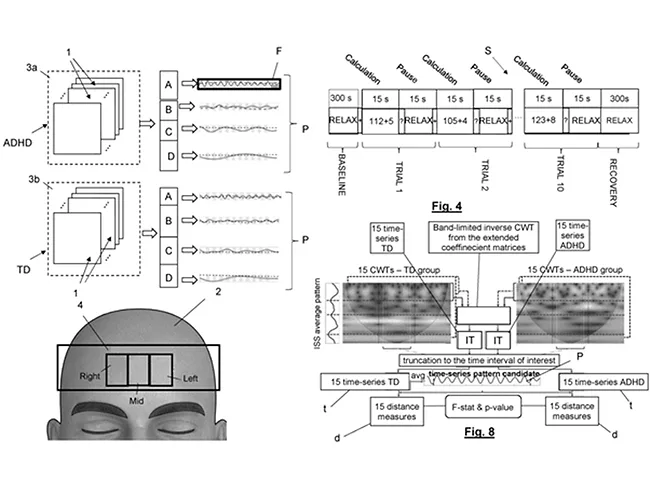
In just the second PCT filing published in the name of Newmanbrain SL, co-founders Carlos Belmonte and Joaquin Ibañez seek specific protection for the use of Newmanbrain’s functional near infrared spectroscopy system, Theia, in the diagnosis of attention deficit/hyperactivity disorder.
After reaching a height in 2021, seed and series A rounds have fallen in recent years, and 2024 is no exception, although amounts raised are tracking slightly ahead of last year. On July 23, the numbers were given a boost when two new companies – namely Dover, Del.-based Brenig Therapeutics Inc. and Boston-based Third Arc Bio Inc. – raised $65 million and $165 million, respectively, in series A financings. A third new company, Abiologics Inc., also received $50 million in initial funding.
Spotlight Medical SAS recently raised €6.2 million (US$6.7 million) in seed funding to bring its first artificial intelligence-powered cancer test to the market as it looks to transform treatment of the disease. “We believe our personalized testing approach will revolutionize cancer treatment, providing everyone with the best possible chance to beat cancer,” Sylvain Berlemont, CEO of Spotlight told BioWorld.
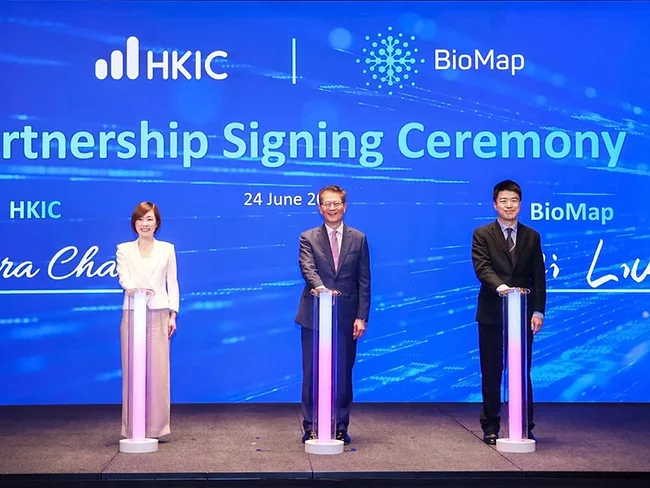
Silicon Valley-based Biomap is setting up a new global biocomputing innovation hub, dubbed Biomap Innohub, in Hong Kong as the local government ramps up investment to build supercomputing prowess, Vicky Qu, senior vice president of Biomap, told BioWorld. The goal is to accelerate novel drug product development and commercialization with biocomputing.
Airs Medical Inc., of Seoul, South Korea, raised $20 million in a series C financing round to expand its artificial intelligence-based health care technology, including for better and faster magnetic resonance imaging scans for radiologists and patients.
Silicon Valley-based Biomap is setting up a new global biocomputing innovation hub, dubbed Biomap Innohub, in Hong Kong as the local government ramps up investment to build supercomputing prowess, Vicky Qu, senior vice president of Biomap, told BioWorld. The goal is to accelerate novel drug product development and commercialization with biocomputing.
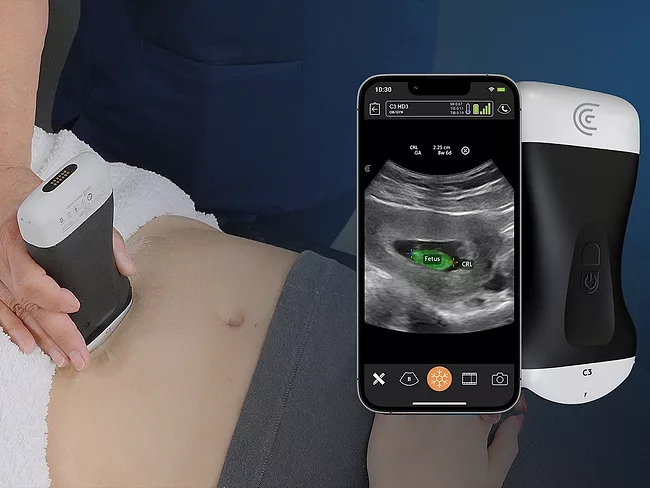
Clarius Mobile Health Corp. received U.S. FDA clearance for the Clarius OB artificial intelligence biometric measurement tool, which is designed to improve access to accurate prenatal monitoring in low-resource regions. The system automatically estimates fetal age, weight and growth intervals critical to assessing fetal health and early identification of potential issues and multiple pregnancies.