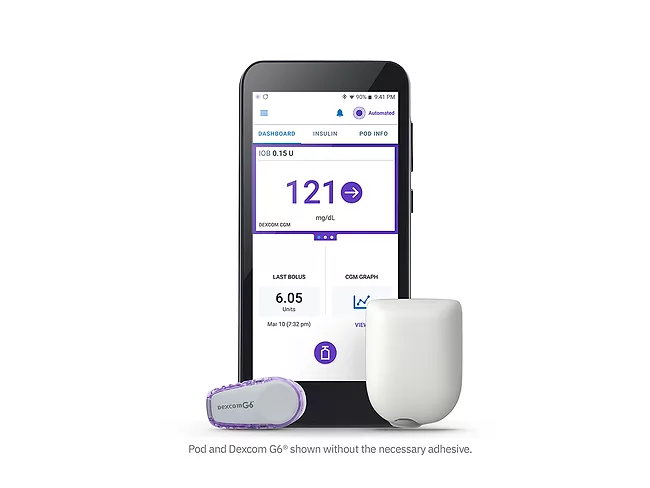
Insulet Corp. received FDA clearance for its Omnipod 5 closed-loop automated insulin delivery (AID) system for patients aged six and older who have type 1 diabetes on Friday, Jan. 28, making it the first tubeless “artificial pancreas” system to get the FDA greenlight. The Omnipod 5 works with Dexcom Inc.’s widely used G6 continuous glucose monitor (CGM) to self-adjust insulin dosing using its Smartadjust algorithm.
Vicentra BV has closed a $74 million series C financing round to accelerate the European rollout of its wearable insulin patch. The small, lightweight system Kaleido is the company’s flagship product and consists of two pumps controlled by a Bluetooth wireless connected handset. The small size rests on a pumping action that – unlike a conventional syringe mechanism – uses micro-pulse technology to deliver accurate and consistent doses of insulin.
LONDON – Quell Therapeutics Ltd. has raised $156 million in an oversubscribed series B, enabling it to start a phase I/II trial of its engineered T regulatory (Treg) cell therapy for promoting long-term immune tolerance in liver transplant patients, averting the need for chronic immunosuppression.
Gentibio Inc. has raised $157 million to develop its engineered regulatory T cells (Tregs), setting itself a target to cure type 1 diabetes and treat other diseases caused by the immune system. Boston-based Gentibio launched in August last year with $20 million seed funding from Orbimed, Novartis Venture Fund and RA Capital. Those investors stayed on into the next round, which was led by Matrix Capital Management with participation by Avidity Partners and JDRF T1D Fund.
There’s a lot of competition in the regulatory T cells (Tregs) space and that’s a sign that something good is happening. Sonoma Biotherapeutics Inc. CEO Jeff Bluestone likened it to a typical drive leading to an everyday observation.
LONDON – Topas Therapeutics GmbH announced the close of a series B round at €40 million (US$47.5 million), to take forward its two lead immune tolerizing programs. The first, TPM-203, is in clinical development for the treatment of the rare, severe autoimmune skin disorder pemphigus vulgaris, while the second, TPM-502, is due to enter the clinic in celiac disease before the end of the year.
Despite an FDA advisory committee’s narrow ruling that Provention Bio Inc.’s teplizumab has benefits that outweigh the risks in treating diabetes, the agency sent the company a complete response letter (CRL) regarding the diabetes therapy’s priority BLA. The CRL came the evening of July 2, Provention said, the PDUFA date that had been set months before.
The FDA’s Endocrinologic and Metabolic Drugs Advisory Committee (EMDAC) voted 10-7 May 27 that the benefits of Provention Bio Inc.’s teplizumab outweighed its risks, but the vote was not a ringing endorsement of the anti-CD3 monoclonal antibody biologic that could be the first disease-modifying treatment for people at risk of developing type 1 diabetes (T1D).
Provention Bio Inc.’s diabetes candidate, teplizumab, is heading into a May 27 advisory committee meeting with a skinnier label than originally planned, which could signal a smoother path to approval. The positive briefing document the FDA put out Tuesday also suggested an approval path for what could be the first disease-modifying treatment available for type 1 diabetes (T1D).