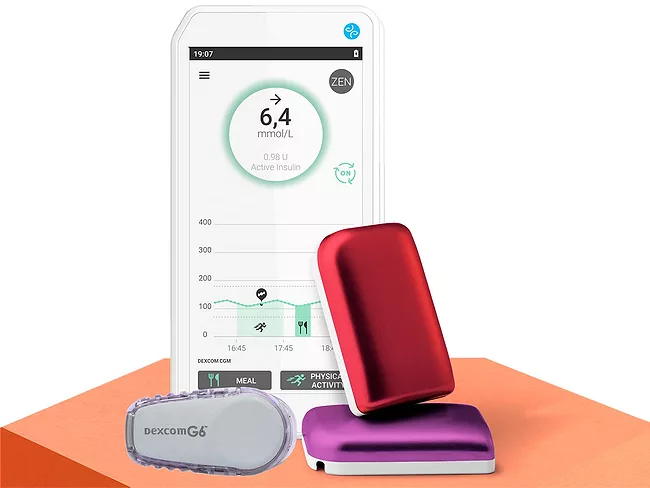
With hybrid closed-loop systems for automated insulin delivery increasingly being seen as life changing for people with diabetes, Vicentra BV has teamed up with Diabeloop SA and Dexcom Inc. to launch a system to help people with type 1 diabetes manage their condition.
The Swedish Medical Products Agency has authorized Uppsala University's clinical trial application to initiate an investigator-sponsored, first-in-human study of UP-421, an allogeneic, primary islet cell therapy engineered with Sana Biotechnology Inc.'s hypoimmune technology, in patients with type 1 diabetes.
The U.K. National Institute for Health and Care Excellence (NICE) has seen the nation’s spending numbers for diabetes, which is said to account for roughly 10% of healthcare spending in the U.K., and responded in a collaboration with the National Health Service (NHS).
Itolerance Inc. and Kadimastem Ltd. have submitted a meeting request to the FDA's INTERACT committee for ITOL-102, which is under development as a potential cure for type 1 diabetes without the need for chronic immunosuppression.
Sab Biotherapeutics Inc. has obtained human research ethics committee (HREC) approval in Australia to commence a first-in-human phase I trial investigating SAB-142 for type 1 diabetes.
Sab Biotherapeutics Inc. has announced a private placement of up to $130 to fund the company’s lead research program, SAB-142, a potential disease-modifying treatment for type 1 diabetes. SAB-142 is expected to advance into clinical trials in the fourth quarter of this year.
Abata Therapeutics Inc. has announced its second development candidate, ABA-201, which has the potential to be a disease-modifying Treg cell therapy for patients with type 1 diabetes who have remaining β cell function. Abata expects to begin clinical studies in 2025.
Tandem Diabetes Care Inc. obtained reimbursement in France for its Control-IQ technology, an advanced hybrid closed loop system for patients with type 1 diabetes that uses an algorithm to automatically adjust insulin in response to predicted glucose levels.
Diabetes has been associated with increased bone fracture risks, however, the cellular and molecular mechanisms underlying diabetic bone fragility are not clear. In the current study, researchers from the Children's Hospital of Philadelphia presented data from a study that aimed to investigate these mechanisms in murine monogenic model of type 1 diabetes (T1D).
Two years after a U.S. FDA advisory committee agreed that Celltrans Inc.’s pancreatic islet cellular therapy had a favorable risk-benefit profile, the agency has finally approved Lantidra (donislecel) for treating adults with type 1 diabetes.