The U.S. FDA has lifted the full clinical hold it imposed in June on Biomea Fusion Inc.’ s phase I/II studies of BMF-219 in types 1 and 2 diabetes. A safety review of the phase IIb expansion study was encouraging and none of the elevated lab values confirmed serious liver injury or impairment, said Biomea’s CEO, Thomas Butler.
The assessment of glycosylated autoantigens as immunotolerance therapies is emerging as a potential strategy for the treatment of several autoimmune diseases, such as type 1 diabetes, Crohn’s disease or multiple sclerosis.
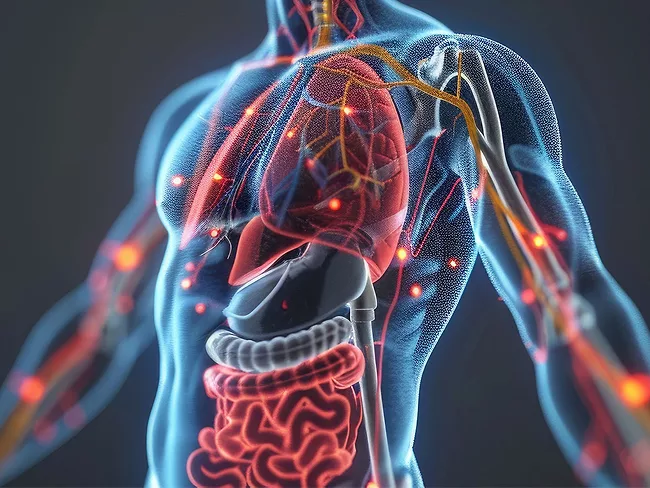
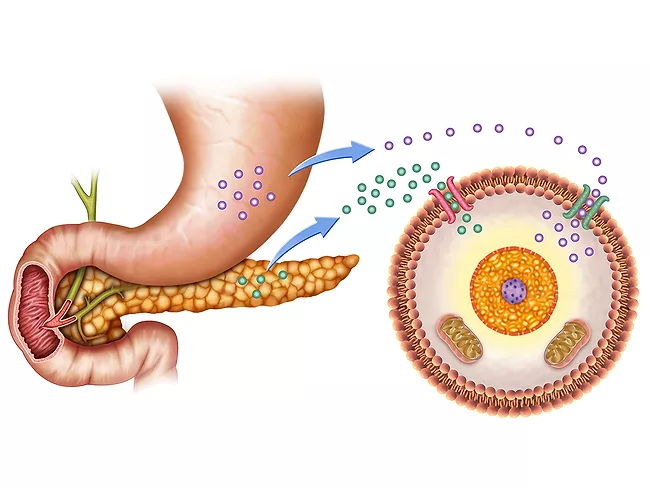
Incretins are not just metabolic hormones that regulate glucose levels after eating. Their functions go beyond stimulating the release of insulin from the pancreas. Glucagon-like peptide-1 (GLP-1) and glucose-dependent insulinotropic polypeptide (GIP), the two main incretins, have receptors and effects in different organs, including the heart, brain, bone and kidneys. Even if they do not directly play those keys, other organs such as the liver and muscle receive signals from the same score and join the orchestra.
Integrated Nanotherapeutics Inc. has received an award from Breakthrough T1D (formerly Juvenile Diabetes Research Foundation Ltd. [JDRF]) to advance the company’s technology to induce immune tolerance in type 1 diabetes.
Tiximed Inc. has received IND clearance for its inhibitor of thioredoxin-interacting protein (TXNIP), TIX-100, in individuals with type 1 diabetes. TIX-100 is a potent and specific inhibitor of TXNIP.
Following an advisory committee’s recommendation in May against approval, the U.S. FDA issued a complete response letter (CRL) to Novo Nordisk A/S for its once-weekly insulin icodec injection for diabetes, which is on the market as Awiqli in several other countries.
Roche Holdings AG received CE mark for its artificial intelligence (AI)-enabled continuous glucose monitoring (CGM) system, Accu-Chek Smartguide. The company said the solution addresses the unmet need around diabetes management and glycemic control as it offers critical predictions to people living with type 1 and type 2 diabetes.
The U.S. FDA clamped a full clinical hold Biomea Fusion Inc.‘s phase I/II study of BMF-219 for treating type 1 diabetes and type 2 diabetes. The hold sank the stock on June 7 as the company looked to find answers so it could sit down with the agency to discuss next steps.