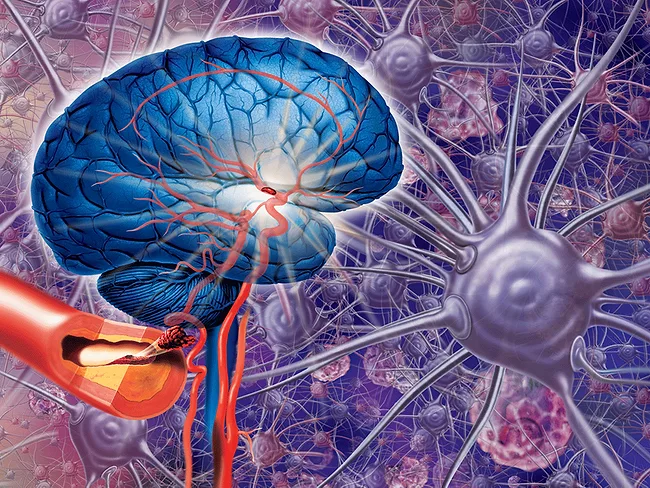
Hypoxic-ischemic brain injury (HIBI) is a condition affecting neonates and is a leading global cause of perinatal neurological morbidity, with limited therapeutic options. Regarding its pathogenesis, the ion channel-kinase transient receptor potential melastatin 7 (TRPM7) is a known contributor to HIBI pathology and was the focus of a recently reported study.
Patients with Parkinson’s disease (PD) frequently suffer from sleep disorders, in addition to the neurodegenerative processes associated with the disease. These disorders affect both rapid eye movement (REM) and non-REM (NREM) sleep, but the underlying mechanisms in PD patients remain largely unknown.
Hidradenitis suppurativa (HS) is a chronic autoinflammatory condition affecting the skin, the genetic mechanisms of which are not well understood. A group of researchers set out to explore the genetic background of familial HS by performing whole-exome sequencing on genomic DNA from patients.
Solute carrier family 2, member 5 (GLUT5) is known to be upregulated in metabolic disorders and cancer, but its potential role in ischemic stroke is not well defined. Japanese researchers have now explored the association of GLUT5 expression with oxidative stress in ischemic stroke.
Researchers from China hypothesized that Takeda G protein-coupled receptor 5 (TGR5), also known as G-protein coupled bile acid receptor 1, could have therapeutic potential in acute kidney injury by inhibiting ferroptosis.
Bronchopulmonary dysplasia (BPD) is a chronic disease of the lungs that mainly affects premature newborns, especially those who receive mechanical ventilation, which can contribute to altering normal lung development. There are few treatment options with limited efficacy to improve the prognosis of BPD.
Lysine demethylase 4C (KDM4C) is a chromatin-modifying protein frequently overexpressed across multiple solid and hematological cancers (including breast, lung, colon, prostate, esophageal cancers and lymphomas) and has been linked to chromatin instability and enhanced cell proliferation and stem cell-like behavior.
Hepatoblastoma is the most common liver cancer during childhood, with limited therapeutic options in aggressive or relapsed cases. NEDDylation is a post-translational modification that modulates cullin-RING ligases and has arisen as a crucial regulator of protein turnover in cancer.
Increasing evidence exists regarding receptor-interacting protein kinase 1 (RIPK1), a necroptosis regulator, being involved in inflammation and fibrosis in chronic liver disorders. The relationship between necroptosis and the inhibition of RIPK1 were investigated in primary sclerosing cholangitis (PSC) in a recently published study using clinical specimens from patients.
The range of effects caused by rhinoviruses – the pathogens responsible for the common cold – motivated scientists at Yale University to study the human nasal epithelium and uncover a previously undescribed defense mechanism. The interferon-mediated protective response in these cells can limit infection, whereas a maladaptive response tends to worsen it. Based on these findings, the researchers have identified potential therapeutic targets to reduce inflammation associated with rhinovirus infection.