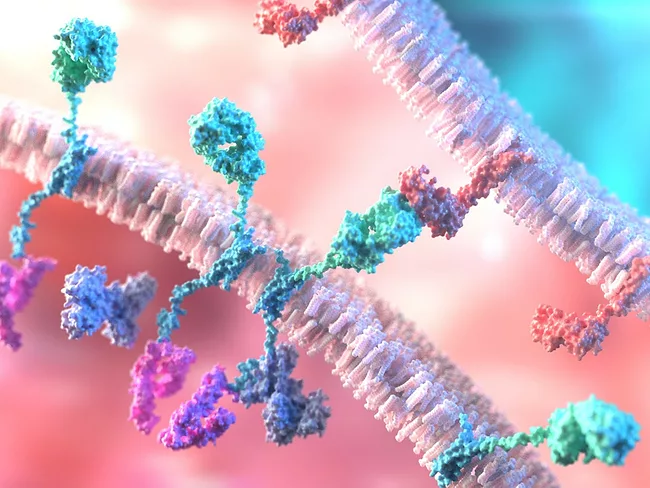
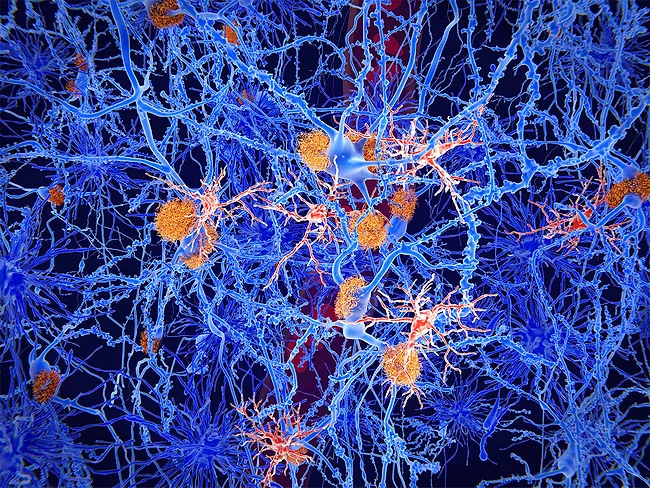
The current treatment strategies for neurodegenerative diseases focus on targeting Aβ in Alzheimer’s disease (AD), α-synuclein aggregates in Parkinson’s disease (PD) and anti-tau therapies, which are primarily used in AD but are also being explored for PD. At the 2025 International Conference of Alzheimer’s & Parkinson’s Disease and Related Neurological Disorders, Aditya Iyer, senior RD scientist from Amyl Therapeutics Srl, presented data on an option which could potentially serve as a pan-amyloid therapeutic.
The current treatment strategies for neurodegenerative diseases focus on targeting Aβ in Alzheimer’s disease (AD), α-synuclein aggregates in Parkinson’s disease (PD) and anti-tau therapies, which are primarily used in AD but are also being explored for PD. At the 2025 International Conference of Alzheimer’s & Parkinson’s Disease and Related Neurological Disorders, Aditya Iyer, senior RD scientist from Amyl Therapeutics Srl, presented data on an option which could potentially serve as a pan-amyloid therapeutic.
ABL Bio Inc. announced April 7 that it sealed a potential £2.075 billion (US$2.65 billion) license deal with GSK plc, granting GSK global rights to use ABL’s blood-brain barrier (BBB) penetrating bispecific antibody platform, Grabody-B, to develop multiple programs in the neurodegenerative disease arena. Under the terms signed April 5, ABL agreed to transfer Grabody-B-related technology and know-how to GSK, upon which GSK will assume responsibility for preclinical and clinical development, manufacturing and commercialization.
ABL Bio Inc. announced April 7 that it sealed a potential £2.075 billion (US$2.65 billion) license deal with GSK plc, granting GSK global rights to use ABL’s blood-brain barrier (BBB) penetrating bispecific antibody platform, Grabody-B, to develop multiple programs in the neurodegenerative disease arena. Under the terms signed April 5, ABL agreed to transfer Grabody-B-related technology and know-how to GSK, upon which GSK will assume responsibility for preclinical and clinical development, manufacturing and commercialization.
The survival and plasticity of neurons depends on the signaling of the nerve growth factors BDNF and NGF acting through TRK receptors, which is crucial in neurological disorders such as Alzheimer’s disease (AD). Alzecure Pharma’s ACD-856 is a positive allosteric modulator (PAM) of TRK receptors that is in phase I trials for AD, and has shown good safety, pharmacokinetics and target engagement in the central nervous system.
Dual-specificity tyrosine phosphorylation-regulated kinase 1A (DYRK1A) is an attractive therapeutic target due to its involvement in cancer and neurodegenerative diseases. Researchers from the National Health Research Institutes and their collaborators have presented a series of DYRK1A inhibitors for reducing neurofibrillary tangle formation in Alzheimer’s disease.
Although CAR T-cell therapies have reached significant clinical success in hematological malignancies, their utility in solid tumors remains limited. One of the main challenges is the scarcity of truly cancer-specific antigens for precise targeting of solid tumors. The use of engineered small, specific antigen-binding domains, such as nanobodies, could be a potential strategy to improve the specificity and efficacy of CAR T cells against solid tumors.
Previous work uncovered the role of the complement system in neuroinflammation and synaptic loss in neurodegenerative disorders such as Alzheimer’s disease (AD). The third component, C3, central in all complement activation pathways, has been proposed as a potential therapeutic target in AD.
At this week’s International Conference on Alzheimer’s and Parkinson’s Diseases and Related Neurological Disorders, researchers from Suntec Medical Inc. and collaborators presented a poster introducing a novel biologic (STM-003) targeting several pathological mechanisms involved in Alzheimer’s disease (AD), aiming to delay disease progression and improve cognitive function.
During the first oral sessions on Translational Drug Discovery at the 19th Alzheimer’s & Parkinson’s Diseases (ADPD) Conference, Beka Solomon from Tel Aviv University presented her work on the therapeutic potential of bone-marrow-derived microglia in Alzheimer’s disease (AD). “After working more than 30 years in immunotherapy, I decided to totally change the subject of the work,” Solomon told the audience.