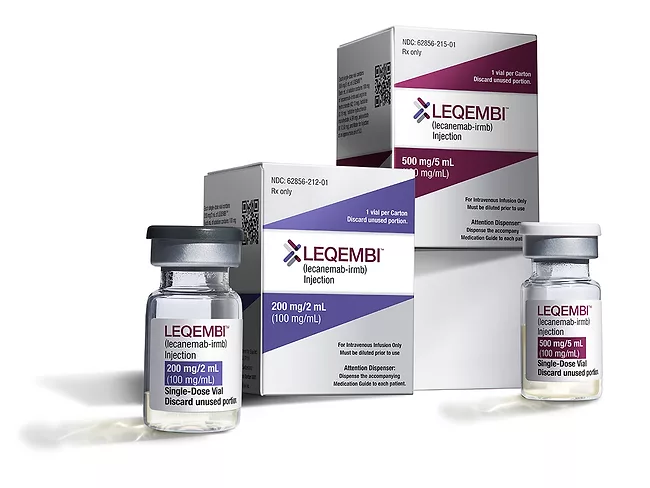
As the clock ticks toward the “full,” or traditional, approval date for Biogen Inc./Eisai Co. Inc.’s Alzheimer’s drug, Leqembi (lecanemab), the U.S. Centers for Medicare & Medicaid Services (CMS) is facing increasing pressure to get the structures in place to ensure Medicare beneficiaries have access to the drug when the approval comes.
Regenlife SAS raised $3.3 million in series A funding in order to finalize the development of its photomodulation technology to treat neurodegenerative diseases.
Investigators have identified a second individual who remained cognitively normal into his late 60s despite having the PSEN1 E280A mutation, which causes a familial version of early-onset Alzheimer’s disease (AD). The likely source of protection, a mutation in a gene called Reelin, is distinct from the protective mechanism identified in the first case of an individual who was protected from the effects of PSEN1 E280A. That case was reported in 2019.
The aqueous supernatants resulting from ultracentrifugation of brain samples from patients with Alzheimer’s disease (AD) contain aggregates so far described as soluble oligomers of amyloid-β protein (Aβ), which are responsible for the neurotoxicity underlying AD and thus considered targets to watch in this devastating condition. Now, a group of scientists from Harvard Medical School have determined that these aggregates are in fact insoluble diffusible fibrils with the same atomic structure as plaque fibrils.
In January, a Wall Street analyst predicted the U.S. FDA’s rejection of Eli Lilly and Co.’s application seeking accelerated approval of amyloid beta-targeting Alzheimer’s candidate, donanemab, would be a “mere footnote” in the drug’s development, a forecast confirmed in the wake of positive top-line phase III data showing donanemab significantly slowed cognitive and functional decline in people with early symptomatic disease.
The U.S. Centers for Medicare and Medicaid Services’ years-long musing over a streamlined coverage policy specifically for breakthrough medical devices is now taking a toll on breakthrough medications that could provide a cure or arrest the progression of debilitating diseases.
Therini Bio Inc. has closed a US$36 million series A financing round that will support its work on developing fibrin-targeted therapies for diseases driven by chronic inflammation, including Alzheimer’s disease, multiple sclerosis and retinal diseases such as diabetic macular edema.
An electronic pen that tracks upper limb and hand motions to diagnose Parkinson’s disease is to be repurposed to detect neurotoxic side effects of immunotherapy for cancer, following the award of a grant from Johnson & Johnson Innovation.
U.S. Centers for Medicare & Medicaid Services (CMS) Administrator Chiquita Brooks-LaSure made her first appearance April 26 before the House Energy and Commerce’s Subcommittee on Health, ostensibly to discuss legislative solutions to increase transparency and competition in health care. But member after member, regardless of political party, demanded answers about why CMS continues to severely restrict access to Eisai Co. Ltd.’s Alzheimer’s drug, Leqembi (lecanemab), especially since another government agency is covering it for all veterans that meet the labeling requirements.
Michigan State University has identified microtubule-associated protein tau (PHF-tau; MAPT) aggregation inhibitors reported to be useful for the treatment of Alzheimer’s disease.