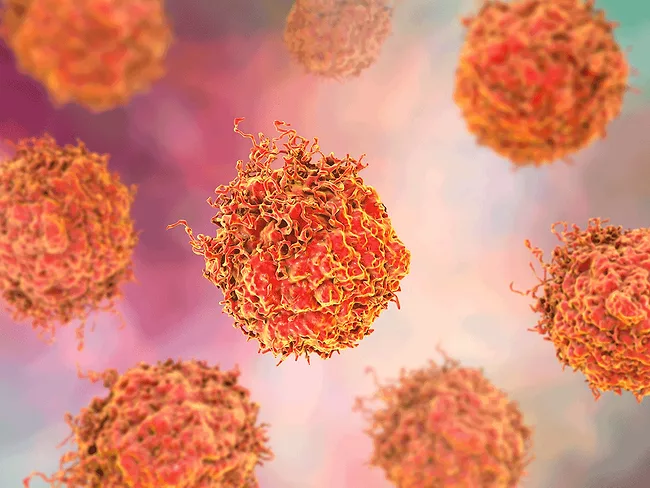
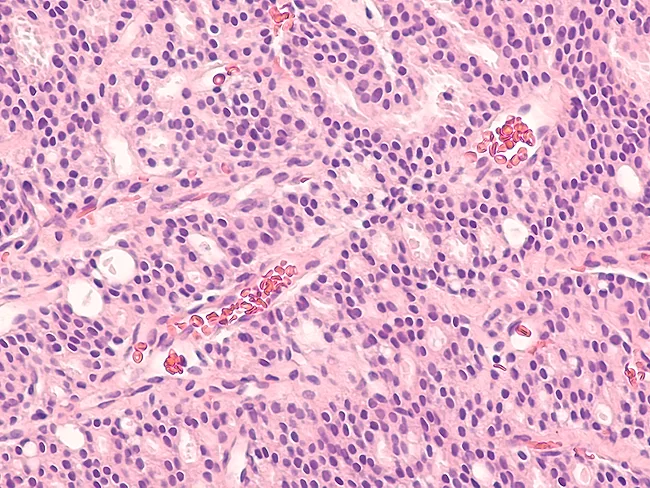
Two enzymes from the protein disulphide isomerase (PDI) family enable prostate cancer cells to grow, survive, and resist treatment. This discovery, however, could be taken as an advantage to improve therapy for this type of tumor. Blocking the function of PDIA1 and PDIA5 leads to cancer cell death and a reduction in tumor size.
Researchers from AUTOTAC Bio Inc. and affiliated organizations presented preclinical data for ATC-324, a novel autophagy-targeting chimera (AUTOTAC) designed to induce androgen receptor (AR) degradation.
Yuhan Corp., of Seoul, South Korea, has inked a ₩150 billion (US$108.6 million) deal with Korean biotech Ubix Therapeutics Inc. to gain exclusive global rights to UBX-103, Ubix’s oral small-molecule androgen receptor degrader for prostate cancer. Yuhan also announced July 1 that it gained the U.S. FDA’s nod to start a phase I study of a Gaucher disease drug candidate called YH-35995.
Nido Biosciences Inc. emerged from stealth by unveiling $109 million in series A and B equity funding and a clinical-stage program in spinal and bulbar muscular atrophy.
Researchers from Arvinas Inc. and affiliated organizations presented the discovery and preclinical evaluation of ARV-766, a novel androgen receptor (AR) degrading proteolysis targeting chimera (PROTAC), being developed for the treatment of metastatic castration-resistant prostate cancer (mCRPC).
Researchers from Guangzhou Institutes of Biomedicine and Health and CSIRO presented the discovery and preclinical characterization of novel compounds with high activity against androgen receptor (AR)-dependent prostate cancer cells.
Shares of Suzhou, China-based Kintor Pharmaceutical Ltd. (HKEX:9939) rose to HKD28.85 (US$3.68), up HKD14.87, or 106%, after the firm reported top-line data from the phase III multiregional trial with proxalutamide in people with mild to moderate COVID-19 infection, regardless of vaccination status or risk factors.
Shares of Suzhou, China-based Kintor Pharmaceutical Ltd. (HKEX:9939) rose to HKD28.85 (US$3.68), up HKD14.87, or 106%, after the firm reported top-line data from the phase III multiregional trial with proxalutamide in people with mild to moderate COVID-19 infection, regardless of vaccination status or risk factors.
For most people, neither polyglutamine disorders nor neuromuscular disorders are likely to be among the things they associate with androgen receptor (AR) dysfunction. But the three are indeed linked. And researchers have reported new insights into the nature of those links that could lead to a treatment for spinal and bulbar muscular atrophy, and possibly other disorders linked to AR signaling dysfunction.
For most people, neither polyglutamine disorders nor neuromuscular disorders are likely to be among the things they associate with androgen receptor (AR) dysfunction. But the three are indeed linked. And researchers have reported new insights into the nature of those links that could lead to a treatment for spinal and bulbar muscular atrophy, and possibly other disorders linked to AR signaling dysfunction.