In a decision that maintains the regulatory status quo, the U.S. FDA denied a petition from Harrison.ai to partially exempt certain diagnostic/detection AI devices from premarket review so long as the manufacturer has 510(k) clearance for a device in a similar category and a robust postmarket plan.
The U.S. FDA cleared Respiree Pte. Ltd.’s 510(k) for its RS-001 cardio-respiratory wearable that measures respiration and offers passive cardio-respiratory monitoring.
Molecular diagnostics company Genetic Signatures Ltd. is gearing up to launch its Easyscreen gastrointestinal parasite detection kit in the U.S. following its first FDA 510(k) clearance.
South Korean medical software firm Coreline Soft Co. Ltd. said it gained U.S. FDA 510(k) clearance for its artificial intelligence-based coronary artery calcification assessing solution, Aview CAC, while raising ₩18 billion (US$13.33 million) in a private placement.
Artificial intelligence (AI) is steadily making inroads into the world of health care, and San Francisco-based Eko Health Inc. has taken up the AI call with a stethoscope developed in conjunction with the Mayo Clinic that can detect low ejection fraction of the heart.
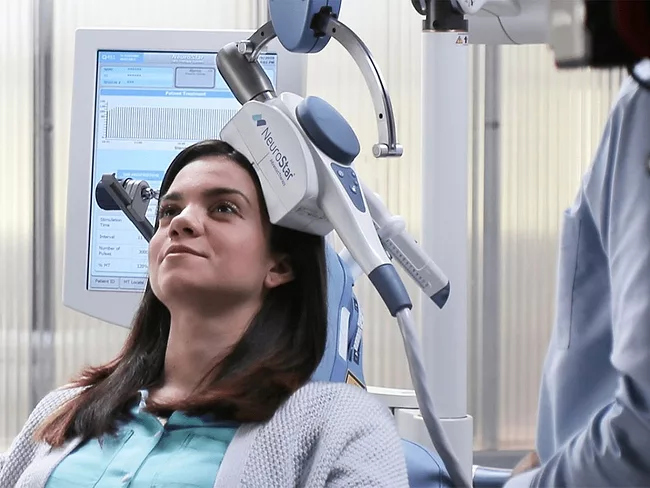
The U.S. FDA granted Neuronetics Inc. clearance for use of its Neurostar advanced therapy as an adjunctive treatment of major depressive disorder in patients aged 15 to 21, making it the first transcranial magnetic stimulation treatment (TMS) cleared for this age group, the company said.
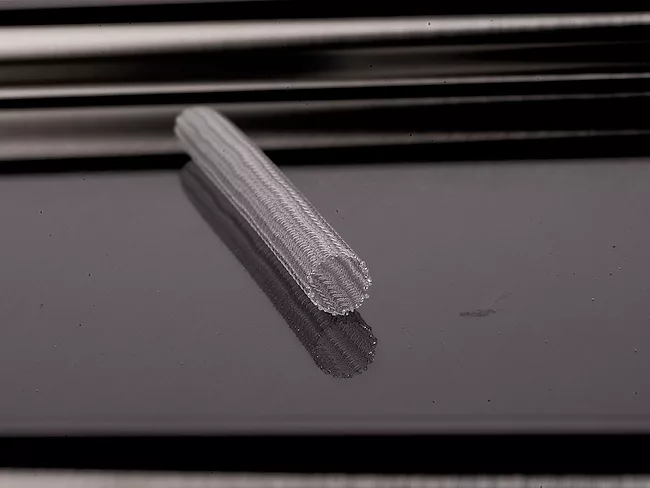
Woven Orthopedic Technologies LLC secured a second U.S. FDA 510(k) clearance for the use of its Ogmend implant enhancement system in spine surgery. The approval is for the large size Ogmend sleeve which is compatible with pedicle screws up to 10.5 mm and will give surgeons a tool to be able to easily secure stable fixation between the screw and bone during orthopedic surgery.
At first glance, the U.S. FDA’s draft guidance for evidentiary expectations for 510(k) implants seems to demand more rigor on these applications, but some in industry believe that several of these elevated requirements offer little or no commensurate benefit. Geeta Pamidimukkala of the Advanced Medical Technology Association (Advamed) said the draft would seem to require that manufacturers preemptively explain the exclusion of animal testing, a requirement she said creates more work for both industry and FDA without offering a meaningful benefit.
The FDA’s ongoing efforts to modernize the 510(k) program produced three draft guidances in the waning days of fiscal year 2023, one of which is a draft for the scenarios in which clinical data would be required for a 510(k) application.
The U.S. FDA’s draft guidance for selection of a predicate device in 510(k) submissions is part of a larger effort to overhaul the 510(k) program, but industry’s response is that this draft guidance goes too far.