The U.S. Department of Health and Human Services (HHS) is 6-1 so far in blocking court challenges to the Medicare price negotiation program mandated by the Inflation Reduction Act (IRA). The department’s latest victory came July 31 when a federal district judge in New Jersey tossed a complaint filed by Novo Nordisk A/S, citing a lack of jurisdiction on the court’s part and the company’s lack of standing.
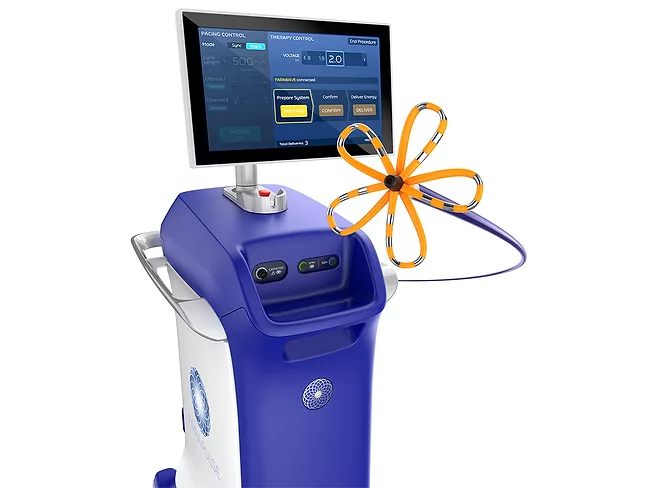
The first economic modelling of Boston Scientific Corp.’s pulsed field ablation system in U.K.’s National Health Service showed that it is more cost-effective as a treatment for paroxysmal atrial fibrillation compared to standard cryoablation.
Magenta Medical Ltd. raised $105 million in financing that will go toward clinical trials and to secure U.S FDA approval for its Elevate system, the world's smallest heart pump. The substantial investment haul was “a vote of confidence” from the investor community for what the company is doing, David Israeli, CEO of Magenta told BioWorld.
A schizophrenia drug in Cerevel Therapeutics Inc.’s lineup understandably stole much of the thunder during coverage of Abbvie Inc.’s takeover late last year to the tune of $8.7 billion, but much further back in the pipeline awaits another potentially lucrative prospect: a kappa opioid receptor antagonist (KORA) for major depressive disorder (MDD).
Having secured a 40% price cut and a commitment to not enforce a patent protecting a tuberculosis drug, South Africa’s Competition Commission decided not to prosecute a complaint accusing Johnson & Johnson (J&J) and its subsidiary, Janssen Pharmaceutica (Pty) Ltd., of anticompetitive conduct.
The U.S. Department of Health and Human Services (HHS) and the FDA already are getting a glimpse of the post-Chevron world and how the Supreme Court’s June 28 unwinding of the 40-year-old Chevron deference could rein in agency policies that defy Congress’ expressed intent.
In May, the value of med-tech deals dropped to $85.78 million, marking a 50% decrease from April's $172.37 million but exceeding March's $27 million. The monthly average for deal value in 2024 now stands at $129.7 million, an 84% decline compared to the 2023 monthly average of $886.13 million.
News comes from the U.K. Intellectual Property Office at the beginning of May 2024, where Ethicon, a Johnson & Johnson MedTech company, applied for five additional years patent protection for its Ethizia hemostatic sealing patch, whose embedded Pox polymer system dehydrates blood and accelerates the coagulation cascade to in occur in seconds, forming a tight yet flexible seal that maintains a barrier to bleeding.
Gaining full rights to a bispecific antibody to treat atopic dermatitis, Johnson & Johnson is paying $1.25 billion to acquire Yellow Jersey Therapeutics, a wholly owned subsidiary of Numab Therapeutics AG. The subsidiary houses all assets related to NM-26, which targets IL-4Ra (type I and II receptors) and IL-31, and was designed with Numab’s MATCH (Multispecific Antibody-based Therapeutics by Cognate Heterodimerization) technology platform. It is ready for phase II development for atopic dermatitis, although J&J intends to develop, manufacture and commercialize the drug globally for follow-on indications as well.
News out of the Heart Rhythm Society 2024 meeting May 16-19 highlighted the rapid disruption pulsed field ablation (PFA) devices have wrought in cardiac arrhythmia treatment, so it is little surprise to see that PFAs are among the top five technologies with transformative potential identified by Clarivate plc in its Medical Technologies to Watch in 2024 report. The impact of the other four – continuous glucose monitors (CGM) for diabetes, neurostimulation devices, surgical robotics and renal denervation – has been just as revolutionary, if longer in being realized.