BioWorld. Link to homepage.

Clarivate
  • BioWorld
  • BioWorld Science
  • BioWorld Asia
  • Data Snapshots
    • Biopharma
    • Medical technology
    • Infographics: Dynamic digital data analysis
    • Index insights
    • NME Digest
  • Special reports
    • Infographics: Dynamic digital data analysis
    • Trump administration impacts
    • Under threat: mRNA vaccine research
    • BioWorld at 35
    • Biopharma M&A scorecard
    • Bioworld 2025 review
    • BioWorld MedTech 2025 review
    • BioWorld Science 2025 review
    • Women's health
    • China's GLP-1 landscape
    • PFA re-energizes afib market
    • China CAR T
    • Alzheimer's disease
    • Coronavirus
    • More reports can be found here

BioWorld. Link to homepage.

  • Sign In
  • Sign Out
  • My Account
Subscribe
BioWorld - Sunday, February 22, 2026
Home » Topics » Science

Science
Science RSS Feed RSS

Lung cancer driven by the Kras oncogene shown in purple

Broader KRAS inhibition methods include chaperoning, gluing, vaccinating

April 24, 2024
By Anette Breindl
The existence of two approved therapies, Lumakras (sotorasib, Amgen Inc.) and Karzati (adagrasib, Mirati Therapeutics Inc.), has been a triumphant success against KRAS, a protein that was once considered undruggable.
Read More
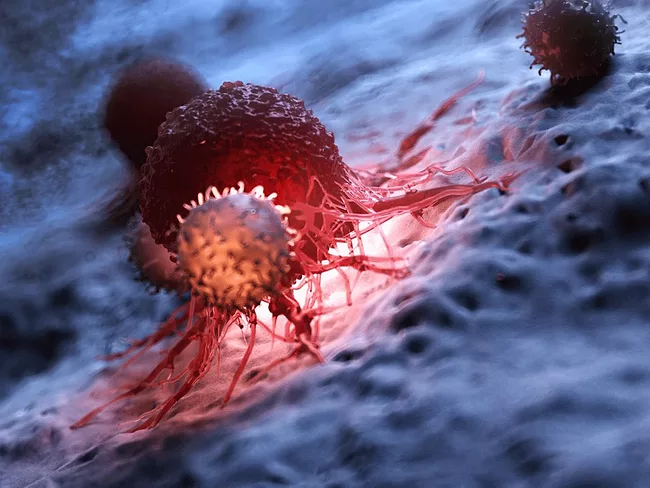
Macrophage and cancer cell
Cancer

Pancreatic cancer cells' interaction with macrophages induces cachexia

April 22, 2024
By Mar de Miguel
Cross talk between macrophages and tumor cells could modulate cachexia in pancreatic cancer patients. A group of scientists from the University of Oklahoma has discovered a new pathway that promoted muscle wasting after the recruitment of this immune cell in the tumor microenvironment, activating cachexia-inducing factors.
Read More
Macrophage and cancer cell
Cancer

Pancreatic cancer cells' interaction with macrophages induces cachexia

April 19, 2024
By Mar de Miguel
Cross talk between macrophages and tumor cells could modulate cachexia in pancreatic cancer patients. A group of scientists from the University of Oklahoma has discovered a new pathway that promoted muscle wasting after the recruitment of this immune cell in the tumor microenvironment, activating cachexia-inducing factors. Macrophage depletion and the inhibition of this signaling could be developed as a therapeutic target for this condition.
Read More
Illustration of cancer cells entering the bloodstream.
Cancer

AACR 2024: New concepts suggest new targets for metastatic disease

April 16, 2024
By Anette Breindl
Prior to this year’s Annual Meeting of the American Association for Cancer Research (AACR), it had been 14 years since metastasis had been the subject of a plenary session. So, the Tuesday session on “Evolution of the genome, microenvironment, and host through metastasis” had plenty of new insights to share.
Read More
Illustration of cancer cells entering the bloodstream.
Cancer

AACR 2024: New concepts suggest new targets for metastatic disease

April 10, 2024
By Anette Breindl
Prior to this year’s Annual Meeting of the American Association for Cancer Research (AACR), it had been 14 years since metastasis had been the subject of a plenary session. So, the Tuesday session on “Evolution of the genome, microenvironment, and host through metastasis” had plenty of new insights to share.
Read More
Image of clock over dna strands
Cancer

AACR 2024: Getting older younger may be driving rise in early-onset cancers

April 8, 2024
By Anette Breindl
As with most common diseases of the developed world, aging is the major risk factor for developing cancer. Most of the half-dozen hallmarks of precancer that were published last week by investigators from Vanderbilt University and the Fred Hutchinson Cancer Research Center are also hallmarks of aging. Unfortunately, scientists reported at the American Association for Cancer Research’s (AACR) 2024 annual meeting this week that accelerated aging is increasing, and may be driving an increase in early-onset cancers.
Read More
Illustration of head with maze that is missing parts
Neurology/Psychiatric

Better drugs for neurodegeneration will take more research, better biomarkers

April 5, 2024
By Anette Breindl
At a recent meeting on “Research priorities for preventing and treating Alzheimer’s disease and related dementias” (ADRD), convened by the National Academies, one consensus priority on ADRD research was that there needs to be more of it at every stage. Several speakers presented stark numbers on the relative volume of research in cancer and neurodegeneration. Research output, measured in peer-reviewed papers, for dementia is estimated to be around 10,000 papers annually, compared to 150,000 for cancer, while AD clinical trials are also few and far between compared to cancer trials. This final installment of BioWorld’s series on Alzheimer’s explores some of the reasons for this discrepancy along with the latest advances and ongoing efforts to accelerate research and drug development in the field.
Read More
Illustration of amyloid plaques in Alzheimer's disease
Neurology/Psychiatric

After the first approvals, where does amyloid go from here?

April 4, 2024
By Anette Breindl
After decades of trying and dozens of failed trials, amyloid targeting has paid off with the first disease-modifying agents reaching the market. But success does not mean slam dunk. Aduhelm (aducanumab, Biogen Inc.) was dogged by controversy throughout its brief tenure, and Biogen pulled the plug on it in early 2024. Leqembi (lecanemab, Biogen Inc.) has received full approval. In this second installment of a three-part series on Alzheimer’s, BioWorld looks at the nuanced view of amyloid’s role in the disease.
Read More
AI-generated illustration showing a brain in an hour glass with most of the sand at the bottom
Aging

Aging, and aging well, gives clues for dementia drug discovery

April 3, 2024
By Anette Breindl
Ironically, the first person to be diagnosed with what is now Alzheimer’s disease was missing its major risk factor. When she first began showing symptoms of dementia in 1901, Auguste Deter was not particularly old. Despite Deter’s case, aging is the largest risk factor for developing Alzheimer’s, by a large margin. But “geroscience has not been translated into drugs for Alzheimer’s disease,” Howard Fillit, Alzheimer’s Drug Discovery Foundation co-founder and chief scientific officer, told BioWorld. “We’re just starting to see that cross-fertilization now.” This first article of a three-part BioWorld series on Alzheimer’s disease looks at how a group of researchers, as well as some startups, are trying to approach Alzheimer’s via an aging lens.
Read More
DNA mutations or genetic disorder concept art
Dermatologic

Australian researchers discover gene mutation that causes psoriasis

April 2, 2024
By Tamra Sami
Scientists from the Australian National University have discovered the gene mutation responsible for causing psoriasis, and the findings could lead to improved diagnosis and treatment for patients with psoriasis and psoriatic arthritis, a chronic inflammatory skin disease. “We were able to identify the gene that could be important in enabling this progression from a skin-only condition to a skin-and-joint condition,” lead study author Chelisa Cardinez told BioWorld.
Read More
Previous 1 2 … 33 34 35 36 37 38 39 40 41 … 191 192 Next

Popular Stories

  • Today's news in brief

    BioWorld
  • IL-22 and TL1A, a robust couple for diagnosing hidradenitis suppurativa

    BioWorld Science
    Hidradenitis suppurativa (HS) is a chronic inflammatory skin disease with strong association with psoriasis and inflammatory bowel disease (IBD). While some...
  • 3D illustration of skin layers

    TL1A is overexpressed in hidradenitis suppurativa

    BioWorld Science
    Despite the availability of advanced therapeutic options, about 40%-50% of patients with hidradenitis suppurativa do not achieve significant improvement in...
  • Illustration of head with maze that is missing parts

    Inhibiting the NLRP3 inflammasome for cognitive impairment, stroke

    BioWorld Science
    Vascular cognitive impairment and dementia (VCID) and cerebral small vessel disease are among the leading causes of dementia, where inflammation is known to play...
  • Illustration of brain and antibodies

    VST Bio’s VB-001 is neuroprotector after stroke

    BioWorld Science
    At the recent International Stroke Conference, researchers from VST Bio Corp. and Yale University presented preclinical data regarding VB-001, a monoclonal...
  • BioWorld
    • Today's news
    • Analysis and data insight
    • Clinical
    • Data Snapshots
    • Deals and M&A
    • Financings
    • Medical technology
    • Newco news
    • Opinion
    • Regulatory
  • BioWorld Science
    • Today's news
    • Biomarkers
    • Cancer
    • Conferences
    • Endocrine/metabolic
    • Immune
    • Infection
    • Neurology/psychiatric
    • NME Digest
    • Patents
  • BioWorld Asia
    • Today's news
    • Analysis and data insight
    • Australia
    • China
    • Clinical
    • Deals and M&A
    • Financings
    • Newco news
    • Regulatory
    • Science
  • More
    • About
    • Advertise with BioWorld
    • Archives
    • Article reprints and permissions
    • Contact us
    • Cookie policy
    • Copyright notice
    • Data methodology
    • Infographics: Dynamic digital data analysis
    • Index insights
    • Podcasts
    • Privacy policy
    • Share your news with BioWorld
    • Staff
    • Terms of use
    • Topic alerts
Follow Us

Copyright ©2026. All Rights Reserved. Design, CMS, Hosting & Web Development :: ePublishing