Peking University researchers in collaboration with the NIH have discovered a new biochemical pathway related to a bacterium that eliminates nicotine in the intestine. The findings could lead to new ways to improve nonalcoholic fatty liver disease in smokers.
“Epilepsy is really a classical neurological disorder,” Lars Pinborg told the audience at the European College of Neuropsychopharmacology (ECNP) annual conference on Sunday. “Or is it?” Pinborg, of Rigshospitalet's The Neuroscience Center in Denmark, was chairing a session dedicated to an alternative hypothesis, summed up in the session title: “Is epilepsy a psychiatric disorder?”
Differences in individual responses to COVID-19 vaccines have been linked directly to different human leukocyte antigen (HLA) alleles and it has been shown that people carrying one specific variant, HLA-DQB1*06, generate higher antibody responses and are better protected from SARS-CoV-2 infection.
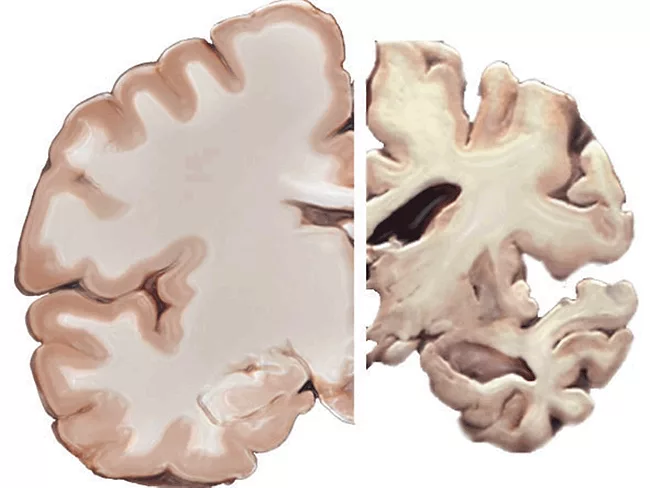
Researchers at the University of Cincinnati have published data showing that in patients with dominantly inherited Alzheimer’s disease-causing mutations, high levels of soluble amyloid-β42 (Aβ42) in the cerebrospinal fluid predicted a reduced risk of developing dementia over three years.
By independently manipulating the lifespan of worms and one of its purported biomarkers, namely, the cessation of vigorous movement (CVM), investigators at the Center for Genomic Regulation (CRG) in Barcelona have demonstrated that the two are driven by partly independent processes.
The 2022 Nobel Prize in chemistry was awarded to Carolyn Bertozzi of Stanford University, to Morten Meldal of the University of Copenhagen, and – for the second time – to Barry Sharpless of The Scripps Research Institute “for the development of click chemistry and bioorthogonal
chemistry.”
Click chemistry, the Nobel Committee’s Olof Ramström told reporters while announcing the prize, “is almost like it sounds – it’s all about linking different molecules.”
He likened click chemistry to a seatbelt buckle, whose interlocking parts can be attached to many different materials, linking them by snapping the two parts of the buckle together.
“The problem was to find good chemical buckles,” Ramström said – chemicals that “will easily snap together, and importantly, they won’t snap with anything else.”
Researchers at the Walter and Eliza Hall Institute of Medical Research (WEHI) in Melbourne, Australia, have developed a new genome editing technique than can activate any gene, including those that have been silenced, allowing new drug targets and causes of drug resistance to be explored.
The 2022 Albert Lasker Basic Medical Research Award has been awarded to Richard Hynes, of the Massachusetts Institute of Technology, Erkki Ruoslahti, of the Sanford Burnham Prebys Medical Discovery Institute, and Timothy Springer, of Harvard Medical School.
Tumor mutational burden (TMB), a biomarker used to assess whether a patient will respond to immunotherapy, needs to be recalculated in order to be useful for patients of Asian or African descent. Scientists at the Dana-Farber Cancer Institute found a significant bias in the estimated TMB values affecting these populations and adjusted them for those patients.
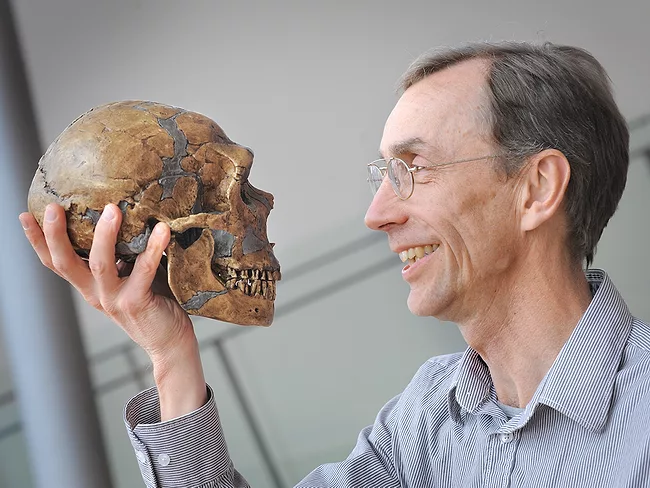
The Nobel Prize in Physiology or Medicine 2022 was awarded to Svante Pääbo today "for his discoveries concerning the genomes of extinct hominins and human evolution." Pääbo, who is currently the director of the Max Planck Institute for Evolutionary Anthropology in Leipzig, Germany, and his colleagues overcame extreme technical challenges to sequence the DNA of ancient hominids – because after tens of thousands of years, there is no such thing as aging well for DNA.
 RSS
RSS