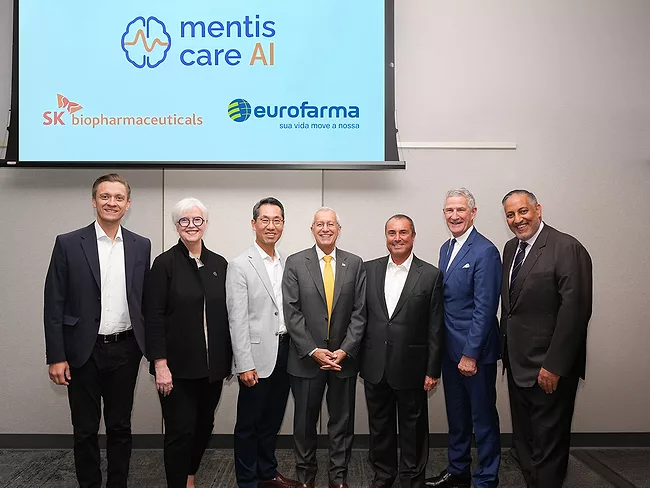
SK Biopharmaceuticals Co. Ltd. and Eurofarma Laboratórios SA launched a new joint venture called Mentis Care Inc. Oct. 21, dedicated to developing an AI-powered platform for epilepsy management.
The U.K. Medicines and Healthcare Products Regulatory Agency reported the winners of the second phase of the AI Airlock challenge, which includes the Tortus AI, a medical scribe system developed by physicians in the U.K. National Health Service.
Japan is reimagining how mental health care can be delivered digitally and proactively, with local governments investing in digital technology to create data-driven safety nets that aim to detect distress and deliver help, presenters said during the Bio Japan 2025 conference in Yokohama, Oct. 8 to 10.
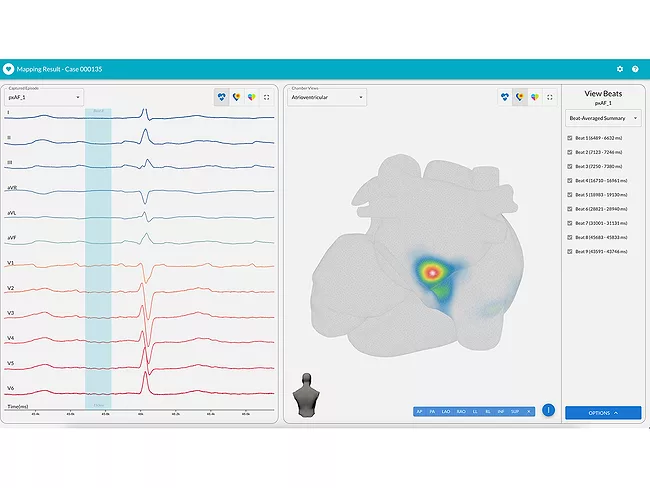
Vektor Medical Inc. recently secured CE mark for Vmap, its AI-powered electrocardiogram mapping system, marking a “major milestone” for the company, said CEO Rob Krummen. The regulatory approval from the EU authorities confirms that Vmap meets the stringent safety and performance requirements of the EU Medical Device Regulation, opening the door for clinical use in Europe, he told BioWorld.
ARC (Accelerate, Redesign, Collaborate), the innovation arm of Israel’s Sheba Medical Center is looking to use the principles of gaming and simulation to create smarter, more scalable solutions that will benefit both patients and providers.
A team of U.S. and South Korean researchers have developed an AI model called MSI-SEER that can not only predict microsatellite instability-high (MSI-H) tumors based on tissue slides, but also flag “what it does not know.” “Have you ever asked ChatGPT anything, and the response was, ‘I don’t know?’” Cheong Jae-ho asked during an interview with BioWorld. “Probably not, and that is the problem with AI now.”
Pharma companies are collaborating to boost the power of artificial intelligence (AI) in drug discovery by allowing access to proprietary structural data to train a large language model. Each of the partners is contributing data from several thousand experimentally determined protein:ligand interactions, creating one of the most diverse datasets and the richest chemistry assembled to date for model training.
AI seems to suggest that a world of problems with health care spending may become more manageable, but Stephen Bittinger, a shareholder in the D.C. office of the law firm of Polsinelli PC told BioWorld that all the headaches surrounding validation of these algorithms suggests a need for an independent AI validation institute.
China’s National Medical Products Administration is arguably more active than regulatory agencies in many nations in advancing guidance for AI in medical technology, but Chang-Hong Whitney, President/CEO of Whitney Consulting Ltd., told BioWorld that the premarket review process still carries some unpredictability.
A new generative AI model trained on UK Biobank data can simultaneously forecast the risks and timing of developing over 1,000 different diseases a decade into the future. The developers applied similar algorithmic concepts to those used to develop large language models like ChatGPT and Gemini to build the model, using medical records from 402,799 participants in UK Biobank.
 RSS
RSS