Nonalcoholic steatohepatitis was renamed, for the first time in 34 years, to metabolic dysfunction associated steatohepatitis (MASH), but a name change is far from being the biggest development in the field, according to experts at Bioplus Interphex (BIX) Korea 2024.
AI-driven clinical trial design company Opyl Ltd. formed a partnership with L39 Capital Pty Ltd. to establish a $100 million biotech fund that will showcase the predictive power of Opyl’s Trialkey software in selecting successful biotech and pharmaceutical stocks. Melbourne, Australia-based Opyl leverages AI to elevate clinical trial design and forecast outcomes, empowering clinical researchers, biopharma companies and investors to enhance trial design, drug development and market delivery.
Interim data from two early stage Friedreich’s ataxia (FA) cardiomyopathy studies from Lexeo Therapeutics Inc. hit the mark by reducing heart muscle thickness, a key cause of death among patients with the rare disease. The results came from the Sunrise-FA phase I/II study and an investigator-initiated phase Ia study of LX-2006, an adeno-associated virus-mediated gene therapy encoding the human frataxin gene. The drug is designed to improve frataxin protein expression to improve mitochondrial cell function.
Two weeks after reporting positive top-line results in first-line head and neck cancer with its lead candidate, eftilagimod alfa, in combination with Merck & Co. Inc.’s Keytruda (pembrolizumab), Immutep Ltd. presented updated data indicating the treatment could offer a non-chemotherapy option for patients with negative PD-L1 expression. Data from cohort B of the Tacti-003 (Keynote-PNC-34) phase IIb trial, which included 31 evaluable patients with PD-L1 expression of less than 1, as measured by Combined Proportion Score, showed a 35.5% objective response rate per RECIST 1.1 assessment.
The primary-endpoint win by Sensorion SA in a phase II proof-of-concept study with SENS-401 (arazasetron) in hearing loss made public March 11 brought renewed interest in the space, where a number of players are advancing gene therapies. The story marches on, with Montpellier, France-based Sensorion due to discuss the product July 13 at the International Conference on Cochlear Implants and Other Implantable Technologies in Vancouver, British Columbia.
AI-focused medical diagnostics company Spectral AI Inc. is collaborating with burn wound therapy company Polynovo Ltd. to test limited deployment of Spectral’s Deepview system for predicting burn healing in Australia.
Nonalcoholic steatohepatitis was renamed, for the first time in 34 years, to metabolic dysfunction associated steatohepatitis (MASH), but a name change is far from being the biggest development in the field, according to experts at Bioplus Interphex (BIX) Korea 2024.
Kazia Therapeutics Ltd.'s stock shot up 248% on July 10 after the Sydney-based company reported that paxalisib showed a 3.8-month improvement in overall survival, a 33% improvement, for newly diagnosed unmethylated patients with glioblastoma (GBM) compared to the concurrent standard-of-care arm in the pivotal GBM-Agile phase II/III study.
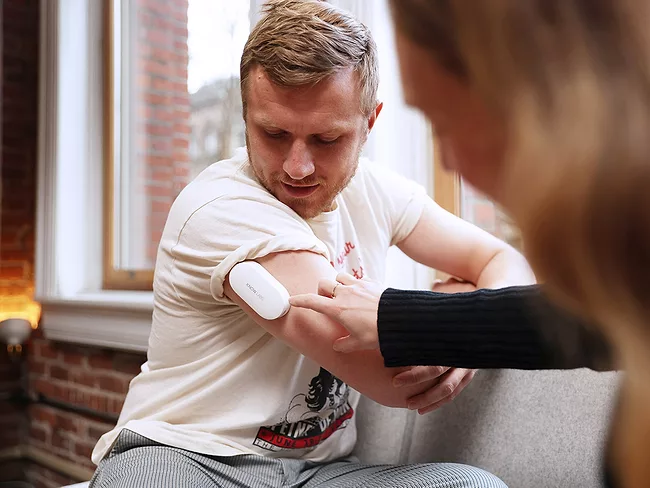
Know Labs Inc.’s radiofrequency sensor accurately classified blood glucose levels more than 93% of the time, a study published in Diabetes Technology & Therapeutics found. That’s good news for people with diabetes, who may be able to use the non-invasive technology to avoid not just the needle sticks that used to be the hallmark of diabetes management, but even the microneedles used in current continuous glucose systems.
Phase I/II data of IDCT (rebonuputemcel), a cell therapy in development for chronic and progressive lumbar degenerative disc disease and one that has both regenerative medicine advanced therapy and fast track designations in the U.S., has been published in the International Journal of Spine Surgery for showing statistically significant improvements in pain, disability and quality of life.
 RSS
RSS