Shares of Lyra Therapeutics Inc. soared more than 310% on data from its second phase III trial testing drug-device candidate LYR-210 in patients with chronic rhinosinusitis, with results from the Enlighten 2 study showing statistical significance on primary and key secondary endpoints and offering hopes of a regulatory pathway ahead.
Despite the advancement of AI and machine learning technologies and their incorporation into cancer treatment and drug development, a lack of trust and understanding of these new approaches is impeding care and treatment.
For the second time in as many months, the lack of statistically significant overall survival data sent shares of Summit Therapeutics Inc. sliding, despite otherwise positive findings for PD-1/VEGF bispecific candidate ivonescimab in non-small-cell lung cancer. But analysts noted the stock reaction overlooks the consistency of the efficacy data to date, as well as the fact that the phase III Harmoni study marks the first pivotal trial testing ivonescimab in a global population.
Facing erosion of its mighty Eylea (aflibercept) franchise and near-term loss of exclusivity with Dupixent (dupilumab), Regeneron Pharmaceuticals Inc. took a blow as one of two phase III trials with IL-33-blocking monoclonal antibody itepekimab failed in chronic obstructive pulmonary disease (COPD). The Tarrytown, N.Y.-based firm’s shares (NASDAQ:REGN) closed May 30 at $490.28, down $115.11, or 19%. Partner Sanofi SA, of Paris, saw its stock (NASDAQ:SNY) dip somewhat, too, and ended at $49.37, down $2.98. Cantor analyst Carter Gould opined that the latest news “all but [ruled] out a path forward short of a new study” with the compound.
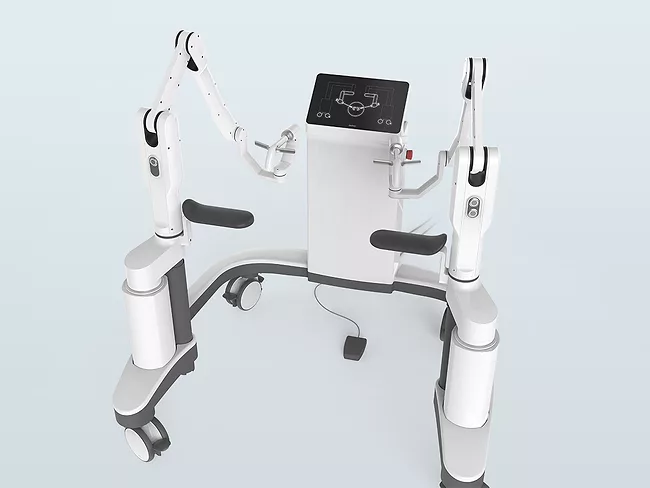
The U.S. FDA granted 510(k) clearance to Distalmotion SA's Dexter, its surgical robotic system, for use in cholecystectomy in adults. The greenlight from the regulatory body is the second nod Dexter has received following de novo clearance granted in 2024 for use in inguinal hernia repair.
Daiichi Sankyo Co. Ltd. and Merck & Co. Inc. have voluntarily pulled the BLA for accelerated approval tied to their HER3-directed antibody-drug conjugate (ADC) in treating EGFR-mutated non-small-cell lung cancer. The partnership in the expanding ADC space began nearly two years ago in a $22 billion deal.
Glycoengineering specialist Glycoera AG is preparing to take its extracellular protein degrader constructs into the clinic in the treatment of autoimmune diseases, after closing a $130 million series B.
Boston Scientific Corp. reported the latest setback in its transcatheter aortic valve replacement (TAVR) aspirations with the news that it is officially discontinuing worldwide sales of its Acurate neo2 and Acurate Prime systems
Glycoengineering specialist Glycoera AG is preparing to take its extracellular protein degrader constructs into the clinic in the treatment of autoimmune diseases, after closing a $130 million series B.
After reporting in April that its gastrointestinal reprogramming product (Garp) failed to meet the primary efficacy endpoint in a phase II trial in irritable bowel syndrome (IBS), Anatara Lifesciences Ltd. conducted a further analysis that shows a positive trend toward efficacy.
 RSS
RSS