Raising capital has always been a challenge for small to medium biotech firms worldwide, but the economic whiplash and the wider downturn across international markets post-pandemic have pushed Chinese biotechs to make-it-or-break-it scenarios for crossing the IPO threshold, speakers at the Chinabio Partnering Forum 2023 said in Shanghai.
“Why do the top 10 pharmaceutical companies remain in the top 10?” asked Li Chen, founder and CEO of Hua Medicine, to audience members at the Chinabio Partnering Forum in Shanghai on Sept. 20. “[It comes down to] their ability to innovate themselves, but also the capability to acquire technology from partnerships, [to] manufacture and sell in countries like the U.S."
New and updated clinical data presented by biopharma firms at the International Association for the Study of Lung Cancer, 2023 World Conference on Lung Cancer, including: Amgen, Astrazeneca, BMS, Daiichi, Gilead, Janssen.
Springboarding off the success of its AI-based imaging software for cancer detection, the deep learning-based artificial intelligence (AI) company Lunit Inc. has another AI software, called the Lunit Scope, up its sleeve for which it hopes to gain U.S. FDA approval by 2025.
South Korean biopharmaceutical firms are facing a harsher climate and an uphill battle both domestically and abroad, amid the larger economic downturn that has slowed everything from new drug approval to dealmaking. At the Global Pharma Key Opinion Leaders (GPKOL) 2023 Symposium held at the El Tower on Sept. 7 in Seocho-gu, Seoul, officials from the industry, government and academia gathered to discuss strategies on bouncing back from the lasting effects of the COVID-19 pandemic.
Rapidly evolving artificial intelligence (AI) is effectively resetting all biopharmaceutical companies to the figurative starting line, and collaboration is a key strategy to winning the drug discovery race, an AI-based startup founder said at the Global Bio Conference (GBC) 2023.
“I am not a fortune teller, nor am I a gambler. I will make no bets,” Lorraine Kalia told the audience at the 2023 International Congress of Parkinson’s Disease and Movement Disorders. “But I am optimistic.” At the meeting, which is being held in Copenhagen this week, Kalia, who is a scientist at Toronto Western Hospital’s Krembil Brain Institute and at the University of Toronto’s Tanz Centre for Research in Neurodegenerative Diseases, was giving an overview of “Emerging targets in the clinic” in a plenary session on “Therapeutic strategies for the future.”
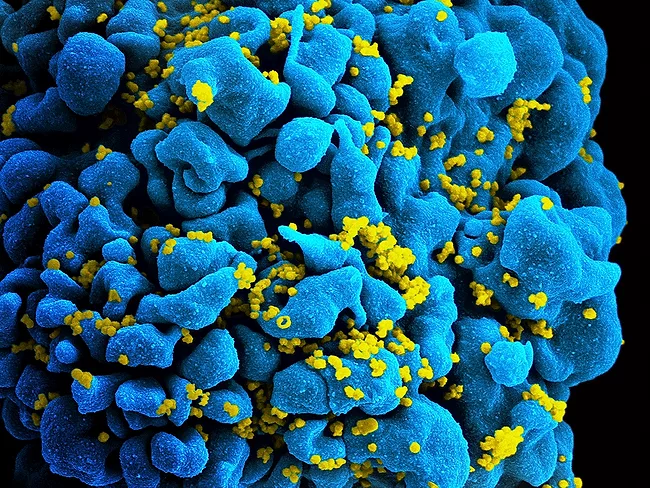
For people living with HIV, the single greatest achievement to date has been the emergence of antiretroviral treatments (ART) that completely block the virus, resulting in reduced mortality and morbidity and improved quality of life. But taking one pill a day for life cannot be the end of this journey, speakers said during the International AIDS Society meeting held July 23 to 26 in Brisbane, Australia. Even with the success of ART, drug adherence remains a problem due to pill fatigue or depression and other mental health conditions, as well as drug-drug interactions, said Claudia Cortes, associate professor at the University of Chile in Santiago. New drugs that are longer lasting, more convenient, and affordable are desperately needed, she said.
Broadly neutralizing antibodies (bNAbs) have the potential to prevent HIV, and more researchers are turning to bNAbs as an alternative to antiretroviral therapy (ART), speakers said during the International AIDS Society meeting held July 23 to 26 in Brisbane, Australia.
Although huge strides have been made with antiretroviral therapy (ART) and prevention since HIV was first reported 42 years ago, there is still not an effective preventive vaccine or a scalable cure for those living with HIV. But broadly neutralizing antibodies (bNAbs) look to be a further step down the pathway to a cure, speakers said during the International AIDS Society meeting held July 23 to 26 in Brisbane, Australia.

 RSS
RSS