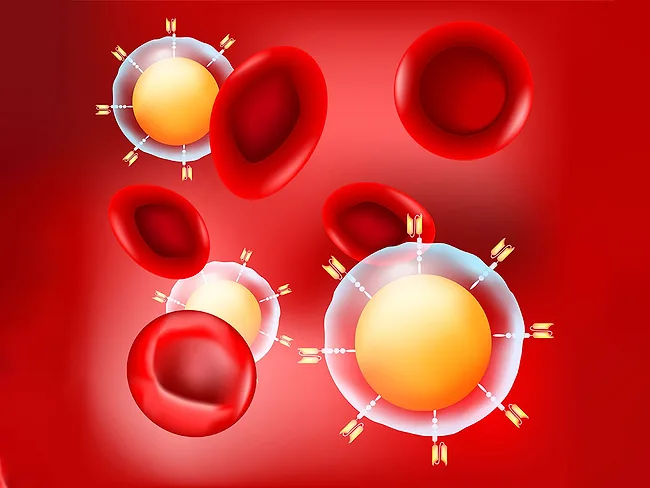
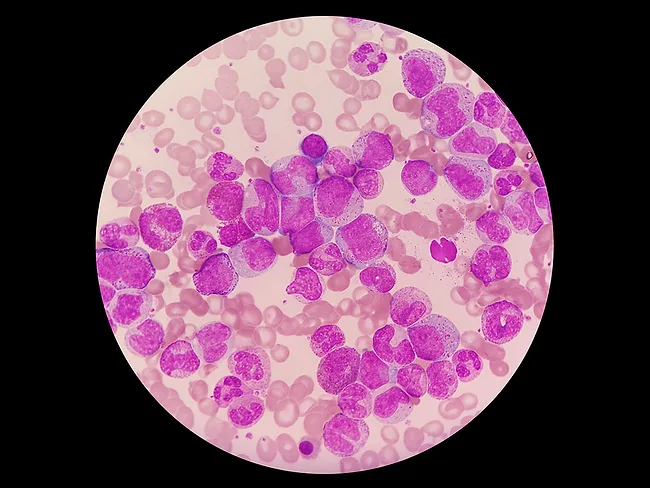
Light chain multiple myeloma (LCMM) is a cancer driven by malignant plasma cells that produce excessive pathogenic free light chains (FLCs) that may cause kidney dysfunction and form amyloid deposits in key organs, thus leading to poor outcomes. Ab Studio Inc.’s CATA-001 is a bispecific antibody targeting both CD38 and aggregated light chains (ALs) designed to deplete CD38+ plasma cells and clear both circulating and tissue-deposited pathogenic FLC aggregates for the treatment of LCMM and AL amyloidosis.
Treatment with first-generation CAR T cells regularly sent patients to the intensive care unit. Now, investigators are envisioning a future where CAR T treatment could occur on an outpatient basis.
Clonal hematopoiesis (CH), where few blood stem cells produce a significant fraction of mature blood cells that are genetically identical, is partly an inevitable feature of aging. Certainly, it is near universal in those older than 60. CH is not itself a disease, but 1%-2% of CH cases progress to acute myeloid leukemia, and it raises the risk of some other types of cancer as well. A total of eight genes are responsible for 95% of CH cases, George Vassiliou told the audience in Saturday’s plenary session at the 2026 Annual Congress of the European Hematology Association (EHA 2026).
Clinical responses to BCMA- or GPRC5D-directed T-cell engagers in relapsed/refractory multiple myeloma (MM) are often limited by disease relapse and antigen escape, underscoring the need for dual-targeting strategies that enhance durability while mitigating cytokine-driven toxicity.
At the recently concluded congress of the European Hematology Association, researchers at Cogent Biosciences Inc. presented preclinical data on CGT-1145, a JAK2 V617F-mutant-selective inhibitor designed to preferentially target the mutant kinase while sparing wild-type JAK2.
Clonal hematopoiesis (CH), where few blood stem cells produce a significant fraction of mature blood cells that are genetically identical, is partly an inevitable feature of aging. Certainly, it is near universal in those older than 60. CH is not itself a disease, but 1%-2% of CH cases progress to acute myeloid leukemia, and it raises the risk of some other types of cancer as well. A total of eight genes are responsible for 95% of CH cases, George Vassiliou told the audience in Saturday’s plenary session at the 2026 Annual Congress of the European Hematology Association (EHA 2026).
Treatment with first-generation CAR T cells regularly sent patients to the intensive care unit. Now, investigators are envisioning a future where CAR T treatment could occur on an outpatient basis. At Sunday’s late-breaking oral session of the 2026 Annual Congress of the European Hematology Association (EHA2026), Lei Fan told his audience that the first-in-human data “support further development of LB-2501 as a potential first-in-class, off-the-shelf, single infusion, no lymphodepletion, outpatient use CAR T therapy.” Fan is a professor of hematology at the First Affiliated Hospital of Nanjing Medical University.
In the most simplistic view, adult cancers occur because “immature cells are exposed to mutagens, accumulate mutations, and across life ultimately transform into cancer cells,” Franck Bourdeaut told his audience at the 2026 Annual Congress of the European Hematology Association (EHA 2026). “On the contrary, in pediatric cancers, it is assumed that very few mutations are responsible for a maturation block, make these cells derail from their normal differentiation trajectory and ultimately result in an early onset typical pediatric cancer.”
Tolerability is a key factor in the appeal of Enliven Therapeutics Inc.’s ELVN-001 for previously treated chronic myeloid leukemia (CML), which yielded positive updated phase I data from the Enable trial. Dennis Kim, hematologist from Princess Margaret Cancer Center in Toronto, said he would use the drug for a patient “who doesn’t have any other options.”
 RSS
RSS