With an IND filing in systemic lupus erythematosus expected during the third quarter of 2024, Cullinan Therapeutics Inc. changed its name from Cullinan Oncology Inc. and detailed its plans to target autoimmune diseases with CLN-978, a CD19xCD3 T-cell engager.
By a unanimous 12-0 vote, the U.S. FDA’s Oncologic Drugs Advisory Committee concluded that new evidence support the use of minimal residual disease (MRD) as an accelerated approval endpoint in multiple myeloma (MM) clinical trials. The FDA will now consider the recommendation, which, if incorporated into future studies, could dramatically shorten some drug developer timelines and offer more options for treating the aggressive bone marrow cancer.
As Novartis AG’s approved prostate cancer therapy, Pluvicto (177Lu-PSMA-617), continues on a growth trajectory, the firm signed a licensing deal with Arvinas Inc. potentially valued at north of $1 billion for global development and commercialization of ARV-766, the latter’s second-generation proteolysis targeting chimera (PROTAC) androgen receptor degrader targeting the same disease.
The U.S. FDA thinks using minimal residual disease as an endpoint for accelerated approval in new therapies to treat multiple myeloma (MM) might just be an idea whose time has come. The FDA now wants to know what its Oncologic Drugs Advisory Committee thinks about it, so the agency has convened a meeting of the committee for a deep dive into the subject on April 12.
Having failed in their efforts to get the U.S. NIH to march in on Xtandi’s patents under the Bayh-Dole Act because of price, Knowledge Ecology International and two other advocacy groups are now asking the Centers for Medicare & Medicaid Services (CMS) to do what the NIH refused to do. But rather than pressing for a march-in, which can be a lengthy process, the groups are pushing for CMS to use other statutory tools to clear the way for Xtandi (enzalutamide) generics to launch in the U.S. before Astellas Pharma Inc.’s three remaining patents for the prostate cancer drug expire in 2026 and 2027.
The timing is ripe for a robust biosimilar market in China, given the rapid increase of novel biologics approved to treat cancer and inflammatory diseases in the country over the past decade and the looming patent cliffs for several established biologics. As of December, the NMPA had approved more than 20 biosimilars that were developed in China. Most of those referenced just two biologics – Roche AG’s cancer drug Avastin (bevacizumab) and Abbvie Inc.’s immunology drug Humira (adalimumab). In 2022, the oncology and immunology biosimilar market in China garnered sales of about $2 billion, according to Clarivate estimates. To reach their full potential in China though, biosimilars must win over prescribers and patients.
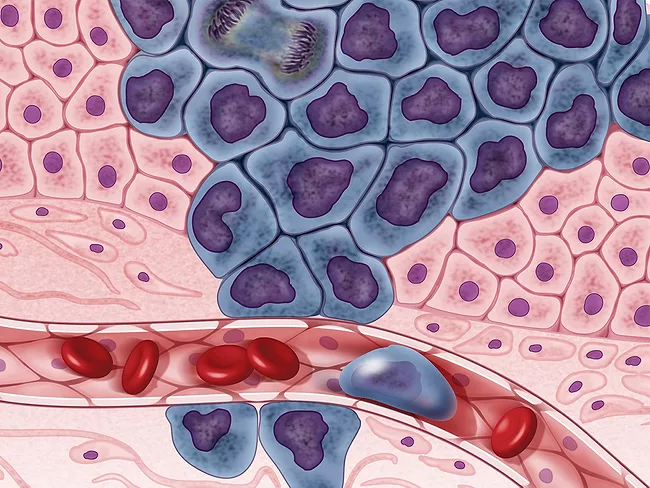
Prior to this year’s Annual Meeting of the American Association for Cancer Research (AACR), it had been 14 years since metastasis had been the subject of a plenary session. So, the Tuesday session on “Evolution of the genome, microenvironment, and host through metastasis” had plenty of new insights to share.
Stable disease in about half the patients tested wasn’t enough for Wall Street, and shares of Vincerx Pharma Inc. (NASDAQ:VINC) nosedived by $3.72, or 78%, to close April 9 at $1.06 on the disclosure of preliminary phase I data with small-molecule drug conjugate VIP-236 in metastatic solid tumors.
Essential Pharma Ltd. is paying up to £70 million (US$88.7 million) to acquire Renaissance Pharma Ltd., taking ownership of Hu14.18, a treatment for high-risk neuroblastoma. The antibody has completed a 64-patient phase II trial conducted by St Jude’s Children’s Research Hospital, in which it showed an improvement in overall survival of around 50% compared to currently available therapies.
A day after investing $40 million in China’s D3 Bio Inc., London-based venture capital firm Medicxi is investing $25 million to co-found a new U.K.-based company called Petalion Therapeutics Ltd. that will focus on an early stage oncology asset from Australia’s Starpharma Holdings Ltd. to develop novel dendrimer-based treatments.

 RSS
RSS