Full-Life Technologies Ltd. announced Sept. 29 the completion of a $77 million financing, comprising $50 million in series C equity and $27 million in debt financing, which will be used to advance a portfolio of radiopharmaceuticals and radionuclide-drug conjugates worldwide.
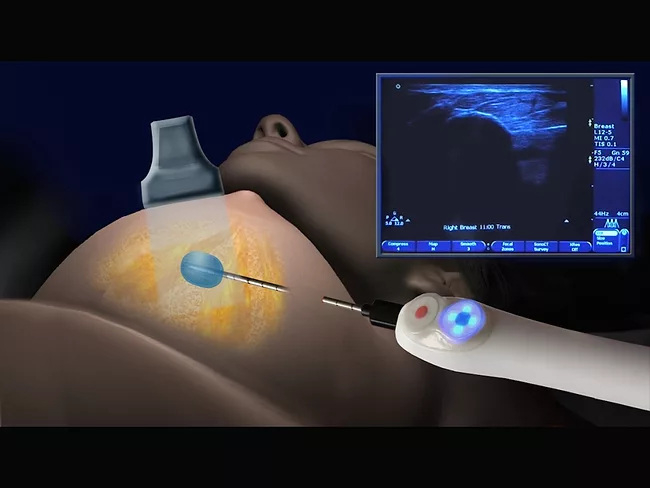
Icecure Medical Ltd. reported that the U.S. FDA has granted marketing authorization to Icecure's de novo application for the Prosense cryoablation system for the local treatment of breast cancer in patients 70 years of age or older with biologically low-risk tumors. The authorized indication includes patients that are not suitable for surgery for breast cancer treatment.
Full-Life Technologies Ltd. announced Sept. 29 the completion of a $77 million financing, comprising $50 million in series C equity and $27 million in debt financing, which will be used to advance a portfolio of radiopharmaceuticals and radionuclide-drug conjugates worldwide.
Palmetto GBA, the Medicare administrative contractor for most of the southeastern U.S., has opened a coverage analysis for the use of irreversible electroporation for a variety of cancers, but Palmetto has made it clear that it is unwilling to cover the procedure pending additional evidence.
Phase Scientific International Ltd. launched China’s largest clinical study for urine-based cervical cancer screening. If successful, the blood-based test could be the first non-invasive test for HPV.
Rakuten Medical Inc. is advancing a pipeline of solid tumor therapeutics built on its Alluminox platform worldwide, having gained conditional early approval of ASP-1929, an Alluminox-derived photoimmunotherapy, in Japan in 2020.
In what represents the first filing to have emerged in the name of Cellect Laboratories Inc., one of the start-up’s co-founders, Claire Theresa Murphy, describes their development of a non-invasive screening method that could one day replace the Pap test.
Two back-to-back papers published in Nature on Sept. 10, 2025, shed new light on the unexpected role of neurons in shaping the evolution of small-cell lung cancer (SCLC). It’s already known that, in gliomas, cerebral cancer cells actively damage axons, contributing to tumor progression through direct neural disruption.
Tensive Srl's Regenera, a bio-absorbable breast implant, promises to help the millions of women who undergo breast cancer surgery every year, to feel whole again. “While surgery will save many lives, it comes at the cost of losing something very personal, which is the sense of a woman's wholeness. I think that's what has been a major challenge,” Sanjay Kakkar, CEO told BioWorld.
Goodpath Inc., a virtual provider of whole-person care for chronic conditions, raised $18 million in series A financing, led by Massmutual Ventures with participation from Healthy Ventures and current investors.
 RSS
RSS