Many cancers involve upregulation of Aurora kinase B, which helps deregulate normal cell cycling to drive tumor proliferation. The kinase should therefore be a good therapeutic target, yet no small-molecular inhibitor has been clinically approved despite more than two decades of effort.
The U.S. Supreme Court preserved the U.S. Preventative Services Task Force coverage mandate that requires payers to cover certain preventive services at no cost to patients in a 6-3 ruling. That’s very good news for many diagnostics companies including Exact Sciences Corp. and Guardant Health Inc. as well as companies that manufacture HIV pre-exposure prophylaxis (PReP) medications such as Gilead Sciences Inc.
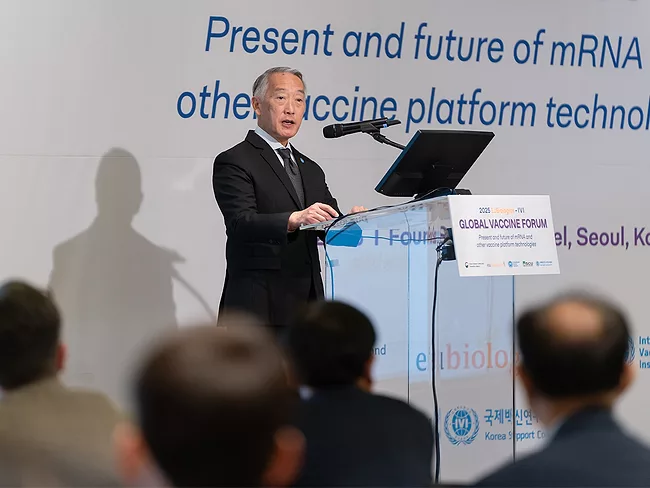
Experts in mRNA convened at the Global Vaccine Forum (GVF) 2025 to weigh the present and future of vaccine technology, including emerging innovations in self-amplifying mRNA (sa-mRNA) and drug delivery platforms. “Breakthroughs in mRNA and next-generation vaccine platforms are revolutionizing how we prepare for and respond to global health challenges,” Jerome H. Kim, International Vaccine Institute (IVI) director general, told the audience in Seoul, South Korea, June 19.
China’s National Medical Products Administration (NMPA) has accepted for review Carsgen Therapeutics Holdings Ltd.’s NDA for satricabtagene autoleucel (satri-cel, CT-041), an autologous CAR T candidate targeting Claudin18.2 for treating Claudin18.2-positive advanced gastric/gastroesophageal junction adenocarcinoma (G/GEJA) in patients who have failed at least two prior lines of therapy. Just one day earlier, Carsgen announced that it had submitted the satri-cel NDA to the NMPA.
Abion Inc. signed a potential $1.315 billion deal with an anonymous partner June 22, granting the counterparty exclusive global rights to a preclinical claudin 3-targeting monoclonal antibody, ABN-501, and the potential to license four more protein targeting antibodies.
Blossomhill Therapeutics Inc. has synthesized new indazole-based macrocyclic compounds acting as ALK tyrosine kinase receptor inhibitors potentially useful for the treatment of cancer.
T-cell activity is often suppressed by the immunosuppressive nature of the tumor microenvironment, contributing to the limited efficacy of many immunotherapeutic strategies. Treatment with peptides derived from human telomerase reverse transcriptase (hTERT) has been shown to effectively promote the expansion and activation of effector T cells, thereby enhancing antitumor immunity.
Despite the approval of numerous antibody-drug conjugates (ADCs), their therapeutic index remains limited by off-target toxicity resulting from linker instability. To address this challenge, the development of novel ADCs with improved plasma stability and reduced systemic toxicity is critically needed.
CDR-Life Inc. has announced CDR-609 as its next clinical candidate. Built on the company’s proprietary M-gager platform, CDR-609 is a novel T-cell engager targeting LGR5, a surface antigen widely expressed on common solid tumors, including colorectal, gastric, liver and pancreatic cancers.

 RSS
RSS