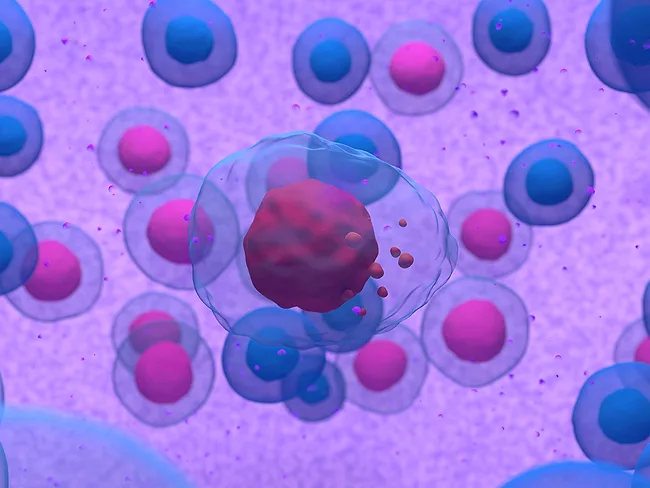
Reports of T-cell malignancies, including lymphoma, have the U.S. FDA investigating the risks for patients who received certain autologous CAR T-cell immunotherapies.
Cancer Research UK (CRUK) is worried that rising prices and its total dependence on public donations mean its funding model is becoming unsustainable. The charity is calling on the U.K. government to step in and plug a £1 billion (US$1.23 billion) shortfall it said will open up over the next decade, in order to maintain investment at 2019 levels in real terms.
Springworks Therapeutics Inc.’s nirogacestat became the first drug indicated specifically for desmoid tumors, as well as the first gamma-secretase inhibitor to win marketing approval, winning a U.S. FDA nod on the anticipated PDUFA date of Nov. 27. Branded Ogsiveo, nirogacestat has breakthrough therapy, fast track and orphan designations.
In less than one week, Innovent Biologics Inc. has seen two NDAs for non-small-cell lung cancer accepted for review by China’s National Medical Products Administration, and both are firsts for China. The NDA for IBI-351 under priority review marks China’s first NDA for a KRAS G12C inhibitor, and the NDA for taletrectinib is the first global submission for the ROS1 inhibitor.
Shanghai Henlius Biotech Inc. has announced IND approval by the FDA for HLX-42 for injection, an antibody-drug conjugate (ADC) developed under a collaboration between Henlius and Medilink Therapeutics.
Novartis AG has divulged pyrazolopyrimidine derivatives acting as methylcytosine dioxygenase TET2 inhibitors and thus reported to be useful for the treatment of cancer.
CSPC Pharmaceutical Group Ltd.’s selective son of sevenless homolog 1 (SOS-1) inhibitor SYH-2038 has received clearance by China’s National Medical Products Administration (NMPA) to enter clinical trials in China.
Patients with polycystic kidney disease (PKD) are at high risk of developing end-stage renal disease, especially clear cell renal cell carcinoma (ccRCC). Since SET domain-containing 2 (SETD2) has been previously identified as an important tumor suppressor and an immunosuppressor in ccRCC, a recent study aimed to investigate the role of SETD2 in the progression of PKD into ccRCC.
Why cancer? The mechanisms that drive and maintain tumorigenesis are still a mystery. This is a play with different actors who have different roles in several contexts. One of these scenarios is represented by genetic and epigenetic conditions that determine the early trajectories of cancer cells. In addition, different mechanisms will control phenotypes and states that can take one or another direction toward cancer.
GSK plc is looking at a comeback for Blenrep (belantamab mafodotin) as an interim efficacy analysis brought the company good news. Almost exactly a year ago, phase III confirmatory study data for the already-approved multiple myeloma drug fell short of the U.S. FDA’s accelerated approval requirements, so the agency asked GSK to take the drug off the market for the indication.

 RSS
RSS