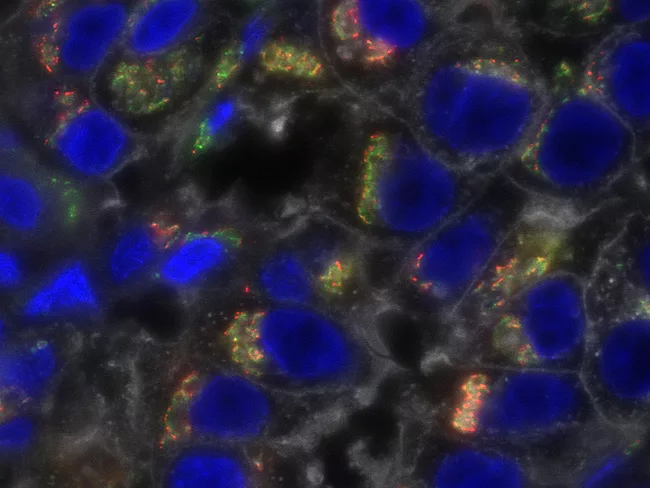
A study of more than a thousand tumor samples, led by the Weizmann Institute of Science in Israel, gives valuable insight into the different gene expression patterns seen in different cancers. The new findings could help address challenges associated with targeting many types of tumors, which are hard to treat in large part due to the variable nature of their cells and gene expression patterns, by helping to create better targeted therapeutics.
Positive data from two studies treating early breast cancer with CDK4/6 inhibitors presented at the American Society of Clinical Oncology (ASCO) meeting in Chicago showed progress is helping patients live longer. The two treatments and companies, Novartis AG and Eli Lilly and Co., are nearly head-to-head competitors in the niche indication.
HER2-targeting bispecific antibody zanidatamab, in development by Jazz Pharmaceuticals plc and Zymeworks Inc., produced better antitumor responses than current standard of care when used as a second-line treatment for biliary tract cancer (BTC) in a pivotal phase IIb study, bringing it closer to becoming the first therapy to target HER2-expressing BTC.
Despite the title of the Sunday, June 4 lead-off presentation at the American Society of Clinical Oncology (ASCO) meeting in Chicago, there was little room left for doubt about the increasingly important place of artificial intelligence (AI) in drug development.
An unexpected burst of early summer heat and three nights of Taylor Swift performances at nearby Soldier Field didn’t deter tens of thousands of cancer vaccine and therapy developers from swarming Chicago’s McCormick Place for the first full day of presentations at the American Society of Clinical Oncology (ASCO) meeting, one of the year’s biggest cancer conferences.
ITM SE has closed a €255 million (US$272 million) round to prepare for market entry, as its lead targeted radiopharmaceutical ITM-11 nears the end of phase III development in the treatment of neuroendocrine tumors of gastroenteric or pancreatic origin.
Researchers at Abbvie Inc. and Calico Life Sciences LLC have described protein tyrosine phosphatase inhibitors, particularly tyrosine-protein phosphatase non-receptor type 2 (PTPN2; TCPTP) and/or PTPN1 (PTP-1B), reported to be useful for the treatment of non-small-cell lung cancer (NSCLC).
Qilu Regor Therapeutics Inc. has divulged protein-arginine deiminase type-4 (PADI4) inhibitors reported to be useful for the treatment of sepsis, cancer, bacterial, viral infections, inflammatory disorders, autoimmune diseases and metabolic diseases.
Insilico Medicine IP Ltd. has identified small-molecule inhibitors of ubiquitin carboxyl-terminal hydrolase 1 (USP1) reported to be useful for the treatment of cancer.
 RSS
RSS