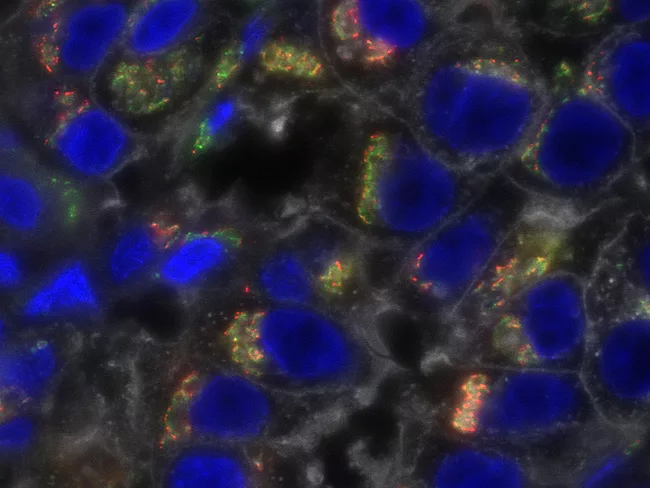
A study of more than a thousand tumor samples, led by the Weizmann Institute of Science in Israel, gives valuable insight into the different gene expression patterns seen in different cancers. The new findings could help address challenges associated with targeting many types of tumors, which are hard to treat in large part due to the variable nature of their cells and gene expression patterns, by helping to create better targeted therapeutics.
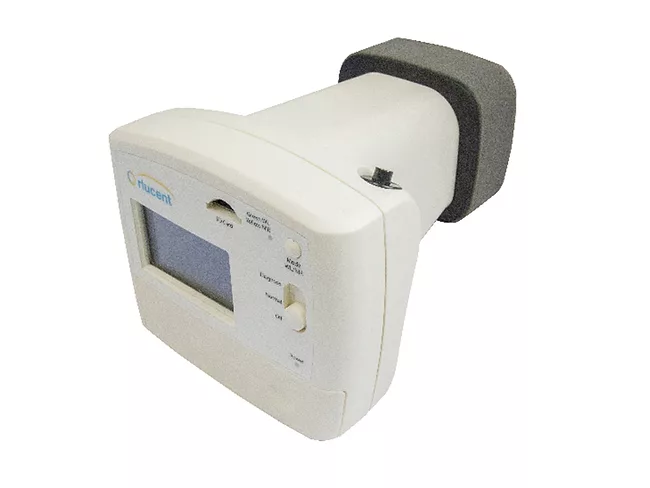
If Orlucent Inc. has its way atypical moles in adults will soon give up their secrets to clinicians on the lookout for skin cancer, this after the Los Gatos, Calif.-based company received a U.S. FDA breakthrough device designation for its non-invasive Orlucent skin fluorescence imaging system. The system is a hand-held point-of-care molecular-based imaging device that identifies “tissue remodeling activity” inside atypical moles that could be a precursor to early melanoma.
Lonza Group Ltd. has acquired Synaffix BV, the developer of a widely partnered set of tools for generating antibody-drug conjugates (ADCs), for €100 million (US$108 million) up front plus up to €60 million more in milestones.
Immutep Ltd. announced an AU$80 million (US$52.1 million) capital raise that consists of a AU$50 million placement and a AU$30 million entitlement offer to eligible shareholders to fund clinical programs for lead candidate eftilagimod (IMP-321, efti), a lymphocyte activation gene-3 (LAG-3) fusion protein and major histocompatibility complex class II agonist that stimulates both innate and adaptive immunity for treating cancer.
Having banked almost $775 million since its inception in 2019, Eikon Therapeutics Inc. closed three transactions to beef up its pipeline and raised nearly $106 million in a series C round. And the dealmaking will continue, said Alfred Bowie, chief financial officer. “We still have well over a half-billion in cash on our balance sheet,” he told BioWorld. “We’re active.” The new funds “add more fuel to the fire,” and let the company “make sure we aren’t cannibalizing some of the funding we’ve raised to help push forward the internal pipeline,” which is “advancing very nicely.”
Hookipa Pharma Inc. is looking to raise about $50 million in a public offering to further advance its lead immunotherapy candidate, HB-200, into a pivotal phase III trial in combination with Keytruda (pembrolizumab, Merck & Co. Inc.) for the first-line treatment of recurrent or metastatic head and neck cancer associated with human papillomavirus (HPV) 16.
Ranok Therapeutics (Hangzhou) Co. Ltd. has divulged proteolysis targeting chimeras (PROTACs) comprising an E3 ubiquitin ligase binding moiety covalently coupled to a GTPase KRAS (G12D mutant) targeting moiety through a linker reported to be useful for the treatment of cancer.
Mesenchymal glioblastoma, a phenotype associated with poor clinical outcomes, is characterized by the expression of CD44 and chitinase 3-like protein 1 (CHI3L1) in mesenchymal glioma stem cells (GSCs). CHI3L1 has been implicated in several oncogenic pathways driving mesenchymal differentiation. However, the role of CHI3L1 as a paracrine modulator of GSC states, as well as the transcriptional regulatory network induced by CHI3L1 in GSCs, remains unknown.
By interfering with mitochondrial plasticity, researchers have succeeded in attenuating brain metastases of HER2-expressing breast tumors. The authors wrote that their findings “highlight targeting mitochondrial dynamics is a viable therapeutic opportunity to limit both brain tumors and metastasis.”
 RSS
RSS