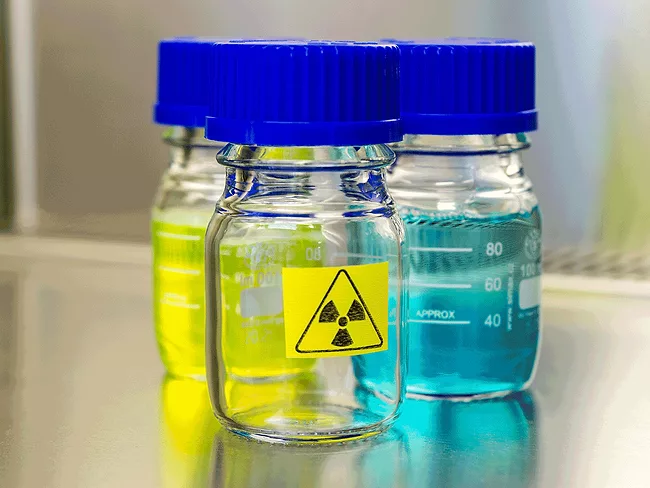
The radiopharma field has garnered increasing attention in recent years due to big-ticket deals like Bayer AG's $2.9 billion acquisition of Algeta ASA and Novartis AG's nearly $6 billion spent on buying Advanced Accelerator Applications SA and Endocyte Inc. As a result, competition is ratcheting up and pipelines are exploding with new combinations of different drugs. The global radiopharmaceuticals market was estimated to be valued at $6.7 billion in 2020, a number expected to reach $11.5 billion by 2027, according to a 2022 William Blair report.
The possibilities of cures for cancer and other tough-to-treat diseases and the ability to further personalize medicine are creating a lot of excitement about the future of radiopharmaceuticals as both therapy and diagnostics. To reach that future, industry and researchers will have to overcome a lot of challenges, not the least of which stem from the multiple government agencies involved in regulating the source material, development, distribution and use of radioactive drugs and devices.
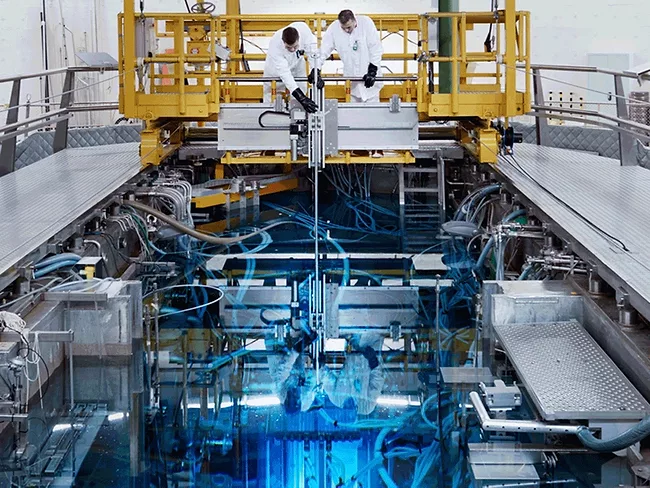
Radiopharmaceuticals require sophisticated infrastructure, with just-in-time radioactives delivered to patients who must isolate while receiving the therapy. Quality control and numerous layers of regulation makes for a daunting space to enter.
Supply issues are a “major concern for the whole industry and for the medical community as well, because they see targeted radiotherapy as a very promising field with very interesting results in the clinic, but they are concerned that drugs may not be available for a large number of patients, and it is a legitimate concern,” Orano Med SAS CEO Julien Dodet said.
Suzhou Zion Pharma Technology Co. Ltd. has reported GTPase KRAS (G12C mutant) inhibitors described as potentially useful for the treatment of brain cancer.
Receptor-interacting serine/threonine-protein kinase 1 (RIPK1; RIP-1) inhibitors have been reported in a Shanghai Institute of Organic Chemistry patent as potentially useful for the treatment of cancer, atopic dermatitis, psoriasis, macular degeneration, systemic lupus erythematosus, rheumatoid arthritis, inflammatory bowel and Alzheimer’s disease, among others.
Protein-tyrosine phosphatase SHP-1 is a negative regulator of immune cell function and is broadly expressed in the hematopoietic compartment. Due to its role in immune cell signaling, SHP-1 may be explored as a target for tumor immunotherapy.
Word recently from Nexcella Inc. of progress in its potentially BLA-enabling phase Ib/IIa study, with the BCMA-targeted, autologous CAR T therapy called NXC-201 for relapsed/refractory (r/r) multiple myeloma and r/r amyloid light chain amyloidosis, helped put nearer to center stage the class, which has proven attractive to a handful of developers. Among others in the space are Arcellx Inc. and Gracell Biotechnologies Inc.
In the string of successes and frustrations generated by their five-year collaboration, Merck & Co. Inc. and Eisai Inc. can now add a few more frustrations. The companies are discontinuing the phase III LEAP-003 study of Keytruda (pembrolizumab) plus Lenvima (lenvatinib) for first-line treatment of unresectable or metastatic melanoma because it did not improve overall survival (OS) vs. Keytruda as a monotherapy. Also, the phase III LEAP-017 trial evaluating the combination in unresectable and metastatic colorectal cancer did not meet its primary endpoint of OS.
Two years after its formation, Mosaic Therapeutics Ltd. has raised $28 million in a series A to begin commercialization of research carried out by the Translational Cancer Genomics Lab at the Sanger Institute in Cambridge, U.K., into the genetic vulnerabilities of multiple tumor types and how that impacts response to therapy.
 RSS
RSS