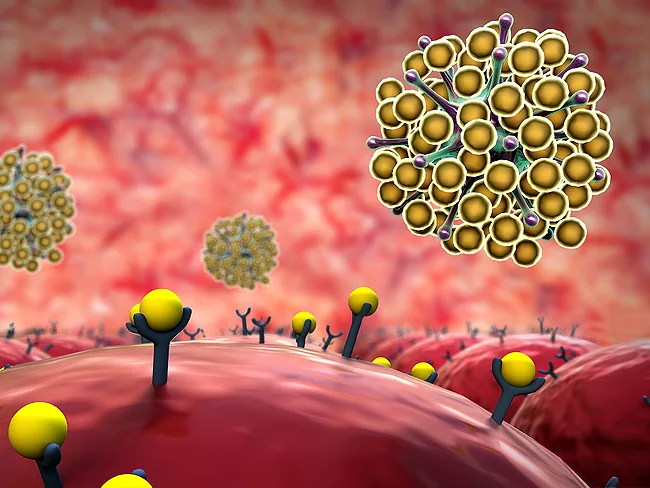
Radiopharmaceutical company Telix Pharmaceuticals Ltd’s TLX250-CDx (Zirconium (89Zr) TX250) met both primary and secondary endpoints in the phase III Zircon study in clear cell renal cell carcinoma, according to top-line data.
Biocytogen Pharmaceuticals Co. Ltd.’s subsidiary Eucure Biopharma Co. Ltd. has granted Isu Abxis Co. Ltd. rights to use its humanized agonistic anti-CD40 antibody YH-003 to develop cancer drugs.
Zhuhai Beihai Biotech Co. Ltd. has raised nearly ¥200 million (US$27.5 million) in a series B round slated to support clinical trials for its lead candidates as well as preparations to file an NDA for its core asset, BH-009.
New and updated preclinical and clinical data presented by biopharma firms at the Society for Immunotherapy of Cancer Annual Meeting including: Affimed, Compugen, Genenta, Geneos, Hummingbird, Iovance, Nextcure, Nouscom, Oncolytics.
Mirati Therapeutics Inc. has described GTPase KRAS (G12C mutant) inhibitors reported to be useful for the treatment of cancer, in particular non-small-cell lung cancer (NSCLC).
The Cleveland Clinic Foundation has disclosed citron rho-interacting kinase (CRIK; CIT) inhibitors reported to be useful for the treatment of medulloblastoma and prostate cancer.
Navrogen Inc. has entered into a cooperative research and development agreement (CRADA) with researchers at the U.S. National Cancer Institute (NCI), part of the National Institutes of Health (NIH). Under this CRADA, Navrogen will sponsor the clinical investigation of the experimental antibody-drug conjugate (ADC) NAV-001, under supervision of the NCI.
Inhibition of emerging polyclonal on-target acquired resistance mutations remains a critical unmet need in the treatment of fibroblast growth factor receptor 2 (FGFR2)-driven tumors. In the current study, researchers from Tyra Biosciences Inc. presented the preclinical characterization of a novel FGFR1/2/3 inhibitor, TYRA-200, being developed for the treatment of cancer.
Targeted therapies and immunotherapies have revolutionized cancer treatment in recent years. However, achieving durable responses and, ultimately, curing metastatic cancers driven by intracellular oncogenes remains a primary unmet medical need. Although fragments of intracellular oncoproteins can act as neoantigens presented by the major histocompatibility complex (MHC), recognizing the typically minimal differences between oncoproteins and their normal counterparts makes this approach quite challenging.
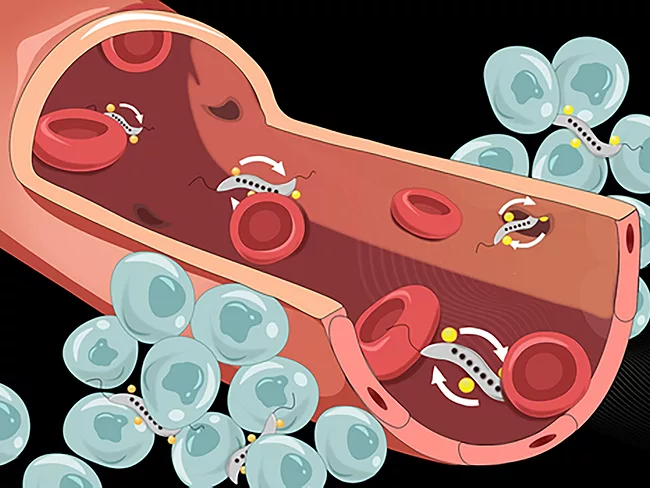
A new method for controlling naturally magnetized bacteria has improved the prospects of applying them as vehicles for intratumoral delivery of cancer drugs and in hyperthermia therapy. The advance will provide a better way of directing the movement of systemically administered bacteria, using external magnetic fields to target them to tumors sited deep in the body. It also points to a possible route for engineering existing bacteria-based anticancer constructs for better targeting.
 RSS
RSS