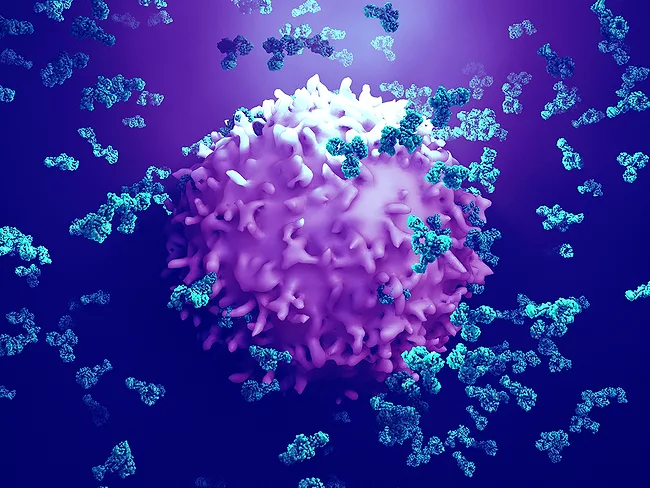
Biocytogen Pharmaceuticals Co. Ltd.’s subsidiary Eucure Biopharma Co. Ltd. has granted Isu Abxis Co. Ltd. rights to use its humanized agonistic anti-CD40 antibody YH-003 to develop cancer drugs.
Radiopharmaceutical company Telix Pharmaceuticals Ltd’s TLX250-CDx (Zirconium (89Zr) TX250) met both primary and secondary endpoints in the phase III Zircon study in clear cell renal cell carcinoma, according to top-line data.
There are doubts about the future of GSK plc’s multiple myeloma drug Blenrep (belantamab mafodotin) after it failed to meet its goal of improving progression-free survival compared with standard chemotherapy in a confirmatory trial, placing its conditional approvals in the U.S. and Europe at risk.
Duality Biologics (Suzhou) Co. Ltd. has presented data describing the discovery and preclinical results of DB-1303, an antibody-drug conjugate containing a trastuzumab biosimilar targeting HER2 (BAT0606), an exatecan derivative payload with topoisomerase I inhibitory activity (P1003) and an enzymatic ally cleavable tetrapeptide-maleimide-linker (payload-linker named L101P1003).
Halia Therapeutics Inc. has disclosed serine/threonine-protein kinase Nek7 inhibitors reported to be useful for the treatment of cancer, asthma, obesity, type 2 diabetes, hepatitis, peritonitis, neurodegeneration and psoriasis, among others.
Given Bioatla Inc.’s positive update from the study testing mecbotamab vedotin (BA-3011) in metastatic non-small-cell lung cancer sharpened investor thirst for more data by the end of this year, and Wall Street wanted to know how good the findings need to be in order to advance further.
At the end of September, C4 Therapeutics Inc. disclosed the U.S. FDA’s green light for the phase I/II trial with CFT-1946 in solid tumors, but the firm has piqued Wall Street’s interest more with another program due to face off with Bristol Myers Squibb Co. (BMS) in multiple myeloma (MM) and non-Hodgkin lymphoma (NHL).
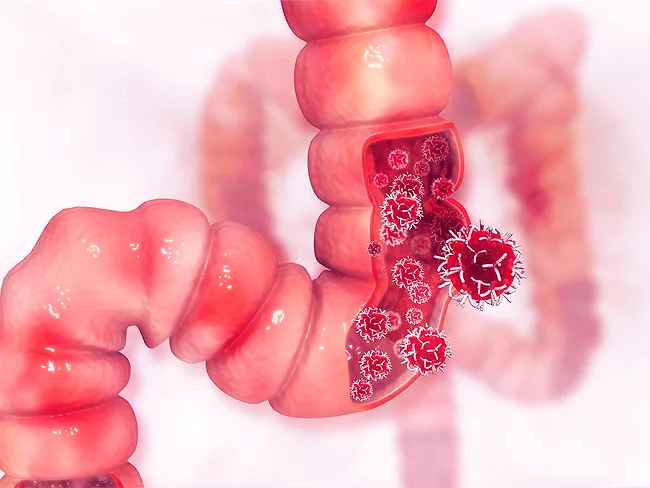
The Gastrointestinal Research Foundation (GIRF) has launched a new initiative, CA CURE, to identify and fund research to improve diagnostics and develop therapeutics focused on immunotherapies and personalized vaccines for digestive cancers, with a focus on projects that might have difficulty attracting funds because they are too experimental or are in the initial stages of development.
Hand-foot syndrome (HFS), or palmoplantar erythrodysesthesia, is a dermatological toxicity produced by the fluoropyrimidine chemotherapy agents capecitabine and fluorouracil and affects 43-71% of patients.

 RSS
RSS