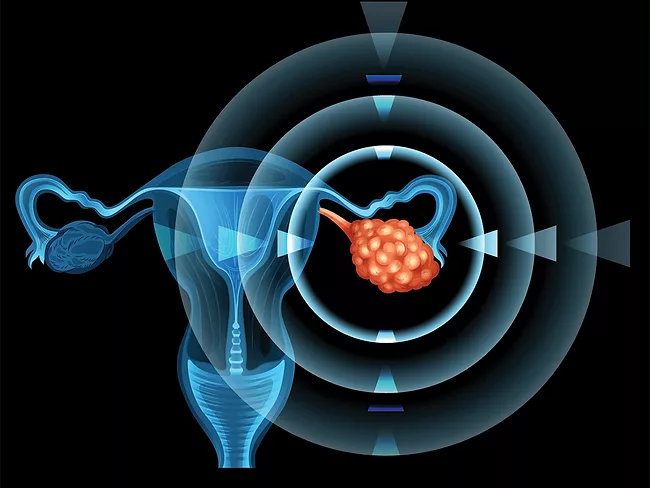
Researchers at the University of Queensland have found a genetic link between endometriosis and ovarian cancer subtypes, enabling them to identify potential drug targets for therapy and increasing the understanding of both diseases.
Shanghai Junshi Biosciences Co. Ltd. and Coherus Biosciences Inc. have disclosed positive data from a phase III trial of the anti-PD-1 antibody toripalimab in combination with chemotherapy in China.
Boston Scientific Corp. sent warning notices of the potential for embolisms arising from use of its Spaceoar and Spaceoar Vue systems because of “inadvertent placement of Spaceoar gel into a blood vessel and subsequent migration of the hydrogel outside of the pelvis.”
Wall Street was not as pleased as some might have expected by Immunogen Inc.’s full results from the pivotal study called Soraya testing mirvetuximab soravtansine (mirv) monotherapy in patients with folate receptor (FR) alpha-high, platinum-resistant ovarian cancer (PROC) who have been previously treated with Avastin (bevacizumab, Roche Holding AG). Analysts hailed the results as positive but shares (NASDAQ:IMGN) closed at $4.30, down 96 cents, or 18.25%.
Bristol Myers Squibb Co.’s relatlimab will hit the market as the first U.S. FDA-approved LAG-3 inhibitor, cleared by the agency for use in a fixed-dose combination with Opdivo (nivolumab) to treat adult and pediatric patients with unresectable or metastatic melanoma. The approval, a day ahead of the March 19 FDA target date, adds another type of immune checkpoint inhibitor to the oncology arsenal, which already includes drugs targeting PD-1/PD-L1 and CTLA4.
 RSS
RSS