Verve Therapeutics Inc. has packed a lot into the past few weeks. The latest is a four-year research deal with Vertex Pharmaceuticals Inc. to find and develop an in vivo gene editing program for an undisclosed liver disease. Vertex will pick up the tab for program costs as Verve does the preclinical R&D. Verve is getting an up-front $60 million from Vertex, along with a $35 million equity investment.
Stem cell therapy company Mesoblast Ltd. said that for patients with chronic heart failure with reduced ejection fraction, treatment with rexlemestrocel-L, its allogeneic product candidate, resulted in greater improvement in a prespecified analysis of left ventricular ejection fraction at 12 months relative to controls in the phase III DREAM-HF trial.
Several genetic studies in a range of model organisms have pointed to an important role for the B-cell lymphoma 2 (BCL2)-associated athanogene 3 (BAG3) gene in the maintenance of cardiac function.
Armed with compelling phase IIb data and with two phase III trials underway, Newamsterdam Pharma BV has sealed a European commercialization deal worth more than €1 billion (US$1.6 billion) with Menarini Group for its cholesterol lowering drug, obicetrapib.
From 20 years of research on metabolic change as a result of salt intake, Karen Duggan discovered in 2003 that a naturally occurring molecule in the human body, native vasoactive intestinal peptide (VIP), was capable of reversing fibrosis caused by hypertension and other chronic diseases such as diabetes. From that discovery, Vectus Biosystems Ltd. was founded, and the company has developed a new class of mimetic drug candidates and a drug library based on VIP.
Philadelphia’s Mineralys Therapeutics Inc. has secured a further $118 million to develop MLS-101, a potential hypertension drug in-licensed from Mitsubishi Tanabe Pharma Corp.
Luca Science Inc. has raised $30.3 million in an oversubscribed series B financing, enabling it to advance a mitochondria replacement therapy toward the clinic. The company is planning a phase Ib trial in myocardial infarction, in which 8 to 12 patients will receive injections of mitochondria immediately after having a heart attack.
Idorsia Ltd. looks on course to produce another marketed drug after supportive phase III results for its hypertension drug, aprocitentan. The company’s first U.S. FDA-approved drug, Quviviq (daridorexant), was launched in April and another product, Pivlaz (clazosentan), was approved and launched in April for cerebral vasospasm in Japan.
Keros Therapeutics Inc. announced preliminary results from a phase I trial of its engineered ligand trap KER-012 that gave its team confidence to proceed with larger studies in pulmonary arterial hypertension (PAH) and potentially some bone diseases. But company shares (NASDAQ:KROS) fell 16.6% to $38.50 May 18, following the announcement, perhaps over concerns about trial subjects that emerged in a company-hosted investor call.
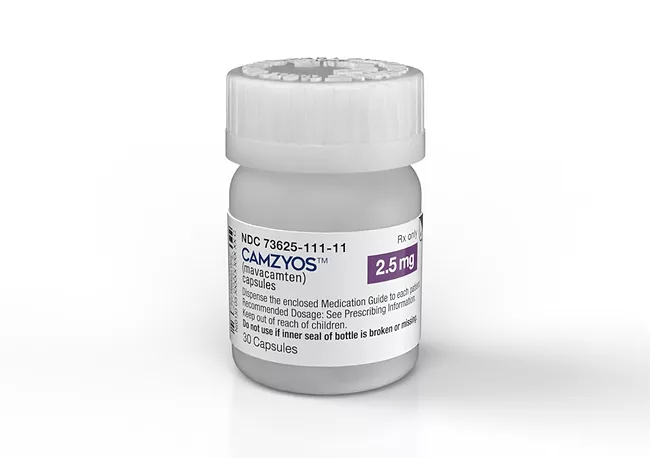
Bristol Myers Squibb Co.’s audacious $13.1 billion 2020 takeover of Myokardia Inc. appears to have paid off with U.S. FDA approval of the drug at the heart of the deal, mavacamten. The medicine, a cardiac myosin inhibitor for treating adults with obstructive hypertrophic cardiomyopathy (HCM), will be marketed under the brand name Camzyos.
 RSS
RSS