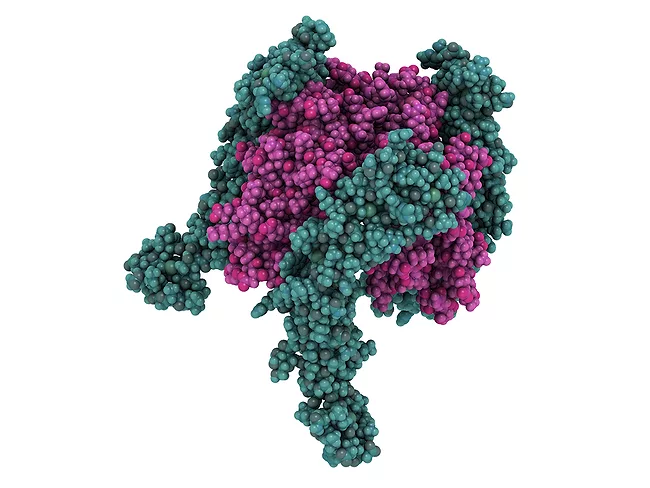
The signaling axis orchestrated by OX40L-OX40 is a T-cell costimulatory pathway implicated in multiple autoimmune diseases, such as atopic dermatitis (AD). Antibodies targeting this pathway have proven useful at treating AD in the clinical setting. Earendil Labs recently presented data regarding HXN-1021, an anti-OX40L antibody with potent activity and extended half-life, in vivo.
Harbour Biomed Ltd. and Sichuan Kelun-Biotech Biopharmaceutical Co. Ltd. have announced IND approval by China’s National Medical Products Administration (NMPA) for HBM-7575 (SKB-575) for the treatment of atopic dermatitis.
The OX40-targeting mechanism pursued by drug developers around the world found itself shadowed March 3 when Kyowa Kirin Co. Ltd. gave up work with rocatinlimab, a monoclonal antibody for which hopes had risen in moderate to severe atopic dermatitis, prurigo nodularis and moderate to severe asthma.
Shortly after Amgen Inc. walked away from its partnership with Kyowa Kirin Co. Ltd., the Tokyo-based company said it is discontinuing all ongoing clinical trials for rocatinlimab due to safety concerns.
The U.S. FDA clearance Feb. 20 of East Windsor, N.J.-based Acrotech Biopharma Inc.’s PDE4 inhibitor Adquey (difamilast ointment 1%) for mild to moderate atopic dermatitis brought renewed focus on the mechanism, where other drugs are already approved and more are stocking developers’ pipelines across indications.
Researchers from Shanghai Ailux Biotechnology Co. Ltd. have disclosed preclinical data regarding their humanized bispecific antibody ALX-001 targeting TL1A and IL-23 for the potential treatment of immune-mediated inflammatory diseases (IMIDs).
After 118 years as a private company, dermatology specialist Leo Pharma A/S is poised to complete an IPO after reporting a full-year net profit for the first time since 2018.
Researchers from Paratus Sciences Corp. presented the preclinical profile of PS-1001, a novel pan-inflammasome inhibitor designed to prevent IL-1β and IL-18 release.
Hidradenitis suppurativa (HS) is a chronic inflammatory skin disease with strong association with psoriasis and inflammatory bowel disease (IBD). While some signaling pathways are well defined in HS, the role of TNF-like ligand 1 (TL1A) is not well understood. A group of researchers has investigated the association of TL1A with HS, as well as its association with other cytokine networks.
Vidac Pharma Holding plc has announced the initiation of an in vivo preclinical program to evaluate the potential of its hexokinase 2 (HK2)/voltage-dependent anion channel (VDAC)-targeting approach in psoriasis.
 RSS
RSS