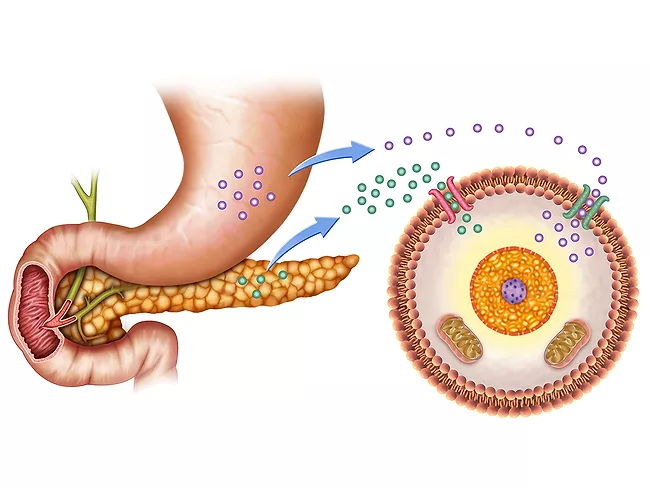
The U.S. FDA clamped a full clinical hold Biomea Fusion Inc.‘s phase I/II study of BMF-219 for treating type 1 diabetes and type 2 diabetes. The hold sank the stock on June 7 as the company looked to find answers so it could sit down with the agency to discuss next steps.
Ventyx Biosciences Inc. has released promising preclinical data for its CNS-penetrant NLRP3 inhibitor VTX-3232 in murine diet-induced obesity (DIO) models.
Researchers from Septerna Inc. presented the discovery and preclinical characterization of novel parathyroid hormone PTH1 receptor (PTH1R) agonists being developed as a new treatment option against hypoparathyroidism.
Relay Therapeutics Inc. has disclosed three new programs from its existing preclinical pipeline, including two novel programs from its genetic disease portfolio and a potentially first-in-class NRAS-selective inhibitor.
An expert in hepatitis delta virus said Vir Biotechnology Inc.’s phase II findings with the monoclonal antibody tobevibart and the small interfering ribonucleic acid elebsiran in chronic disease could lead to a “change [in] the entire care cascade and paradigm.” Shares of Vir (NASDAQ:VIR) ended June 5 at $12.66, up $2.08, or 19.7%, on the clinical news.
Obesity specialist Sixpeaks Bio AG emerged from stealth with $110 million in funding and an option to be acquired by Astrazeneca plc within the next two years, subject to filing an IND for the lead product. Of the $110 million, $30 million is a series A round, with the balance to come from Astrazeneca, which will provide nondilutive finance of up to $80 million.
Celltrion Inc., of Incheon, South Korea, gained MFDS clearance of Eydenzelt (CT-P42) as a biosimilar referencing Regeneron Pharmaceuticals Inc./Bayer AG’s Eylea (aflibercept) on May 30. The news comes on the heels of the U.S. FDA approving the first Eylea interchangeable biosimilars on May 20.
Shares of Structure Therapeutics Inc. (NASDAQ:GPCR) were trading up more than 54%, gaining $18.54 to close June 3 at $52.74, on the back of data for GSBR-1290, an oral, GLP-1 receptor agonist it hopes to position in the highly competitive obesity market. The latest readout sees the company regaining ground lost late in 2023 when earlier phase IIa data prompted unflattering comparisons to more advanced oral GLP-1 candidates.
Previous studies have demonstrated that CaMKKβ/AMPK signaling plays an important role in regulating mitochondrial homeostasis and that down-regulation of CaMKKβ could contribute to the pathogenesis of diabetic kidney disease (DKD).
 RSS
RSS