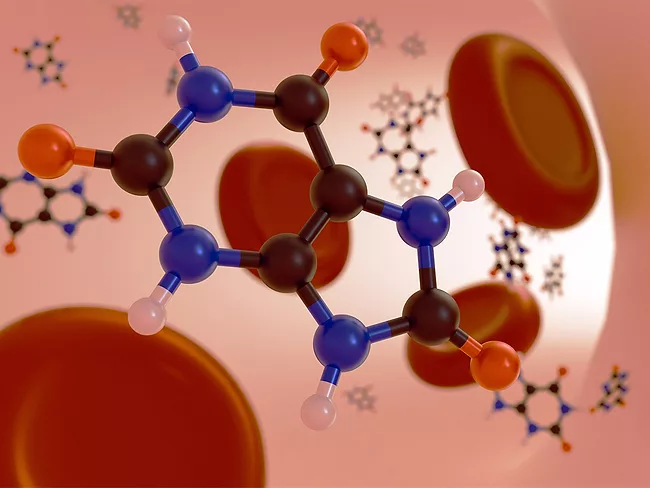
Hyperuricemia is defined as elevated uric acid levels in serum, usually exceeding 6.8 mg/dL, and the primary pathological cause of gout. Chinese investigators have reported recent results on the urate transporter 1 (URAT1) inhibitor HYJ-2 for the potential treatment of hyperuricemia.
Genes that are switched on or off in the human brain differ between men and women. Moreover, these differences are not uniform. They vary across cortical regions and cell types. Scientists at the National Institute of Mental Health (NIMH) and the National Institute on Aging (NIA) used single-cell sequencing and unveiled distinct gene expression patterns regulated by hormones and sex chromosomes. This detailed map of the brain’s molecular biology shows how women and men switch on and off more than 3,000 brain genes differently and expands the catalogue of X chromosome genes that escape inactivation.
Wall Street met with satisfaction but not surprise Eli Lilly and Co.’s undeniably positive top-line results from the phase III Achieve-4 study testing the efficacy and safety of Foundayo (orforglipron) compared to insulin glargine in adults with type 2 diabetes and obesity or overweight at increased cardiovascular risk.
Corbus Pharmaceuticals Inc. has divulged new cannabinoid CB1 receptor antagonists or inverse agonists potentially useful for the treatment of cancer, dyslipidemia, diabetes, obesity, cardiovascular, inflammatory and liver diseases.
Eli Lilly and Co.’s buyout of Ventyx Biosciences Inc. for $1.2 billion at the start of the year brought to the forefront NLR family pyrin domain containing 3 (NLRP3) inhibitors, on which a handful of developers have been working – and research in the space continues to roll out, as with the paper published March 26 in Nature that delved into mechanisms that rev up the NLRP3 inflammasome.
Neurocrine Biosciences Inc. has discovered new peptides acting as corticotropin-releasing factor CRF2 receptor agonists potentially useful for the treatment of obesity.
Everest Medicines Ltd. has agreed to acquire a Singapore-based commercial unit of Hasten Biopharmaceuticals (Asia) Ltd. for $150 million up front, gaining market authorization holder rights to 14 marketed products originally developed by Takeda Pharmaceutical Co. Ltd.
More than four decades on from the approval of the first biologic drug, the industry has reached a tipping point, and biotech drugs now outnumber small molecules in the global R&D pipeline.
Abbvie Inc. is buying exclusive rights to develop, manufacture and commercialize two Nav1.8 inhibitors for pain – HSK-55718 and HSK-51155 – from Haisco Pharmaceutical Group Co. Ltd. for $30 million up front and up to $715 million in milestone payments, plus royalties.
There are new data to chew over in the ongoing controversy about obesity being diagnosed as a disease from a study tracking 157,159 participants in the UK Biobank over 13 years. This shows that even in the absence of any metabolic disturbance such as elevated lipids, high blood pressure or diabetes, there is an increased risk of heart attack, stroke, peripheral arterial disease, heart failure and liver disease in people with a body mass index over 30.
 RSS
RSS